


Listen to the article
The U.N. Security Council has sharply criticized Haitian authorities for failing to advance the country’s political transition while calling for urgent security reforms to combat escalating gang violence in the Caribbean nation.
In a resolution adopted unanimously on Thursday, the council extended the United Nations’ political mission in Haiti until January 31, 2027, while condemning the surge in violence that has destabilized Latin America’s poorest country.
The resolution, co-sponsored by the United States and Panama, highlighted serious human rights violations including sexual violence against women, men, and children, as well as human trafficking, migrant smuggling, killings, and child abductions perpetrated by armed gangs.
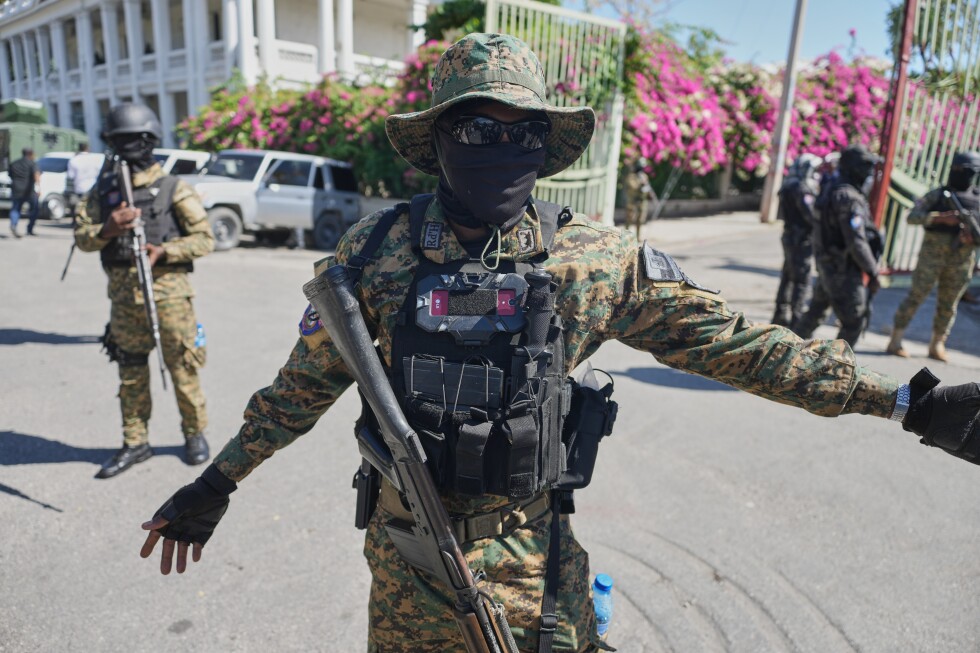
Haiti has faced a deteriorating security situation since President Jovenel Moïse’s assassination in 2021, with armed gangs now controlling approximately 90 percent of Port-au-Prince, the capital. Their influence has steadily expanded into rural areas, creating a nationwide security crisis in a country that has operated without an elected president for over three years.
The current transitional council, established in April 2024 with assistance from Caribbean leaders, emerged after gangs forced the closure of Haiti’s main international airport and launched unprecedented attacks on key infrastructure. These attacks ultimately led to the resignation of former Prime Minister Ariel Henry.
Since its formation, the transitional council has appointed three different prime ministers in an attempt to stabilize the nation. The council is scheduled to dissolve by February 7, 2025, though uncertainty remains about whether this timeline will be honored.
Last week, the United States issued a warning to the transitional council against making governmental changes, as pressure increases for the unelected body to move toward elections. Haiti has not held national elections in nearly a decade, deepening its constitutional crisis.
The revised mandate for the U.N.’s political mission in Haiti, known as BINUH, emphasizes facilitating a “national dialogue” to support efforts for municipal, parliamentary, and presidential elections. The mission is also tasked with working closely with a U.N.-authorized gang suppression force that was approved on September 30.
This new suppression force is intended to replace the current U.N.-backed mission led by Kenyan police, which has been criticized for being understaffed and underfunded. U.S. Ambassador Mike Waltz stated that the force “offers Haiti hope,” though no deployment timeline has been established for its planned 5,500 members.
The Security Council resolution also directs BINUH to assist Haitian authorities in designing a program to disarm and reintegrate former gang members, with special attention to children who have been drawn into armed groups.
The international community’s renewed focus on Haiti comes as the humanitarian situation continues to deteriorate. Gang violence has displaced more than 580,000 Haitians internally, according to U.N. estimates, while severely restricting access to food, healthcare, and education in affected areas.
Regional experts have noted that gang control has created a parallel governance structure in parts of Haiti, with criminal organizations collecting taxes, controlling movement, and administering rough justice in areas where state presence has disappeared.
The U.N.’s extended mission faces significant challenges, including restoring public confidence in Haitian institutions that have been hollowed out by corruption and political instability. Previous international interventions in Haiti have produced mixed results, raising questions about whether this renewed effort will succeed where others have failed.
As the deadline for the transitional council’s dissolution approaches, international observers are closely monitoring whether Haiti can establish the necessary conditions for credible elections that would help restore constitutional order to a nation that has experienced decades of political turmoil.
Fact Checker
Verify the accuracy of this article using The Disinformation Commission analysis and real-time sources.

30 Comments
If AISC keeps dropping, this becomes investable for me.
Good point. Watching costs and grades closely.
Good point. Watching costs and grades closely.
If AISC keeps dropping, this becomes investable for me.
Good point. Watching costs and grades closely.
Nice to see insider buying—usually a good signal in this space.
Production mix shifting toward World might help margins if metals stay firm.
Good point. Watching costs and grades closely.
Good point. Watching costs and grades closely.
If AISC keeps dropping, this becomes investable for me.
Good point. Watching costs and grades closely.
I like the balance sheet here—less leverage than peers.
Good point. Watching costs and grades closely.
Good point. Watching costs and grades closely.
Production mix shifting toward World might help margins if metals stay firm.
Interesting update on UN criticizes Haiti for lack of progress on a political transition. Curious how the grades will trend next quarter.
Good point. Watching costs and grades closely.
Good point. Watching costs and grades closely.
Interesting update on UN criticizes Haiti for lack of progress on a political transition. Curious how the grades will trend next quarter.
Good point. Watching costs and grades closely.
Good point. Watching costs and grades closely.
Silver leverage is strong here; beta cuts both ways though.
I like the balance sheet here—less leverage than peers.
Good point. Watching costs and grades closely.
Silver leverage is strong here; beta cuts both ways though.
Good point. Watching costs and grades closely.
Good point. Watching costs and grades closely.
Interesting update on UN criticizes Haiti for lack of progress on a political transition. Curious how the grades will trend next quarter.
Good point. Watching costs and grades closely.
Good point. Watching costs and grades closely.