


Listen to the article
Ukrainian Skeleton Athlete Defies IOC Ban on Memorial Helmet Ahead of Olympic Competition
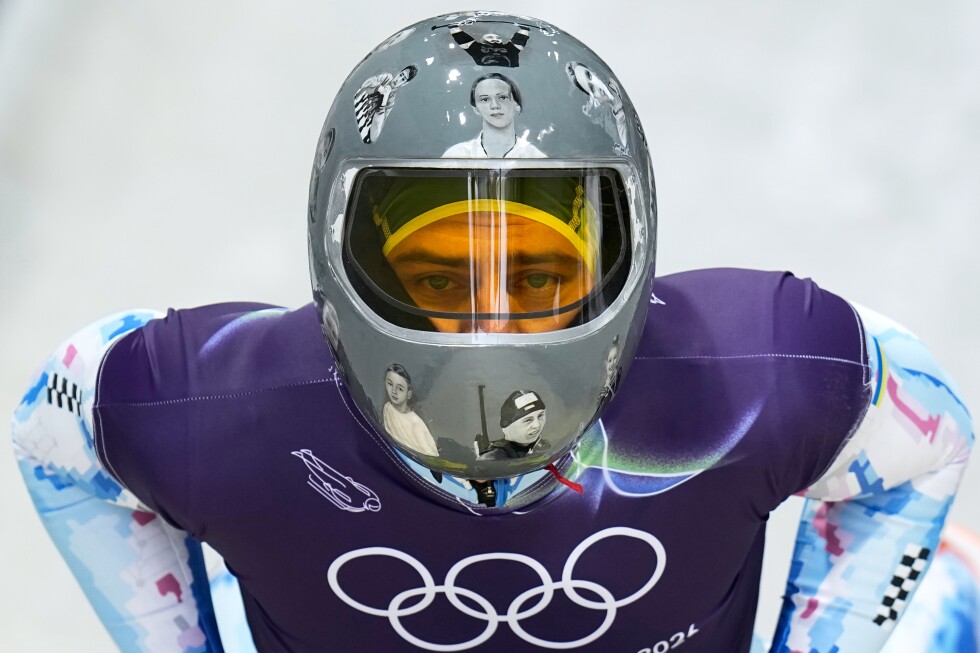
Ukrainian skeleton athlete Vladyslav Heraskevych continued training with his banned helmet Wednesday, just one day before his Olympic competition is set to begin at the Milan Cortina Games, despite the International Olympic Committee’s directive to remove it.
The customized helmet, which displays the faces of more than 20 Ukrainian athletes and coaches killed during the ongoing Russia-Ukraine conflict, has become the center of a growing controversy about what constitutes political expression at the Olympics.
“The helmet does not violate any IOC rules,” Heraskevych insisted after his training session.
The IOC disagrees, citing regulations that prohibit political statements on the Olympic field of play. The organization banned the helmet Monday night and has been attempting to reach a compromise with the Ukrainian athlete.
IOC spokesman Mark Adams emphasized that the committee wants Heraskevych to compete. “We really, really want him to have his moment. That’s very, very important. We want all athletes to have their moment and that’s the point. We want all our athletes to have a fair and level playing field.”
The dispute highlights the ongoing tension surrounding Russia’s invasion of Ukraine, which began shortly after the conclusion of the 2022 Beijing Winter Olympics. For Ukrainian athletes competing in Milan Cortina, the conflict remains an inescapable reality that has directly impacted their athletic community.
In a show of solidarity, other Ukrainian Olympians have begun making their own statements. Luge athlete Olena Smaha wrote “Remembrance is not a violation” on her glove during the women’s luge event Tuesday. Ukrainian skier Dmytro Shepiuk displayed “UKR heroes with us” on his glove after completing the men’s super-G race Wednesday.
Heraskevych, who has emerged as a medal contender after finishing no worse than sixth in his five official training runs, argues that his helmet should be permitted based on precedent. He points to American figure skater Maxim Naumov, who was allowed to bring a photo of his late parents to the kiss-and-cry area after his performance Tuesday.
“A beautiful tribute,” Heraskevych said, suggesting his helmet serves a similar commemorative purpose.
The memorial helmet was created just weeks ago by a Ukrainian artist, specifically for Heraskevych to wear during the Games. The IOC has offered a compromise, suggesting Heraskevych could wear a black armband during competition—a mourning symbol typically not permitted under Olympic rules. Heraskevych has rejected this alternative.
“We will reiterate the many, many opportunities that he has to express his grief,” Adams said. “He can do so on social media and press conferences in the mixed zone. So, we will try to talk to him about that and try to convince him.”
The standoff places the IOC in a delicate position. The organization has long maintained a stance against political displays during competition while acknowledging athletes’ right to expression in other contexts. For Ukrainian athletes, however, the war is not merely political but deeply personal, having claimed the lives of colleagues and friends.
“I think the way that we hope that we can deal with this is on a human level,” Adams added. “We will have conversations with him to try to explain that actually it’s in everybody’s interest for him to compete and for him also to be able to say what he wants to say.”
As Heraskevych prepares for his Olympic race, the unresolved question remains whether he will ultimately comply with the IOC’s ruling or risk disqualification by wearing the memorial helmet during competition.
The controversy underscores the complex interplay between Olympic ideals of political neutrality and the harsh realities faced by athletes from conflict zones—a tension likely to persist as the Games continue.
Fact Checker
Verify the accuracy of this article using The Disinformation Commission analysis and real-time sources.

16 Comments
The Ukrainian athlete’s defiance of the IOC ban on his memorial helmet is an understandable act of protest, even if it does push against the committee’s rules. Honoring fallen teammates is a deeply personal matter, but the IOC has to maintain neutrality at the Olympics.
That’s a fair assessment. The IOC is in a difficult position, having to balance their regulations with the athlete’s desire for a meaningful tribute. Finding common ground will be key here.
This is a tough situation. The athlete’s helmet seems like a personal tribute rather than an overt political statement. But I can see the IOC’s perspective in wanting to enforce their rules around the Olympic field of play.
You make a fair point. The IOC has to apply their policies consistently, even if this specific case feels like more of a human expression than a political one.
Kudos to this Ukrainian athlete for his resolve in honoring his fallen teammates. While the IOC rules are in place for good reason, it’s understandable that he would want to make this personal tribute. A complex issue without a clear solution.
I agree, it’s a delicate balancing act. The IOC has to uphold their guidelines, but denying athletes the chance for modest, respectful memorials is tricky.
Interesting story. The Ukrainian athlete’s custom helmet seems like a poignant way to honor fallen compatriots, even if it does push the IOC’s political expression rules. Balancing sports and politics is always tricky at the Olympics.
I agree, it’s a delicate situation. The IOC likely wants to avoid setting a precedent, but preventing athletes from modest tributes feels heavy-handed.
This is an interesting situation. The athlete’s helmet seems like a heartfelt way to remember fallen countrymen, but the IOC has to enforce their rules around political expression at the games. Not an easy call for anyone involved.
Absolutely. There are valid arguments on both sides. Hopefully they can find a compromise that allows the athlete to compete while respecting the IOC’s guidelines.
It’s admirable that this athlete is standing up for his beliefs, even in the face of pressure from the IOC. Honoring fallen teammates is understandable, though the rules around political statements at the Olympics are complex.
Absolutely. This is a nuanced issue without a clear right answer. The IOC has to balance their regulations with allowing athletes to express themselves.
I can appreciate the athlete’s desire to honor his fallen teammates, but the IOC does have to enforce their rules around political statements at the Olympics. It’s a tricky balance between personal expression and maintaining the neutrality of the games.
That’s a fair point. The IOC likely wants to avoid setting a precedent that could open the floodgates for all kinds of political displays, even if this particular case feels more personal than overtly political.
This is a complex issue without a clear-cut solution. The athlete’s helmet seems like a meaningful tribute, but the IOC has to uphold their guidelines around political expression. It’s an understandable conflict between personal sentiment and institutional rules.
Agreed. It’s a nuanced situation and both sides have valid concerns. Hopefully they can find a middle ground that allows the athlete to compete while respecting the IOC’s policies.