


Listen to the article
Ukrainian forces struck an oil depot in Russia’s Volgograd region early Saturday, triggering a fire that may require local evacuations, according to regional officials. The attack marks the latest development in an escalating exchange of long-range strikes between the warring nations.
Volgograd Governor Andrei Bocharov confirmed the drone attack on the Zhutovskaya oil depot but reported no immediate casualties. Ukraine’s General Staff claimed responsibility for the strike, stating the facility supplies fuel to Russian military forces. The extent of damage remains under assessment.
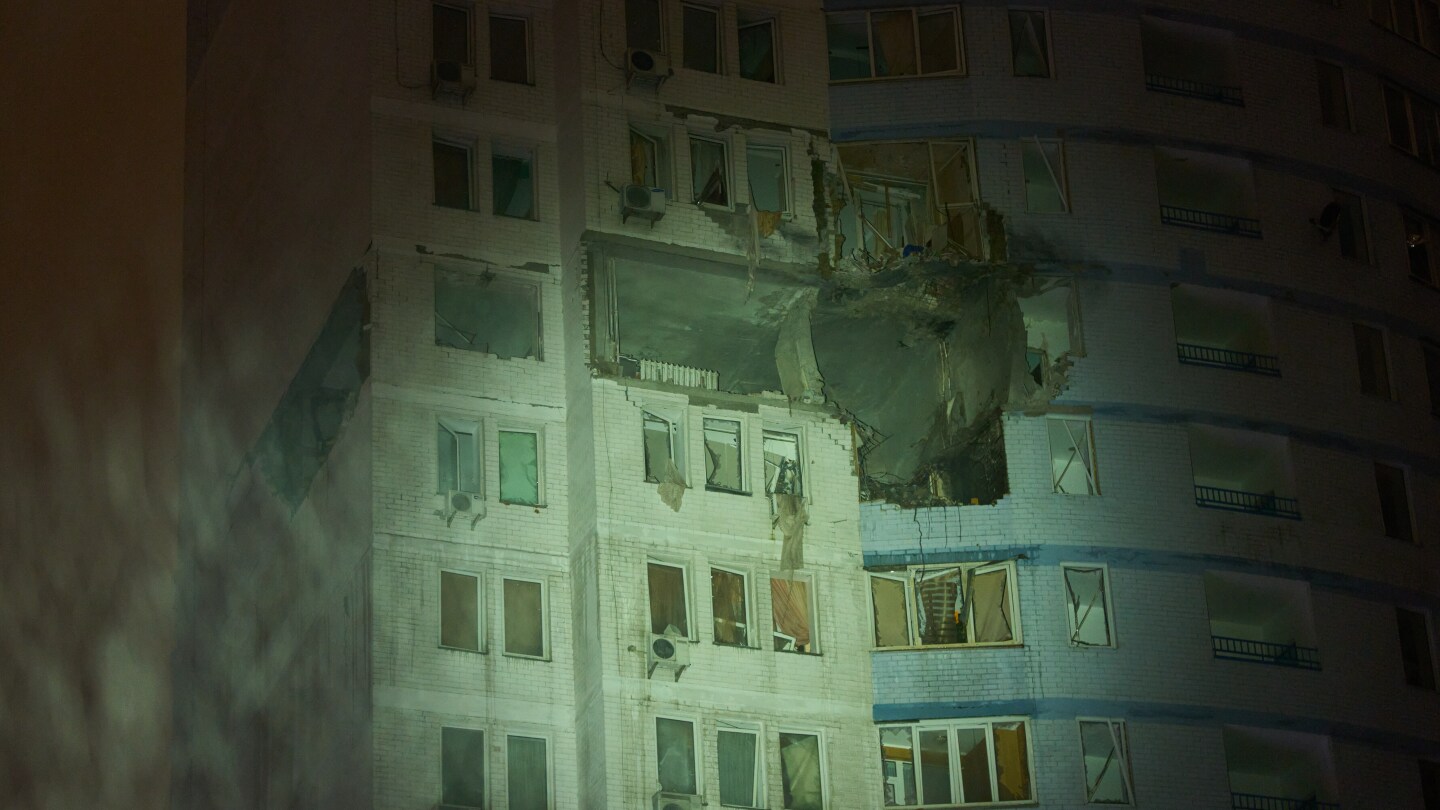
The attack comes amid a particularly intense phase of the nearly four-year conflict. Just one day earlier, Russia bombarded Ukraine with hundreds of drones and dozens of missiles, killing at least four people in Kyiv and causing widespread power outages across the country. The Russian barrage included the deployment of a powerful hypersonic Oreshnik missile—only the second time such a weapon has been used in the conflict.
Energy infrastructure has become a central target for both sides in recent months. Ukraine’s strategy of targeting Russian oil facilities aims to deplete Moscow’s export revenue that funds its military operations. Russia, meanwhile, has methodically attacked Ukraine’s power grid, leaving millions without heat, electricity and running water during the cold winter months.
“These attacks have resulted in significant civilian casualties and deprived millions of Ukrainians of essential services, including electricity, heating and water at a time of acute humanitarian need,” said Stéphane Dujarric, spokesman for the U.N. Secretary-General, referring to Friday’s Russian assault.
The timing of Russia’s intensified bombardment appears significant, coming shortly after reports of progress in talks between Ukraine and its NATO allies about future security arrangements. The use of the nuclear-capable Oreshnik missile, which struck western Ukraine, is widely interpreted as a warning to Kyiv’s Western supporters.
Ukrainian Prime Minister Yulia Svyrydenko addressed the power situation on Saturday, promising full restoration of heat supply in Kyiv by day’s end. Areas on the right bank of the Dnieper River are gradually shifting from emergency blackouts to scheduled outages, while the left bank—where Russian attacks concentrated—faces more extensive damage and complex repairs.
Russia’s Defense Ministry confirmed its forces targeted Ukrainian energy facilities and fuel depots using aviation, drones, missiles, and artillery. According to Ukraine’s air force, Russia launched 121 drones and an Iskander-M ballistic missile overnight, with Ukrainian defenses successfully intercepting 94 drones.
The Russian military also claimed to have neutralized 59 Ukrainian drones over Russian territory and occupied Crimea during the same period.
Beyond the Volgograd oil depot strike, Ukraine’s military reported hitting other strategic targets, including a drone storage facility belonging to Russia’s 19th Motor Rifle Division in Zaporizhzhia, southern Ukraine, and a drone command and control center near Pokrovsk in the east.
The exchange of strikes highlights the war’s evolution into a conflict of attrition, with both sides targeting critical infrastructure. For Ukraine, disrupting Russia’s lucrative oil export business represents a strategic priority to undermine Moscow’s war financing. For Russia, attacking civilian energy infrastructure serves both tactical and psychological purposes, testing Ukrainian resilience during the harsh winter months.
As the conflict approaches its fourth year with no resolution in sight, these infrastructure attacks increasingly impact civilian populations on both sides, raising humanitarian concerns and complicating any potential peace negotiations.
Fact Checker
Verify the accuracy of this article using The Disinformation Commission analysis and real-time sources.

13 Comments
This is a complex and rapidly evolving situation. The use of advanced weaponry like hypersonic missiles and drones by both Ukraine and Russia is troubling. I hope that cooler heads can prevail and that a diplomatic solution can be found to end the hostilities.
It’s troubling to see the energy infrastructure of both countries becoming targets in this conflict. Disrupting oil and gas supplies could have far-reaching economic and humanitarian consequences. I hope the warring parties can find a way to de-escalate and negotiate a peaceful resolution.
The use of hypersonic missiles by Russia is concerning, as they are extremely difficult to defend against. However, Ukraine’s ability to strike back with drones demonstrates their determination and resourcefulness. This is a complex, multi-faceted conflict.
I agree, the advanced weaponry on both sides raises the stakes. It’s crucial that all sides prioritize de-escalation and a diplomatic solution, if possible, to avoid further civilian suffering.
Interesting turn of events – the Ukrainians hitting back at Russian energy infrastructure. This seems like a risky tactic, but may be an effective way to disrupt Russia’s war machine. I wonder what the long-term implications could be?
You raise a good point. Targeting energy facilities could have significant economic and humanitarian consequences. This conflict appears to be escalating in concerning ways.
The use of drones by Ukraine to attack Russian targets shows their growing military capabilities. However, the deployment of hypersonic missiles by Russia is also concerning, as they are difficult to defend against. This conflict appears to be escalating on multiple fronts.
I agree, the continued escalation of military technology and tactics on both sides is extremely worrying. Diplomatic solutions must be explored to end this conflict before it spirals further out of control.
The Ukrainian strike on the Russian oil depot is a bold and potentially risky move. While it demonstrates their military capabilities, it also raises concerns about further escalation and civilian impact. Ultimately, a lasting peace can only be achieved through negotiation and compromise, not through tit-for-tat attacks.
I agree completely. Continued escalation of the conflict, whether through advanced weapons or targeting of critical infrastructure, is only likely to prolong the suffering of the people caught in the middle. Diplomacy and de-escalation should be the priority.
While the oil depot strike is a tactical victory for Ukraine, the broader implications could be quite serious. Damaging Russian energy infrastructure may provoke harsh retaliation, putting civilians at greater risk. This conflict needs to be resolved through peaceful negotiation, not tit-for-tat attacks.
The Ukrainian drone strike on the Russian oil depot is a significant development, demonstrating their ability to reach deep into Russian territory. However, Russia’s use of hypersonic missiles is also a concerning escalation. This conflict appears to be intensifying on multiple fronts.
You’re right, the escalation of military technology and tactics by both sides is alarming. Protecting civilian lives and infrastructure should be the top priority as this conflict continues.