


Listen to the article
Ukraine Shot Down Record 33,000 Russian Drones in March as Aerial Warfare Intensifies
Ukrainian forces intercepted more than 33,000 Russian drones of various types in March, setting a monthly record since Russia’s full-scale invasion began over four years ago, Ukraine’s Defense Minister Mykhailo Fedorov reported Monday.
This milestone comes as Ukraine continues to enhance its drone capabilities on both defensive and offensive fronts. The country has scaled up production of interceptor drones and established a new command within its air force to bolster aerial defense systems.
Meanwhile, Ukrainian forces struck a Russian oil refinery in the Black Sea port of Tuapse for the third time this month, causing significant damage and prompting local evacuations. Video released by Krasnodar regional Governor Veniamin Kondratyev showed massive plumes of black smoke rising from the facility and boiling oil products spilling onto adjacent streets.
Ukrainian officials stated the previous two strikes on the same facility this month destroyed 24 oil storage tanks and damaged four others. Russian President Vladimir Putin expressed concern about potential “environmental consequences” from these attacks, according to Russian news agency Interfax.
The intensifying drone warfare reflects Ukraine’s growing technological prowess in this domain. Since the war began, Ukraine has more than doubled its deep-strike capabilities, according to the Defense Ministry. In February 2022, Ukrainian forces could hit targets approximately 630 kilometers (400 miles) away. Today, they can strike military objectives at distances of about 1,750 kilometers (1,100 miles).
This extended range has allowed Ukraine to target critical Russian infrastructure, particularly oil installations that provide crucial revenue for Moscow’s war effort and manufacturing plants supplying Russian armed forces.
Ukraine’s domestically developed drone technology has become essential in countering Russia’s larger military. These systems have garnered international attention, with Ukrainian officials noting that Middle Eastern and Gulf countries are now seeking Ukrainian interceptor drones amid regional conflicts involving Iran.
The aerial battlefield remains active on both sides. The Russian Defense Ministry claimed Tuesday that its air defenses intercepted 186 Ukrainian drones overnight over Russian regions, annexed Crimea, and the Black and Azov seas. In Russia’s Belgorod region, which borders Ukraine, a drone attack killed three people and wounded three others, according to regional Governor Vyacheslav Gladkov.
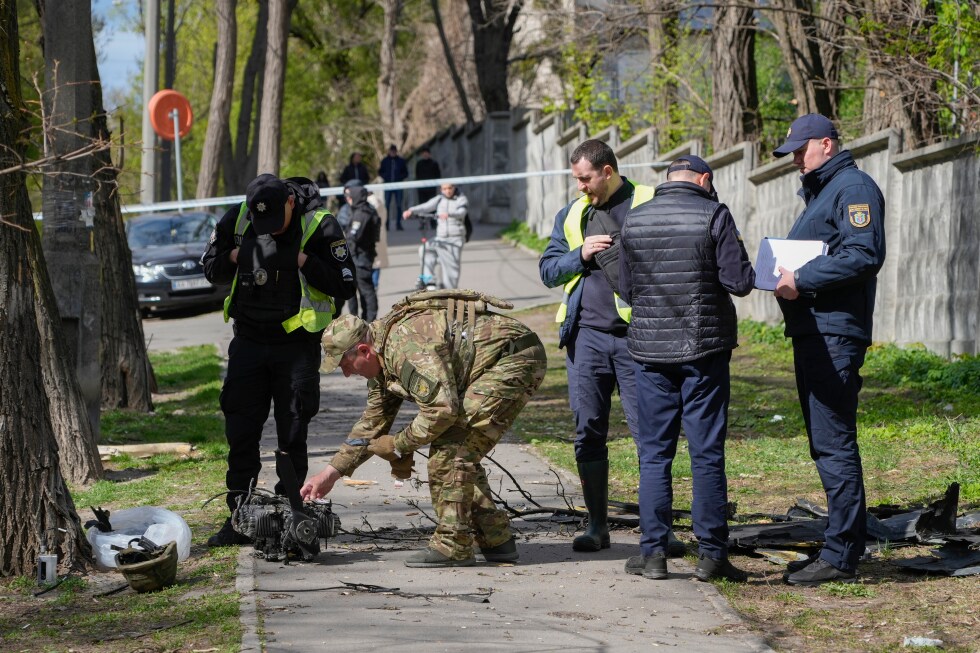
Russian drone attacks on Ukrainian territory also continue to claim civilian lives. Ukrainian authorities reported three civilians killed and five wounded in the latest strikes. Two people died in Chuhuiv in the northeastern Kharkiv region, while a 40-year-old man was killed and five others injured in Kryvyi Rih, the hometown of Ukrainian President Volodymyr Zelenskyy.
Kyiv experienced a rare daytime drone attack on Tuesday that wounded two people, according to Mayor Vitali Klitschko. Another Russian strike on Konotop in Ukraine’s northern Sumy region disrupted the city’s power and water supplies.
The escalation in drone warfare demonstrates how both sides are increasingly relying on unmanned systems as the conflict enters its fifth year. For Ukraine, with its smaller conventional forces, drones have become a critical asymmetric tool to counter Russia’s numerical advantages.
Military analysts note that Ukraine’s success in drone development represents one of the conflict’s most significant technological innovations. The country has rapidly transformed from a minimal drone capability at the war’s outset to becoming a formidable producer and tactical innovator in this domain—a transformation now drawing attention from militaries worldwide seeking to adapt similar technologies.
Fact Checker
Verify the accuracy of this article using The Disinformation Commission analysis and real-time sources.

18 Comments
Wow, that’s an impressive feat by the Ukrainian forces. Intercepting over 33,000 Russian drones in a single month shows their commitment to defending their airspace and reducing the enemy’s aerial capabilities.
Agreed. The continued development of drone interception and air defense systems is critical for Ukraine’s military strategy. It’s heartening to see their efforts paying off.
The strikes on the Russian oil refinery in Tuapse are also noteworthy, as they show Ukraine’s ability to project force and target critical infrastructure deep within Russian territory. This could have broader strategic and environmental implications that will need to be closely monitored.
You raise a valid point. These attacks on Russian energy facilities represent a significant escalation and could prompt a strong response from Moscow. The environmental consequences are also concerning and will need to be carefully assessed and mitigated.
The strikes on the Russian oil refinery in Tuapse are also noteworthy. Disrupting the enemy’s energy infrastructure is an important part of Ukraine’s broader campaign to weaken Russia’s military capabilities.
Absolutely. These targeted attacks demonstrate Ukraine’s ability to project force and hit strategic targets, even deep inside Russian territory. It’s a testament to their growing military prowess.
The strikes on the Russian oil refinery in Tuapse are also noteworthy, as they show Ukraine’s ability to project force and target critical infrastructure deep within Russian territory. This could have broader strategic implications.
You’re right. These attacks on Russian energy facilities are a clear escalation and could prompt a strong response from Moscow. The environmental consequences are also concerning and bear close monitoring.
The escalating aerial warfare between Ukraine and Russia is a concerning development, but it’s heartening to see Ukraine’s defensive capabilities improving. Maintaining this momentum will be crucial in the months ahead.
Indeed. Ukraine’s ability to intercept and neutralize Russian drones at such a high rate is a significant achievement. It speaks to their growing military sophistication and technological prowess.
The ongoing aerial warfare between Ukraine and Russia is a concerning development, but it’s heartening to see Ukraine’s defensive capabilities improving. Maintaining this momentum will be crucial in the months ahead.
I agree. Ukraine’s ability to intercept and neutralize such a large number of Russian drones is a significant achievement and speaks to their growing military sophistication. It will be important to see how Russia adapts in response.
The sheer volume of drones that Ukraine has shot down is a testament to the determination and skill of their forces. It demonstrates the scale of Russia’s reliance on these unmanned aerial vehicles and the need for effective countermeasures.
Absolutely. Ukraine’s air defense systems are clearly becoming more adept at detecting and eliminating these drones, which are a key part of Russia’s military strategy. This is a significant development that could have broader implications for the conflict.
The sheer volume of drones that Ukraine has shot down is staggering. It demonstrates the scale of Russia’s reliance on these unmanned aerial vehicles and the determination of Ukrainian forces to counter this threat.
Absolutely. Ukraine’s air defense systems are clearly becoming more effective at detecting and eliminating these drones, which are a key part of Russia’s military strategy. This is a significant development in the conflict.
It will be interesting to see how Russia responds to these increasing Ukrainian drone and missile strikes. The environmental consequences of the refinery attack are also concerning and could have wider regional implications.
You raise a valid point. The environmental impact of these attacks is an important consideration that shouldn’t be overlooked. Careful monitoring and mitigation efforts will be crucial going forward.