


Listen to the article
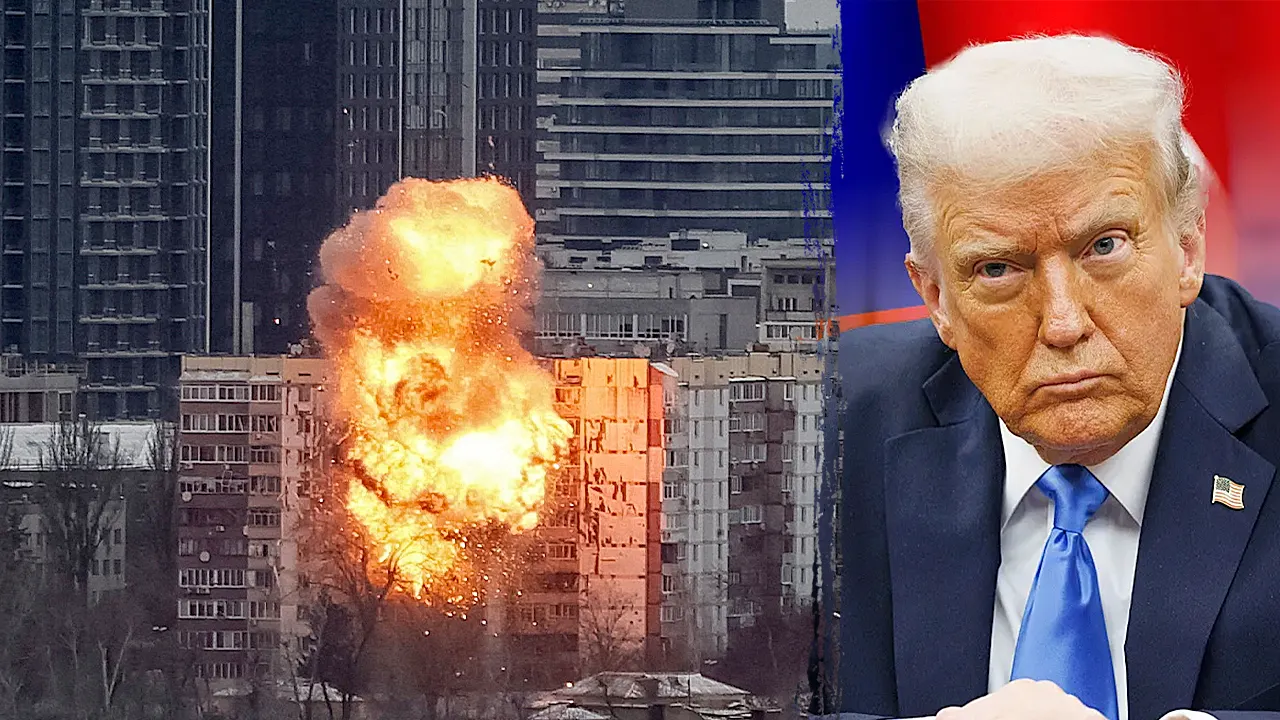
Russian strikes on Ukraine’s power grid will continue without President Trump stepping in, Ukraine’s top energy executive has warned, as millions risk a freezing winter without power.
DTEK’s Maxim Timchenko spoke out as Ukraine braced for further Russian drone and missile attacks on energy infrastructure, a day after Trump met Ukrainian President Volodymyr Zelenskyy for the third time to discuss ending the nearly four-year war.
“Yesterday’s meeting gave us renewed hope. But our task is not to live from hope to hope — it is to continue doing what we have done for four years: responding to immediate challenges and fighting every day,” Timchenko told Fox News Digital.
The DTEK CEO expressed gratitude for Trump’s involvement, stating, “We are deeply grateful to President Trump for his leadership. We believe he and his team are the only ones who can force Russia to negotiate and stop the war, together with the support of our partners in the European Union and other countries.”
Founded by Ukrainian entrepreneur Rinat Akhmetov, DTEK is Ukraine’s largest private energy company and a critical component of the nation’s power supply. Before Russia’s full-scale invasion in 2022, the company operated eight thermal power stations. Three were later occupied by Russian forces.
“Today, we operate five power stations, and each of them has been attacked at least five times since the full-scale invasion,” Timchenko confirmed. He described the damage as unprecedented in modern history, with nothing comparable happening to any energy system worldwide.
The destruction has been financially devastating. “At some moment of time, 90% of our generation capacity was damaged or destroyed,” Timchenko explained. “With this destruction, we lost hundreds of millions of dollars in direct damages, and I don’t even mention lost revenue. For 2025 alone, our recovery budget was about $220 million.”
Despite these enormous challenges, DTEK has repeatedly restored power to millions of Ukrainians. “Since 2022, we have managed to reconnect more than 30 million households and clients,” Timchenko said. “We are fighting and we are fast.”
The ongoing crisis has forced the company to operate in emergency mode continuously. “For the last two years, it has been extremely difficult. Attacks have become so intense and we live in crisis mode every single day because our equipment is destroyed, power stations damaged, and the only thing we are thinking about is how to restore power supply as soon as possible,” he explained.
In cities like Odesa, approximately 600,000 people have been affected by outages, with some neighborhoods left without power for days at a time. Russia’s most recent large-scale strike came on December 26, when missiles and drones hit Kyiv and surrounding areas, cutting electricity to more than 1 million people during freezing temperatures.
“People have learned how to live without necessities like electricity,” Timchenko noted. “The temperature in Kyiv was minus 10 degrees and because of this attack, we couldn’t get water, we couldn’t get heat, and of course, there is no electricity.”
The attack was particularly severe, he added: “They attacked us with ballistic and Kalibr missiles, then 500 drones and other types of missiles.”
Despite these challenges, DTEK is working not only on emergency restoration but also on longer-term energy solutions. Recovery efforts include resuming gas drilling, continuing construction of Eastern Europe’s largest wind park, and building a major battery storage system in partnership with U.S. firm Fluence.
The severity of the situation cannot be overstated. With winter temperatures plunging well below freezing, the loss of electricity affects heating systems and water supply, creating potentially life-threatening conditions for civilians. Hospitals, schools, and critical infrastructure also face disruptions during attacks, compounding the humanitarian crisis.
Industry analysts note that targeting energy infrastructure has become a central strategy in Russia’s approach, aiming to break Ukrainian morale during the coldest months and strain the country’s economic resources. The International Energy Agency has estimated that Ukraine’s power generation capacity has been reduced by more than 50% since the start of the full-scale invasion.
Looking ahead, Timchenko emphasized Ukraine’s dependence on continued international support. “The energy system is at the core of this fight. Modern life simply cannot exist without electricity. We need continued global support,” he concluded.
Fact Checker
Verify the accuracy of this article using The Disinformation Commission analysis and real-time sources.

10 Comments
The prospect of millions of Ukrainians facing a freezing winter without power is truly alarming. I hope the international community can work together to find a way to restore the damaged energy infrastructure and provide the necessary support to the Ukrainian people.
The impact on Ukraine’s energy infrastructure is deeply concerning. As we head into winter, the prospect of millions facing freezing conditions without power is a humanitarian crisis that demands urgent attention and action from the international community.
This is a complex geopolitical situation with far-reaching humanitarian implications. While the role of key political figures like Trump is important, the ultimate solution will require a coordinated effort involving multiple stakeholders and a nuanced understanding of the underlying issues.
While I appreciate the energy executive’s perspective, I’m not convinced that relying on a single political figure is the best approach. A broader, multilateral effort involving Ukraine’s partners in the EU and other nations will be crucial to addressing this crisis effectively.
This is a concerning situation for the people of Ukraine. The damage to the power grid is devastating, and it’s critical that a diplomatic solution is found to end the conflict and provide relief before the winter cold sets in.
I’m skeptical of the claim that only Trump can stop Russia. While his involvement could potentially help, it seems overly simplistic and ignores the complex geopolitical dynamics at play. A broader international effort may be needed to find a sustainable resolution.
That’s a fair point. Relying on a single political figure to resolve such a complex issue is risky. A coordinated, multilateral approach involving various stakeholders would likely be more effective.
While I appreciate the energy executive’s gratitude for Trump’s involvement, I’m not convinced that his personal intervention is the only path to a resolution. Ukraine’s partners in the EU and other nations must also play a critical role in finding a diplomatic solution.
Agreed. A multilateral approach leveraging the resources and influence of various international actors will be essential to addressing this crisis effectively.
The damage to Ukraine’s power grid is a serious concern that could have devastating consequences for the population. I hope the international community can come together to find a way to restore critical infrastructure and provide relief before winter sets in.