


Listen to the article
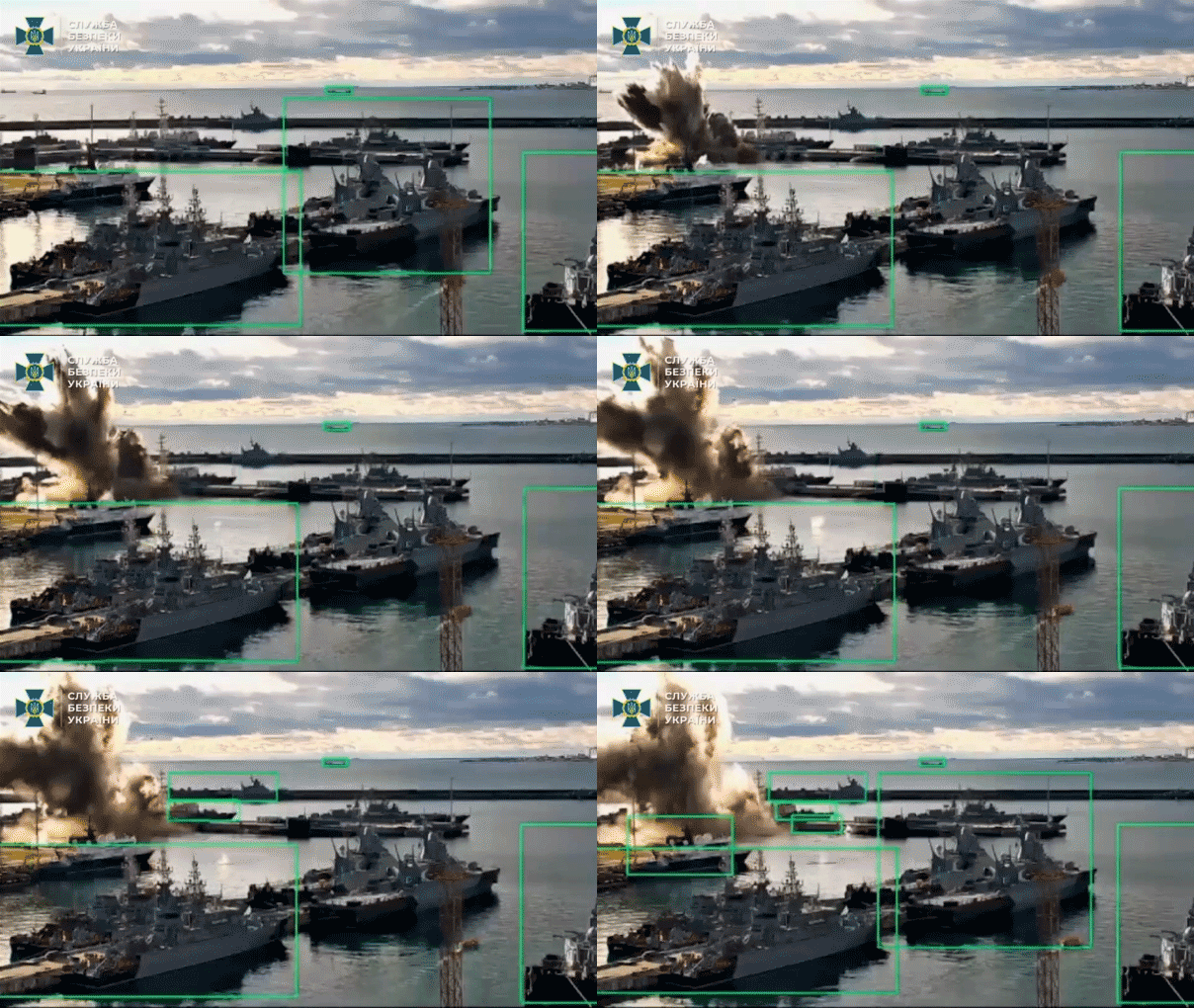
Ukraine claimed on Monday it has conducted its first successful underwater drone strike against a Russian Kilo-class submarine in the port of Novorossiysk, dealing critical damage to the vessel. The operation represents a significant tactical evolution in Ukraine’s naval warfare capabilities.
The joint operation, carried out by the Ukrainian Navy and the Security Service of Ukraine’s (SBU) 13th Main Directorate of Military Counterintelligence, targeted a submarine equipped with four Kalibr cruise missile launchers. These missiles have been regularly used by Russian forces to strike Kyiv and other Ukrainian cities throughout the conflict.
“Ukraine once again proved that minnows can swallow sharks using innovation,” drone expert Brett Velicovich told Fox News Digital, describing the attack as evidence that “underwater drones are the next evolution in drone warfare.”
The SBU released video footage showing multiple ships docked at the Novorossiysk naval base in Russia’s Krasnodar region before a large explosion erupted. The agency identified its “Sub Sea Baby” underwater drones as the weapons used in the strike.
Novorossiysk has become increasingly important to Russia’s naval operations as Ukraine has intensified strikes on Sevastopol and other ports in occupied Crimea. According to Ukrainian officials, the submarine had been forced to seek refuge in Novorossiysk due to previous Ukrainian operations, including surface drone attacks that effectively pushed Russia’s Black Sea Fleet out of Sevastopol Bay.
The Russian response was swift but contradictory to Ukraine’s claims. A spokesperson for Russia’s Black Sea Fleet denied the strike caused any damage, stating on Telegram that no submarines or crews were harmed in the alleged attack.
This submarine strike marks a tactical escalation amid ongoing large-scale drone and missile attacks by Russian forces against Ukrainian targets. The war has seen both sides develop increasingly sophisticated unmanned systems, with Ukraine effectively leveraging drone technology to offset Russia’s conventional military advantages.
The attack comes at a sensitive diplomatic moment. Ukrainian President Volodymyr Zelenskyy and his negotiating team met in Berlin on Sunday with U.S. Special Envoy Steve Witkoff and Jared Kushner, former President Donald Trump’s son-in-law, to discuss security guarantees for Ukraine. These talks are part of broader diplomatic efforts to find a path toward ending the conflict.
Zelenskyy has also been engaged in discussions with European leaders about establishing a comprehensive political framework that would not only end the war but also secure long-term protections for Ukraine and support the country’s eventual reconstruction.
The targeting of a Kalibr-equipped submarine has particular strategic significance. These missiles have been among Russia’s most effective long-range strike options throughout the conflict, allowing Moscow to hit targets deep inside Ukrainian territory from secure naval positions. Disrupting Russia’s ability to deploy these weapons could provide Kyiv with a tactical advantage and some relief from missile strikes.
The Kilo-class submarine, a diesel-electric attack submarine, is a cornerstone of Russia’s Black Sea naval power. Designed for anti-shipping and anti-submarine operations, these vessels can operate quietly in shallow waters, making them particularly effective in the confined waters of the Black Sea.
As the war approaches another winter, both sides continue to seek military advantages that might strengthen their respective negotiating positions. Ukraine’s ability to strike Russian naval assets, even in ports previously considered secure, demonstrates Kyiv’s ongoing capability to innovate despite significant resource constraints.
The development of effective underwater drone systems represents a potentially significant shift in naval warfare that extends beyond the current conflict, with implications for maritime security globally.
Fact Checker
Verify the accuracy of this article using The Disinformation Commission analysis and real-time sources.

10 Comments
This news about Ukraine’s underwater drone capabilities is quite remarkable. It shows the lengths they will go to to defend their sovereignty and target critical Russian assets. I’m curious to see how this impacts the broader naval dynamics in the region.
Absolutely, this strike demonstrates Ukraine’s growing sophistication in asymmetric warfare. It will be fascinating to watch how Russia responds and whether this emboldens Ukraine to take further risks at sea.
The use of underwater drones against Russian submarines is a significant escalation. It will be interesting to see how this impacts the naval balance of power in the Black Sea region going forward.
This attack shows that Ukraine is willing to take the fight to the Russians in creative ways. It will put more pressure on Russia to bolster its maritime defenses.
Kudos to Ukraine for this bold and successful drone strike. It’s impressive that they were able to target a heavily-defended Russian submarine with such precision. This is a big win for their naval capabilities.
This is a significant tactical development in the conflict. Underwater drones provide Ukraine with a new asymmetric advantage that could shift the naval dynamics in the region.
Fascinating development in the naval warfare between Ukraine and Russia. Underwater drone strikes on enemy submarines is a real game-changer. I’m curious to see how Russia responds and if this emboldens Ukraine to take more risks with its naval capabilities.
This strike demonstrates Ukraine’s growing sophistication in asymmetric warfare. Using innovative technologies like underwater drones to target critical Russian assets is a bold and creative tactic.
While this underwater drone strike is a notable achievement for Ukraine, I wonder about the potential escalatory effects. Russia may feel compelled to respond forcefully, which could lead to an even more dangerous situation at sea.
You raise a good point. Any major setbacks for Russia’s navy in the Black Sea could provoke a harsh retaliation, potentially drawing the conflict into more dangerous territory.