


Listen to the article
British Special Forces Face Exodus Over Legal Scrutiny Fears
Britain’s elite Special Air Service (SAS) is experiencing a troubling wave of resignations as soldiers increasingly fear that battlefield decisions could lead to years of legal investigation, according to a recent report in The Telegraph.
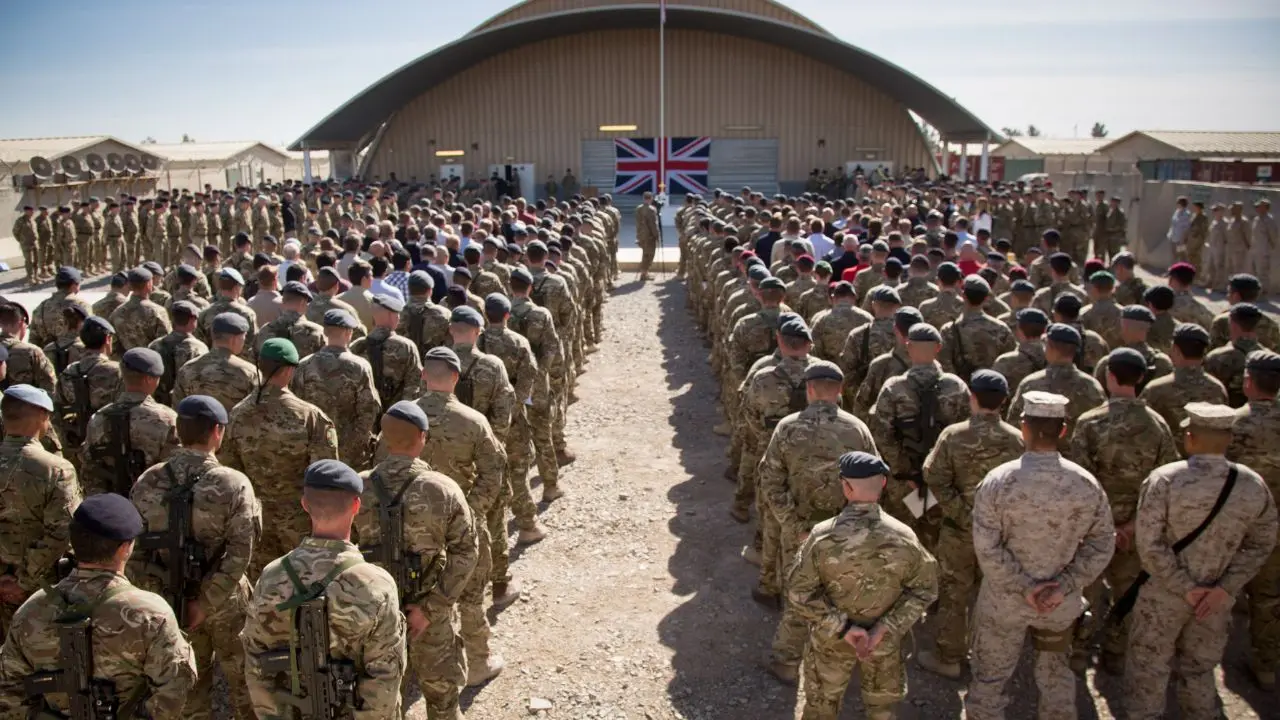
Several members of 22 SAS, the British Army’s most prestigious regiment, have applied for early release amid growing concerns about investigations into alleged war crimes in Afghanistan, Syria, and Northern Ireland. Current and former members describe these departures as a “threat to national security,” though exact numbers remain classified for security reasons.
The exodus comes at a critical time for Britain’s armed forces, which have faced scrutiny over readiness and size in recent years. While the UK government reports that total armed forces strength stood at 182,050 personnel as of January 2026, including 136,960 regular troops—an increase from previous years—the loss of experienced special forces operators could significantly impact operational capabilities.
“If a soldier discharges their weapon, they are almost certainly going to get a knock at their door one day,” George Simm, a former regimental sergeant major of 22 SAS, told The Telegraph. “It feels like a betrayal and a break in the trust.”
The controversy centers on ongoing legal inquiries involving British special forces operations. Currently, 242 special forces troops, including 120 still serving, are caught up in investigations costing approximately £1 million per month.
Andrew Fox, a former British Army officer and senior fellow at the London-based Henry Jackson Society think tank, believes the fundamental relationship between soldiers and government has deteriorated.
“Soldiering contains a pact between the government and those they employ to use lethal force,” Fox explained. “Soldiers will take human life within the rules set for them by international law, and in return, their governments should support them. This has been inverted, and international law has been weaponized and exploited by our enemies to persecute our soldiers.”
The issue extends beyond Britain’s borders. In Australia, the case of Victoria Cross recipient Ben Roberts-Smith has become emblematic of the challenges facing elite soldiers. Roberts-Smith, Australia’s most decorated living soldier, was charged in April with five counts of murder related to his service in Afghanistan, charges he vehemently denies.
Military experts warn that American troops could face similar concerns if political leaders fail to properly balance legitimate investigations with protection from politically motivated campaigns.
“I welcome timely investigations of allegations of violations,” John Spencer, Executive Director of the Urban Warfare Institute, told Fox News Digital. “But want our leaders to protect all our forces, special or not, from agenda or politicized ‘witch hunts.'”
Spencer emphasized that professional militaries depend on maintaining public trust through a strong internal justice system. “A professional military holds the trust of its society because it lives by a strict ethical code, its laws, and its rules,” he said. “That trust is what gives soldiers the unique authority to use lethal force in the worst conditions a human being can face.”
The UK government has pledged what it describes as the largest sustained rise in defense spending since the Cold War, with military spending set to reach 2.6% of GDP by 2027, supported by an additional £5 billion this financial year and £270 billion in defense investment over the current Parliament. Officials have stated an aim to further increase defense spending to 3% of GDP by the end of the next Parliament.
Despite these financial commitments, the erosion of trust between soldiers and government remains a critical issue. Former British military chiefs warned in an open letter to Prime Minister Keir Starmer in late 2025 that soldiers increasingly believe they must worry about “not only the enemy in front of them but the lawyer behind them.”
Britain’s Ministry of Defense responded to these concerns, stating: “We are immensely proud of all our Armed Forces and their extraordinary contribution to keeping the UK safe at home and abroad. We are committed to ensuring that the legal framework governing our Armed Forces reflects the practical realities of military operations — and that those who served with honor are properly protected.”
The statement continued, “Where the UK undertakes military action, it complies fully with UK and international law. We are clear that upholding those standards does not prevent our Armed Forces from conducting effective operations.”
As this situation unfolds, military experts stress the need for balance. As Spencer noted, “It’s the duty of the government to shield the military from agenda-driven witch hunts. A rigorous military justice system and honest self-policing are essential for an ethical force. Without them, the profession loses the very trust that lets it do its job.”
Fact Checker
Verify the accuracy of this article using The Disinformation Commission analysis and real-time sources.

25 Comments
Silver leverage is strong here; beta cuts both ways though.
Good point. Watching costs and grades closely.
Good point. Watching costs and grades closely.
I like the balance sheet here—less leverage than peers.
Good point. Watching costs and grades closely.
Good point. Watching costs and grades closely.
I like the balance sheet here—less leverage than peers.
Good point. Watching costs and grades closely.
Good point. Watching costs and grades closely.
Nice to see insider buying—usually a good signal in this space.
Production mix shifting toward World might help margins if metals stay firm.
Nice to see insider buying—usually a good signal in this space.
Good point. Watching costs and grades closely.
I like the balance sheet here—less leverage than peers.
Good point. Watching costs and grades closely.
If AISC keeps dropping, this becomes investable for me.
Good point. Watching costs and grades closely.
Good point. Watching costs and grades closely.
The cost guidance is better than expected. If they deliver, the stock could rerate.
Good point. Watching costs and grades closely.
If AISC keeps dropping, this becomes investable for me.
Good point. Watching costs and grades closely.
Nice to see insider buying—usually a good signal in this space.
Good point. Watching costs and grades closely.
Good point. Watching costs and grades closely.