


Listen to the article
New Zealand Prime Minister Christopher Luxon secured his leadership position Tuesday after calling for a confidence vote among his National Party colleagues, seeking to quell mounting speculation about his political future.
The vote, conducted behind closed doors during a regular party caucus meeting, came after weeks of media reports suggesting Luxon’s position might be in jeopardy following disappointing polling numbers for both him and his center-right National Party.
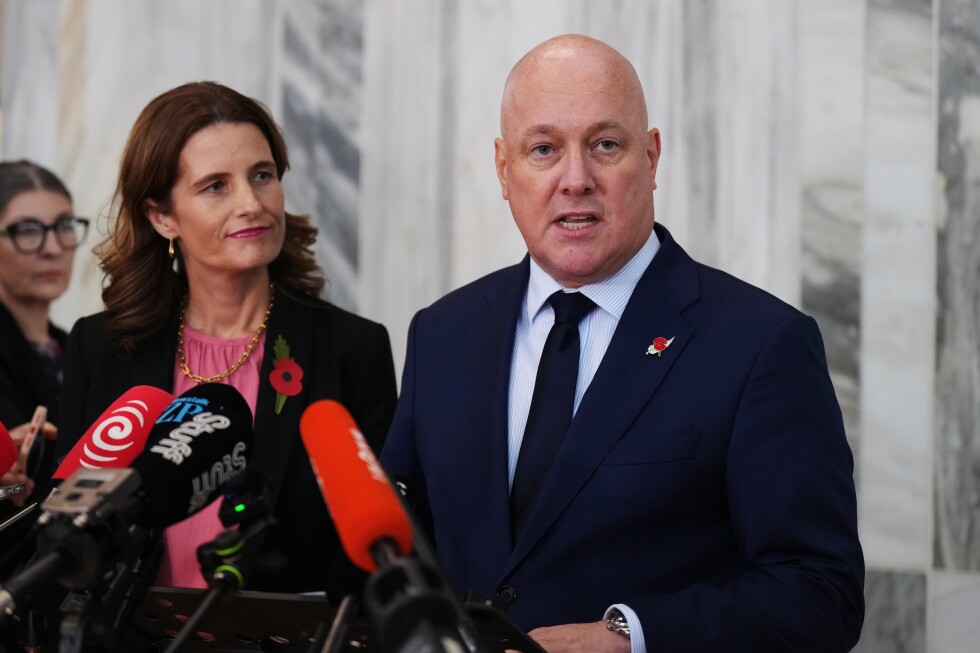
“The last week, there has been intense media speculation about my leadership,” Luxon told reporters in a brief statement after the meeting. “I called for a confidence vote to put that media speculation to rest.”
While declining to take questions from journalists, Luxon stated his party caucus had “answered clearly and decisively” and “backed my leadership.” He did not specify whether the vote was unanimous, and Deputy Party Leader Nicola Willis later clarified it was conducted by secret ballot with only scrutineers knowing the final tally.
The leadership challenge comes at a critical time for New Zealand’s governing coalition, with national elections scheduled for November 7. Recent opinion polls have shown troubling signs for the National-led government, with one prominent 1News-Verian poll indicating that if an election were held immediately, the right-wing bloc led by National could fall behind the opposition left-wing bloc led by the Labour Party.
The National Party has led New Zealand in a right-wing coalition government since winning the 2023 general election. Luxon, who transitioned from a successful corporate career as an airline executive to politics in 2020, has led the party since 2021.
Political analysts note that leadership challenges against sitting prime ministers are relatively rare in New Zealand politics. While two recent prime ministers – National’s John Key and Labour’s Jacinda Ardern – both stepped down voluntarily during their terms, forced removals are uncommon in the country’s political landscape.
Luxon’s leadership style has faced increasing scrutiny as his government tackles economic challenges including persistent inflation, housing affordability issues, and slow economic growth. His administration has pursued a more conservative policy agenda than the previous Labour government, focusing on tax cuts, crime reduction, and limiting government spending.
The Prime Minister blamed news outlets for reports of unrest within his party’s ranks, taking a defensive stance toward media inquiries. “If the media want to keep focusing on speculation and rumor, I am not going to engage,” he stated firmly before departing from the press conference.
Political commentators suggest that while Luxon may have secured immediate support from his caucus, the underlying issues that prompted the confidence vote remain. With six months until the election, the National Party faces significant challenges in rebuilding public confidence and addressing policy concerns that have contributed to its polling decline.
New Zealand’s political landscape has been particularly volatile in recent years, with the country navigating post-pandemic economic recovery and significant social policy shifts. The current coalition government, comprising National, the libertarian ACT Party, and the populist New Zealand First, represents a rightward shift after six years of Labour-led progressive governance.
For Luxon, a former CEO of Air New Zealand who entered Parliament in 2020, the leadership challenge marks perhaps the most significant test of his relatively short political career. Political observers note that his corporate leadership style has sometimes struggled to translate to the rough-and-tumble world of parliamentary politics.
With the election campaign season approaching, Luxon will need to demonstrate that he can reverse his party’s fortunes while addressing the substantive policy concerns that have contributed to the government’s declining popularity among voters.
Fact Checker
Verify the accuracy of this article using The Disinformation Commission analysis and real-time sources.

8 Comments
I wonder how Luxon’s leadership will impact the regulatory environment for the mining and energy industries in New Zealand. Stability and predictability are key for these capital-intensive sectors.
Good point. Investors in mining, metals, and energy will be looking for policy clarity and a favorable business climate from Luxon’s government.
Interesting development in New Zealand politics. It will be important to see how Luxon and the National Party navigate the upcoming election and address the challenges facing the country.
Agreed. Maintaining party unity will be crucial for Luxon, especially with the upcoming election.
The mining and commodities sectors will be watching this closely, as New Zealand’s policies can have significant impacts on industries like gold, silver, copper, and lithium. Curious to see Luxon’s vision for these key industries.
Absolutely. The leadership vote provides a chance for Luxon to outline his agenda for the mining and resources sectors.
The National Party’s support for the mining and commodities sectors will be an important factor in the upcoming election. Voters and industry stakeholders will be closely watching Luxon’s positions on these issues.
Glad to see Luxon secure his position, but the party will need to address the poor polling numbers to have a strong chance in the upcoming election. Transparency and clear communication with voters will be crucial.