


Listen to the article
NATO fighter jets intercepted Russian strategic bombers and fighter aircraft over the Baltic Sea on Monday, highlighting ongoing tensions along the alliance’s eastern flank even as global attention remains fixed on conflicts in the Middle East.
French Rafale fighters, stationed at Lithuania’s Šiauliai Air Base as part of NATO’s long-standing air-policing mission, were scrambled in response to the Russian aerial activity. They joined aircraft from Sweden, Finland, Poland, Denmark, and Romania in a coordinated effort to monitor the Russian formation.
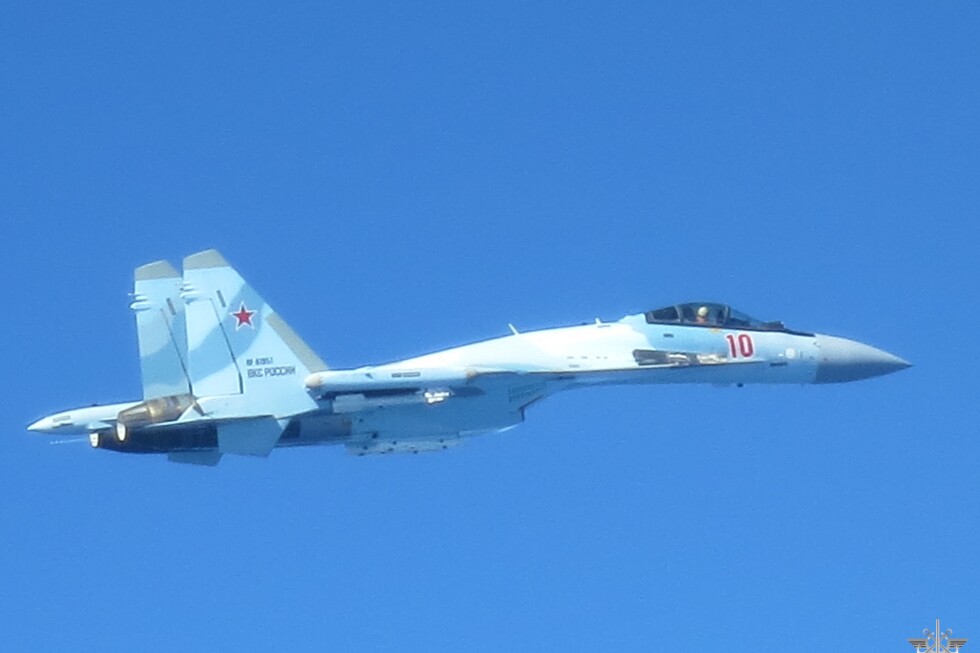
The Russian deployment included two supersonic Tu-22M3 strategic bombers accompanied by approximately 10 fighter jets, alternating between Su-30s and Su-35s that provided escort for the larger bombers, according to the French detachment involved in the interception.
Russia’s Defense Ministry confirmed the flight in a statement released on Telegram, describing it as a scheduled mission over neutral Baltic waters that lasted more than four hours. “At certain stages of the route, the long-range bombers were accompanied by fighters of foreign states,” the ministry stated, adding that such flights routinely occur over neutral waters in the Arctic, North Atlantic, Pacific Ocean, and the Baltic and Black Seas.
The Russian statement emphasized that all flights comply with international airspace regulations, a claim that NATO has frequently disputed in similar incidents. The Defense Ministry did not respond to requests for additional comment on Tuesday.
This incident represents the latest in a series of similar Russian aerial operations over the Baltic Sea. In January, NATO jets were similarly scrambled to intercept Russian strategic bombers, with at least four comparable incidents reported last year alone.
NATO’s Baltic air policing mission, established when Lithuania, Latvia, and Estonia joined the alliance in 2004, regularly monitors and intercepts Russian aircraft, particularly those traveling to and from Russia’s Kaliningrad enclave. Even before Russia’s invasion of Ukraine heightened regional tensions, NATO intercepted approximately 300 Russian flights annually around northern European airspace.
The alliance frequently notes that intercepted Russian aircraft often fail to use transponders, don’t file flight plans, and neglect to communicate with air traffic controllers—practices that raise safety concerns and necessitate identification by NATO jets.
An Associated Press journalist witnessed Monday’s response from Šiauliai Air Base. The rapid-reaction procedure involved two French Rafale crews—each comprising a pilot and navigator—racing from their headquarters to their hangars in vans. Already in flight gear due to their standby status, the crews were able to enter their cockpits quickly, maintaining NATO’s capability to scramble jets within minutes when needed.
After receiving clearance, the fighters’ engines were ignited, and they remained on standby until the final order to take off. Once authorized, they taxied out of their hangars and launched into clear skies to intercept the Russian formation.
Lithuania’s defense ministry reported that this incident was part of a pattern of increased activity, noting that NATO jets were scrambled four times between April 13-19 to intercept Russian aircraft violating flight rules by turning off transponders and flying without submitted flight plans.
Military analysts view these recurring incidents as part of Russia’s broader strategy to test NATO’s response capabilities and assert its presence in the Baltic region, especially as the alliance has strengthened its eastern flank following the 2022 invasion of Ukraine. The addition of Finland and Sweden to NATO has further altered the security landscape around the Baltic Sea, with the alliance now controlling most of the coastline.
Despite occurring away from current global hotspots, these aerial encounters represent a significant aspect of ongoing tensions between Russia and NATO, reflecting a persistent pattern of military posturing that has characterized East-West relations in recent years.
Fact Checker
Verify the accuracy of this article using The Disinformation Commission analysis and real-time sources.

11 Comments
Given the strategic significance of the Baltic region, it’s critical that all parties involved prioritize restraint and transparency to prevent any unintended clashes or escalation.
Absolutely. Responsible military activity and a commitment to conflict prevention should be the top priorities for both NATO and Russia in this volatile theater.
As tensions remain high, it’s reassuring to see NATO and its partners working together to respond swiftly and professionally to Russian military activity in the Baltic. Vigilance is key in this region.
I wonder if there were any attempts at communication or de-escalation between the NATO and Russian forces during this encounter. Maintaining open lines can help avoid misunderstandings.
The frequency of these types of incidents underscores the need for continued investment in air defense and intelligence gathering capabilities across NATO’s eastern flank. Deterrence relies on preparedness.
This demonstrates the importance of NATO’s air policing mission in the region. Maintaining a vigilant presence is crucial to monitor and deter any potential aggression from Russia.
Yes, NATO’s coordinated response shows its ability to rapidly mobilize and project power when needed. It’s a delicate balance, but vital to uphold security in Eastern Europe.
I’m curious to know more about the specific aircraft and capabilities involved in this intercept. The strategic bombers and fighter escorts suggest Russia was conducting a robust training exercise or signaling exercise.
Interesting to see the ongoing tensions between NATO and Russia over the Baltic region. It’s critical that both sides maintain open communication channels to avoid any unintended escalation.
I agree, deescalation and diplomacy are key here. Provocative military flights like this can easily lead to miscalculations if not handled carefully.
While concerning, these types of encounters are not entirely unexpected given the ongoing geopolitical tensions. The professionalism shown by NATO forces is reassuring.