


Listen to the article
Myanmar’s Military-Backed President Calls for Peace Talks Amid Ongoing Civil War
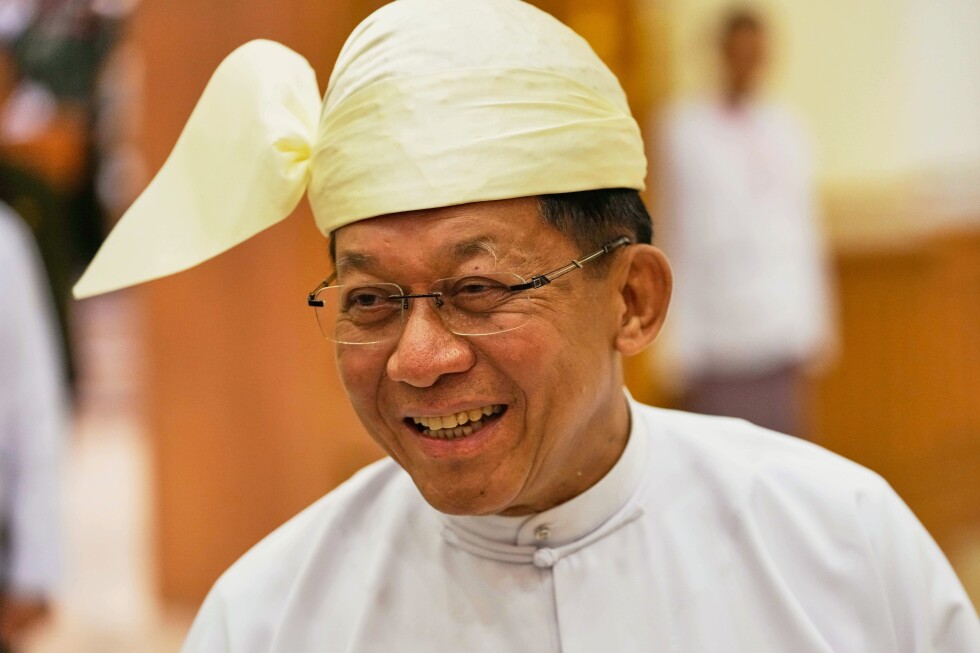
Myanmar’s newly appointed president and former military chief, Min Aung Hlaing, has invited armed resistance groups to fresh peace negotiations as part of his government’s “100-day program,” according to state-run newspapers on Tuesday. This marks his first such initiative since assuming the presidency earlier this month.
The call for dialogue came during a cabinet meeting in the capital Naypyitaw, where Min Aung Hlaing outlined priorities focusing on peace, stability, and development, the state newspaper Myanma Alinn reported. The president took office on April 10 following elections widely criticized by international observers as neither free nor fair, designed primarily to preserve the military’s control over the Southeast Asian nation.
Min Aung Hlaing previously led the 2021 military coup that overthrew the democratically elected government of Aung San Suu Kyi, plunging the country into a devastating civil war. The takeover intensified longstanding armed conflicts as pro-democracy activists joined forces with ethnic armed organizations that had been fighting for decades for greater autonomy.
According to Myanma Alinn, the president has set a deadline of July 31 for ethnic armed groups to participate in new peace talks. “Both NCA signatories and non-signatories are invited to participate in the peace process,” Min Aung Hlaing stated, referring to the Nationwide Ceasefire Agreements signed in 2015 and 2018. He extended the invitation to include the People’s Defense Force—guerrilla groups formed to resist military rule and restore democracy—encouraging them to “enter the legal fold” within the 100-day period.
Myanmar has 21 established ethnic armed organizations with histories of armed struggle. While ten had signed ceasefire agreements under previous governments, four resumed fighting following the 2021 military coup. None of these ceasefires has led to a comprehensive political settlement granting ethnic groups their desired autonomy in frontier regions.
The opposition National Unity Government quickly rejected the peace overture. “We all already understood that the military’s fake invitations are aimed at prolonging people’s subjugation under military rule,” said spokesperson Nay Phone Latt, adding that resistance forces would continue fighting until their goals are achieved.
Min Aung Hlaing’s peace initiative comes after the military regained momentum in the nationwide conflict in mid-2025. The army benefited from China-brokered ceasefires with major rebel groups and increased its ranks through a conscription law activated in early 2024. These developments allowed the military to reclaim territory from ethnic militias, including the Three Brotherhood Alliance, which had previously launched powerful offensives in northeastern Myanmar near the Chinese border and in western regions.
The Alliance, which includes the Ta’ang National Liberation Army, showed potential interest in dialogue when it congratulated Min Aung Hlaing on his presidency last Wednesday, expressing its readiness for peace talks.
This renewed call for negotiations represents another attempt in Myanmar’s decades-long cycle of ceasefires that have brought intermittent periods of relative peace but failed to resolve the underlying political disputes. The military regime’s 100-day program also encompasses social and economic measures and infrastructure development, though details remain sparse.
The peace proposal comes against a backdrop of continued humanitarian crisis, with millions displaced internally and across borders, widespread human rights violations, and an economy crippled by conflict and international sanctions against the junta. Regional neighbors and international observers remain concerned about the worsening situation in Myanmar, which threatens stability across Southeast Asia.
As Min Aung Hlaing transitions from junta leader to president, many analysts view this latest peace initiative as an attempt to legitimize his rule rather than a genuine effort to address the country’s deep-rooted political and ethnic divisions.
Fact Checker
Verify the accuracy of this article using The Disinformation Commission analysis and real-time sources.

8 Comments
Myanmar’s complex ethnic conflicts and the military’s entrenched position make a peaceful resolution extremely challenging. However, the suffering of the people demands that all sides make good-faith efforts to find a way forward through negotiation, not force.
While the invitation for talks is a step in the right direction, the military’s history of broken promises and violent suppression of dissent makes me skeptical about their willingness to make the necessary concessions for a lasting peace. The people of Myanmar deserve better.
I share your skepticism. The military’s track record provides little reason to trust their sincerity. Meaningful progress will require concrete actions, not just words, to build confidence and demonstrate a genuine commitment to inclusive, good-faith negotiations.
The invitation for peace talks is a positive step, but given the military’s history of broken promises and violent crackdowns, many will be skeptical about the sincerity of these overtures. Tangible confidence-building measures will be crucial.
I agree. The military’s credibility is severely damaged after the coup and subsequent abuses. Meaningful concessions and a genuine commitment to inclusive dialogue will be essential if they hope to make progress.
Interesting development. It remains to be seen if the new military-backed government can engage meaningfully with the diverse armed resistance groups and find a path to lasting peace. The civil war has inflicted immense suffering on the people of Myanmar.
Ultimately, sustainable peace in Myanmar will require a political settlement that addresses the long-standing grievances of ethnic minorities and respects democratic principles. The military’s track record provides little reason for optimism, but the stakes are too high to give up on the prospect of dialogue.
The announcement of peace talks is noteworthy, but I worry that the military’s true intent is to buy time and project an image of moderation, rather than a genuine commitment to a negotiated settlement. The people of Myanmar deserve much more than empty promises.