


Listen to the article
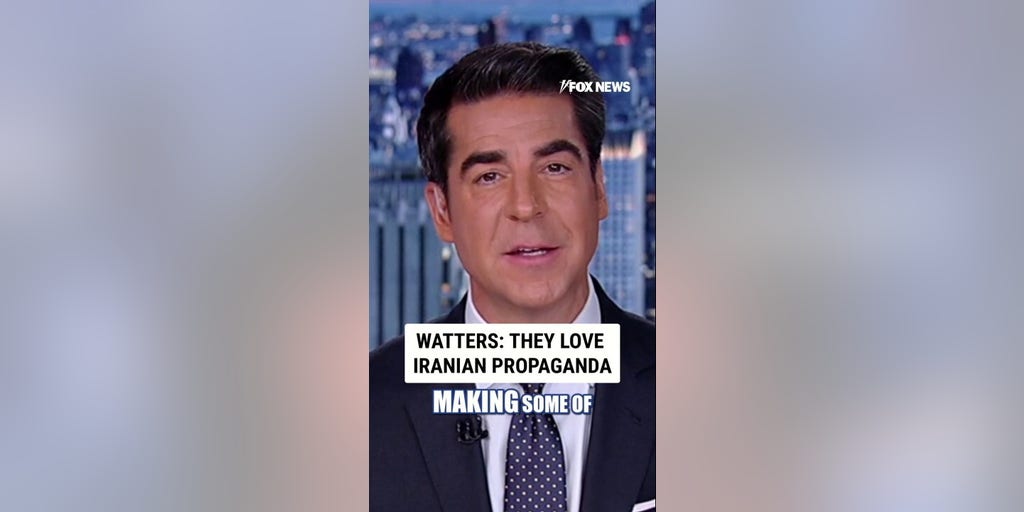
In a scathing critique delivered during a recent broadcast, Fox News host Jesse Watters accused mainstream media outlets of uncritically amplifying Iranian government messaging following Iran’s missile attack on Israel earlier this week.
Watters took aim at what he described as the media’s tendency to parrot Tehran’s narrative without sufficient scrutiny, pointing to coverage of the attack that occurred Tuesday when Iran launched approximately 180 missiles toward Israeli territory.
“When Iran attacked Israel this week, the media became Iran’s biggest cheerleader,” Watters stated during his segment. He highlighted several news reports that quoted Iranian officials claiming the missile barrage was “proportionate” and “concluded” — language that Watters argued gave legitimacy to Iran’s justifications for the attack.
The Fox News host’s criticism comes amid heightened tensions in the Middle East, with the missile attack marking a significant escalation in the ongoing conflict between Iran and Israel. The attack represented the first direct military assault from Iranian soil against Israel, raising fears of a wider regional war that could potentially draw in the United States and other allies.
Media coverage of complex geopolitical events often walks a fine line between reporting official statements and providing necessary context about their accuracy or reliability. Critics like Watters contend that some outlets have failed to apply appropriate skepticism to Iranian government claims, potentially misleading audiences about the nature and justification of the attack.
The attack itself was described by Israel and most Western governments as a severe violation of international norms, while Iran framed it as retaliation for previous Israeli military actions, including the assassination of Hamas leader Ismail Haniyeh in Tehran in July and recent strikes against Hezbollah in Lebanon.
Watters specifically targeted several major news organizations in his critique, suggesting they had effectively served as “publicists” for the Iranian regime by repeating official statements without sufficient contextual analysis or counterbalancing perspectives.
Media experts note that reporting on statements from government officials, even those from adversarial nations, is standard journalistic practice. However, the manner in which these statements are framed and contextualized significantly impacts how audiences interpret events.
The criticism reflects broader concerns about media coverage of international conflicts, where the pressure for rapid reporting can sometimes result in the uncritical transmission of government messaging. This challenge is particularly acute when covering closed societies like Iran, where independent verification of claims is difficult and access for foreign journalists is severely restricted.
The missile attack on Israel has created a precarious situation in the Middle East, with the Biden administration warning Iran against further escalation while also reportedly urging Israel to consider a measured response that would not trigger a full-scale regional war.
Watters’ comments also highlight the increasingly polarized media landscape in the United States, where coverage of foreign policy and international conflicts often splits along partisan lines. Conservative commentators frequently criticize mainstream outlets for what they perceive as insufficiently critical coverage of adversarial regimes, while these same outlets defend their reporting as balanced and factual.
The Iranian missile attack represents the latest chapter in decades of hostility between Iran and Israel. The two nations have engaged in a shadow war for years, with Israel targeting Iranian nuclear facilities and military assets, while Iran has supported proxy groups like Hezbollah and Hamas that regularly confront Israel.
As tensions continue to simmer in the region, the role of media in shaping public understanding of the conflict remains crucial. Critics like Watters argue that more rigorous scrutiny of all parties’ claims is essential for accurate reporting, particularly when covering actions that could potentially trigger wider military confrontation.
The debate over media coverage of the Iran-Israel conflict underscores the challenges journalists face when reporting on complex geopolitical events where information is often limited, contradictory, and shaped by competing strategic interests.
Fact Checker
Verify the accuracy of this article using The Disinformation Commission analysis and real-time sources.

8 Comments
This escalation in the Iran-Israel conflict is very concerning. I hope the media can find a way to report on it responsibly without becoming mouthpieces for either side’s propaganda efforts.
Absolutely, the stakes are high and the public deserves clear-eyed, fact-based journalism to make sense of these rapidly evolving developments.
The media’s role in amplifying or challenging state narratives during conflicts is always a tricky balance. I’ll be interested to see how this plays out and if more nuanced reporting emerges.
Watters raises some valid points about the need for more critical analysis of Iran’s messaging and actions. But the media must also avoid simply parroting the talking points of any side in this conflict.
Agreed, impartial, fact-based journalism is essential when reporting on such a charged geopolitical situation.
Interesting insight into the media’s coverage of the Iran-Israel conflict. It’s important to scrutinize all sides’ narratives and not uncritically amplify propaganda, regardless of the source.
Agreed, the media should strive for objective, balanced reporting on these sensitive geopolitical issues.
Maintaining journalistic integrity and independence is crucial when covering complex, politicized issues like this Iran-Israel conflict. The media must resist the temptation to simply echo official narratives.