


Listen to the article
Hong Kong authorities are moving to seize assets worth approximately HK$127 million ($16 million) linked to jailed media mogul Jimmy Lai, according to court documents reviewed by The Associated Press this week.
The Department of Justice has filed a request with Hong Kong’s courts seeking to confiscate funds from 15 personal bank accounts belonging to Lai, as well as money held in various corporate accounts and shares in multiple companies. The government had previously announced its intention to pursue asset forfeitures in the case but had not specified the amount.
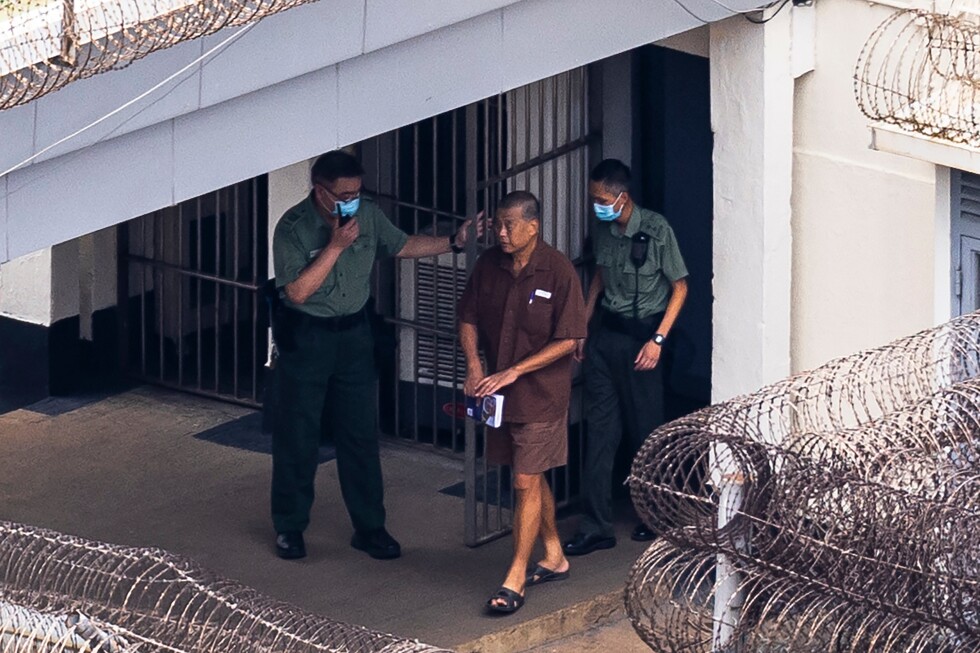
The 76-year-old founder of the now-defunct Apple Daily newspaper was sentenced to 20 years in prison in February after being convicted in December on charges of conspiracy to collude with foreign forces and publishing seditious materials. His sentence represents the harshest penalty imposed to date under Hong Kong’s controversial national security law, implemented by Beijing in 2020 following widespread pro-democracy protests.
Among the assets targeted are Lai’s shares in Next Digital, the former parent company of Apple Daily, which was forced to cease operations in June 2021 after authorities froze its assets and arrested senior executives. The government is also seeking shares in Dico Consultants, a company involved in a previous fraud case against Lai that was later overturned on appeal.
Notably, the government’s filing also seeks to claim HK$2 million ($255,440) that had been imposed as a fine in the 2022 fraud conviction, which could potentially be returned to Lai after those convictions were quashed earlier this year. Authorities are also targeting bail money previously deposited with the court.
The court documents do not provide specific details explaining how the targeted assets are connected to Lai’s alleged crimes. The Hong Kong government has cited provisions in the national security law that allow for the confiscation of funds and tools used or intended for use in committing offenses, as well as proceeds obtained through illegal activities.
In its April 2 announcement of the forfeiture application, the government stated that such orders are designed to “prevent convicts, their accomplices or agents from continuing to use their offense-related properties to engage in acts and activities endangering security.”
The case against Lai has drawn international criticism from press freedom advocates and human rights organizations. His conviction is viewed by many as emblematic of Hong Kong’s deteriorating civil liberties landscape since the implementation of the national security law. Once known for its vibrant media environment, Hong Kong has fallen dramatically in press freedom rankings, dropping to 135th out of 180 territories in Reporters Without Borders’ 2023 World Press Freedom Index.
Hong Kong officials have consistently maintained that Lai’s prosecution is unrelated to press freedom issues. In public statements, authorities have asserted that the defendants used journalistic activities as a pretext for actions allegedly harmful to China and Hong Kong’s interests.
The 2020 national security law, which criminalizes secession, subversion, terrorism and collusion with foreign forces, has been used to arrest more than 250 people. Critics argue the legislation has fundamentally altered Hong Kong’s legal landscape and undermined the “one country, two systems” framework that was promised to preserve the city’s autonomy for 50 years following its 1997 handover from British to Chinese rule.
A court hearing regarding the asset forfeiture request is scheduled for July. The outcome could have significant implications for how authorities handle assets in future national security cases.
Fact Checker
Verify the accuracy of this article using The Disinformation Commission analysis and real-time sources.

8 Comments
This move by Hong Kong authorities is a disappointing erosion of the region’s once vibrant press freedoms. It will further discourage critical reporting and embolden the crackdown on dissent.
Agreed, the government’s actions here seem intended to financially cripple Lai and intimidate other independent media outlets. A concerning trend for Hong Kong’s future.
This is a concerning development for press freedoms in Hong Kong. The government’s efforts to seize Lai’s assets appear to be a continuation of the crackdown on dissent in the region.
Lai’s harsh 20-year sentence under the national security law is deeply troubling. This case highlights the growing restrictions on free speech and independent media in Hong Kong.
I agree, the scale of the asset seizure is also very worrying. It seems designed to further cripple Lai’s media empire and silence critical voices.
Curious to hear more details on the specific allegations and evidence against Lai. The national security law has been criticized for its broad and vague provisions, so the specifics of this case will be important.
While the national security law was intended to maintain stability, cases like this suggest it is being used to target political opponents and restrict fundamental rights. I hope the courts will carefully scrutinize the government’s evidence and rationale.
While I understand the government’s perspective, these actions against a prominent pro-democracy activist set a dangerous precedent. Asset forfeiture should be used judiciously and with strong safeguards.