


Listen to the article
In a significant diplomatic development, the United Kingdom and France signed a declaration on Tuesday establishing a framework for a future peace agreement between Ukraine and Russia, complete with security guarantees backed by the United States and allied partners.
The “Coalition of the Willing” agreement, signed in Paris, outlines what participating nations describe as a path to lasting peace grounded in international law and United Nations Charter principles. The framework comes amid Europe’s largest military conflict since World War II, sparked by Russia’s full-scale invasion of Ukraine in 2022.
According to the declaration, Ukraine’s sovereignty and its right to self-defense are considered non-negotiable elements of any peace settlement. The agreement emphasizes that Ukraine’s ability to protect itself remains essential not only for its own security but also for broader Euro-Atlantic stability.
The coalition’s plan includes provisions for a European-led multinational force that would deploy to Ukraine once a ceasefire is established. With proposed support from the United States, this force would serve two critical functions: deterring potential Russian aggression and supporting Ukraine in rebuilding its military capabilities.
Security guarantees form a central component of the declaration, with coalition members committing to support Ukraine militarily, diplomatically, and economically if Russia launches another armed attack after a peace agreement is reached. These guarantees would activate immediately upon the commencement of any ceasefire.
The United States is set to play a pivotal role in the arrangement, leading a continuous ceasefire monitoring and verification mechanism with contributions from partner nations. American officials would participate in a special commission tasked with managing ceasefire violations, determining responsibility for breaches, and implementing solutions.
Beyond immediate security concerns, coalition members agreed to maintain long-term military support for Ukraine. This includes continued defense cooperation through training programs, defense production partnerships, and intelligence sharing arrangements – creating a sustainable security architecture for the embattled nation.
To ensure effective coordination, the declaration establishes a permanent U.S.-Ukraine-Coalition coordination cell based at the coalition’s headquarters in Paris. This structure aims to facilitate ongoing communication between all parties involved in implementing the peace framework.
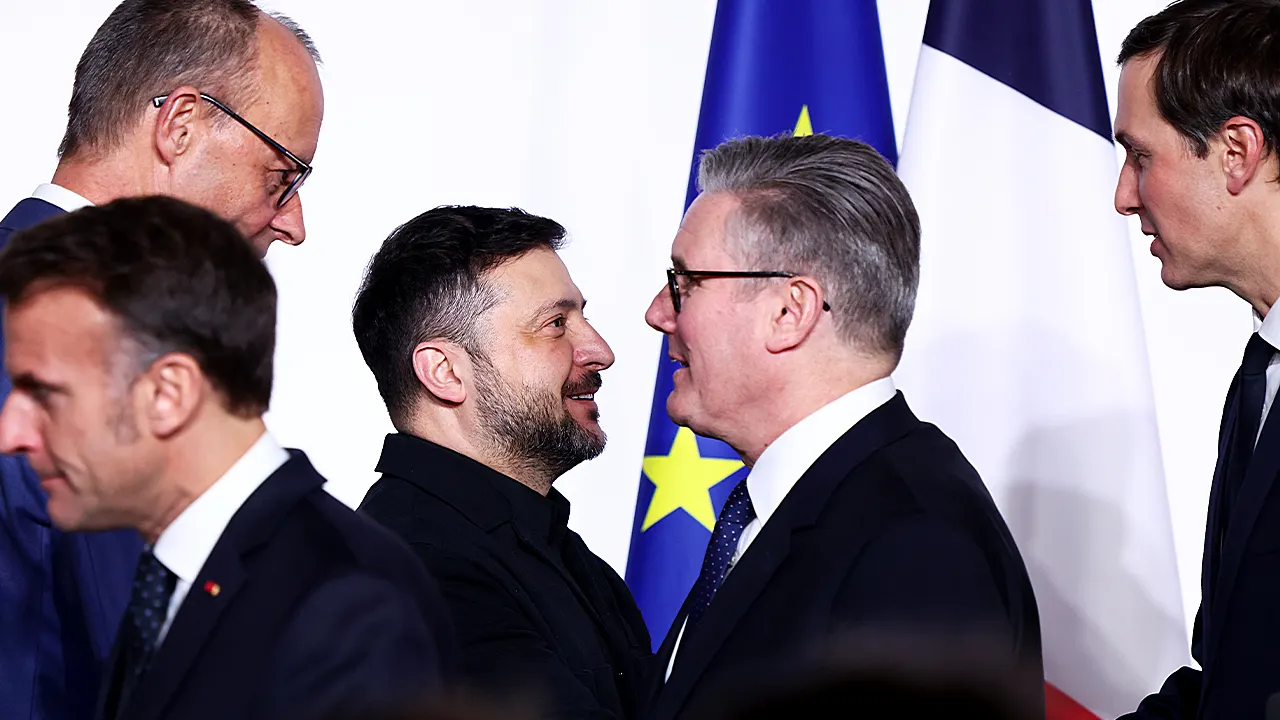
The agreement was formally presented at a joint news conference by French President Emmanuel Macron, Ukrainian President Volodymyr Zelenskyy, and UK Prime Minister Keir Starmer following high-level talks in the French capital. The Paris discussions included participation from prominent U.S. representatives Jared Kushner and Special Envoy Steve Witkoff, underscoring Washington’s involvement in the process.
This declaration represents one of the most concrete diplomatic efforts to date aimed at establishing parameters for eventually ending the conflict, which has devastated Ukrainian infrastructure, displaced millions of civilians, and destabilized European security arrangements.
While the framework lays out ambitious security guarantees and enforcement mechanisms, significant questions remain about Russia’s willingness to accept such terms and how territorial disputes would be resolved in any final settlement. The coalition’s ability to maintain unity and fulfill its security commitments will likely determine the viability of this approach in the coming months.
The agreement comes at a critical juncture as Ukraine faces mounting challenges on the battlefield and Western nations grapple with sustaining military aid amid competing global priorities and domestic political considerations.
For European nations, particularly France and the UK, the declaration demonstrates their commitment to taking greater responsibility for security on the continent while maintaining close coordination with the United States on matters of strategic importance.
Fact Checker
Verify the accuracy of this article using The Disinformation Commission analysis and real-time sources.

8 Comments
This is a significant diplomatic development, bringing together the UK, France, and the US to support Ukraine’s security and sovereignty. The framework for a future peace deal is an important step, though the path to lasting peace remains uncertain given Russia’s ongoing aggression.
Agreed, the provisions for a European-led multinational force to deter Russian aggression and support Ukraine’s defense are crucial. The coalition’s plan reflects the determination to uphold international law and Ukraine’s right to self-determination.
While a ceasefire and peace deal would be welcome, this agreement highlights the continued challenges in resolving the Ukraine conflict. Russia’s refusal to withdraw from occupied territories remains a major obstacle to a comprehensive settlement.
You’re right, Russia’s demands for concessions from Ukraine are still a significant stumbling block. The coalition’s commitment to Ukraine’s sovereignty is critical, but implementation will require careful diplomacy and sustained international pressure on Moscow.
This pact represents an important show of unity among Western allies in support of Ukraine. However, the details of the proposed multinational force and its role in enforcing a ceasefire will be key to its effectiveness.
This agreement represents a significant diplomatic effort to chart a path towards peace in Ukraine. However, the complex geopolitical dynamics and entrenched positions of the parties involved suggest that achieving a lasting resolution will be an immense challenge.
The emphasis on Ukraine’s right to self-defense is commendable, but the success of this framework will depend on Russia’s willingness to engage constructively. Ongoing monitoring and enforcement mechanisms will be crucial to prevent further escalation.
Absolutely, Russia’s cooperation and adherence to the terms of any agreement will be the ultimate test. The coalition must remain steadfast in its support for Ukraine while also leaving the door open for meaningful negotiations.