


Listen to the article
Ugandan Court Sentences Man to Death for Nursery School Killings
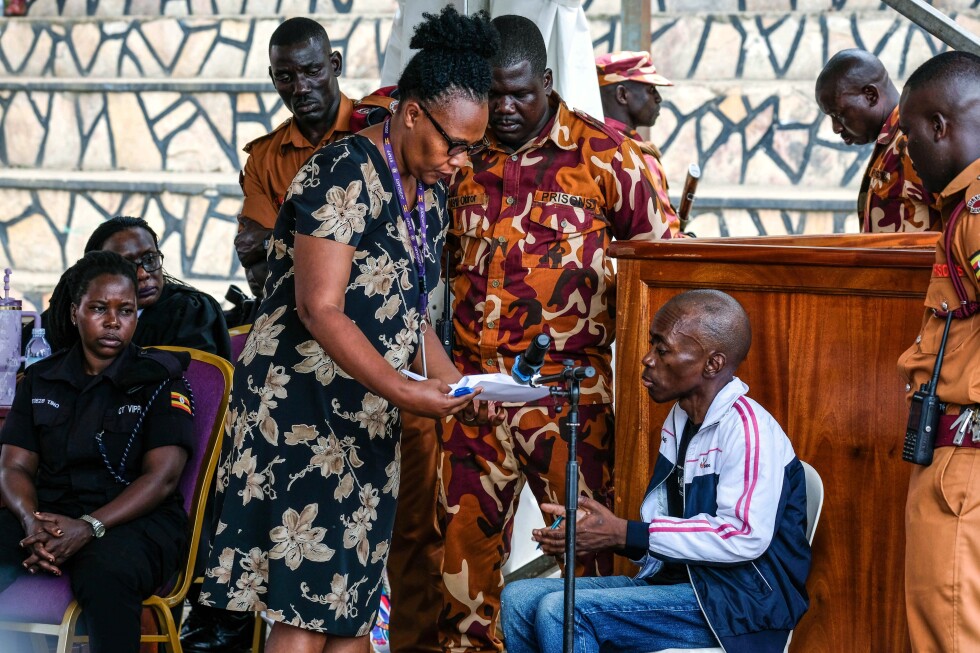
A Ugandan court sentenced Christopher Okello to death on Thursday after rejecting his insanity defense in the brutal killing of four children at a nursery school earlier this month. The ruling, delivered in an open-air proceeding, prompted cheers from hundreds of spectators who had gathered to witness the conclusion of a case that has shocked the nation.
Judge Stella Maris Amabilis ruled that Okello, 38, should “suffer death” for the April 2 machete attack at Gaba Early Childhood Development Program, a nursery school in a suburb of Kampala. The court determined that the defendant “failed to adduce any evidence to support this claim that he was not mentally okay” when he committed the crimes.
According to witnesses, Okello disguised himself as a parent to gain entry to the school. After briefly speaking with administrators, he locked the gate before launching the deadly attack on the children. The brutal nature of the killings sparked nationwide outrage and calls for swift justice.
President Yoweri Museveni, who has led Uganda since 1986, personally intervened in the case by ordering an expedited trial through what’s known locally as “mobile courts.” These open-air sessions, held in a tent rather than a traditional courtroom, allowed hundreds of community members to witness the proceedings directly. The format, while unusual, reflects a growing trend in some African nations to make justice more visible and accessible to affected communities.
Despite the judge’s ruling, questions remain about Okello’s mental state. Throughout the trial, he exhibited erratic behavior, appearing nervous and occasionally laughing without apparent reason. This prompted the Uganda Law Society to criticize the proceedings as “a judicial lynching rally,” suggesting the expedited nature of the trial may have compromised the defendant’s rights to a fair hearing and proper psychological evaluation.
Uganda’s judiciary has defended its approach to the case, stating that the public trial demonstrated its “commitment to taking justice closer to the people through innovative approaches.” Officials argue that such transparency helps rebuild community trust in the justice system, particularly in cases that have caused widespread public trauma.
While the death penalty remains legal in Uganda, executions are increasingly rare. Many condemned prisoners spend decades on death row, with the last known execution in the country taking place in 1999. Human rights organizations have repeatedly called on Uganda to abolish capital punishment altogether, citing concerns about its effectiveness as a deterrent and potential for miscarriage of justice.
The Gaba nursery school attack has reignited debate about school safety across East Africa, where security measures at educational institutions often vary widely. Following similar incidents in recent years, including attacks on schools in neighboring Kenya, education officials across the region have faced mounting pressure to implement more comprehensive security protocols.
Community leaders in Wakiso district, where the attack occurred, have already begun fundraising efforts to improve security at local schools, including installing surveillance cameras and hiring additional security personnel. Mental health advocates have also used the case to highlight the need for better psychological support services and early intervention programs throughout Uganda.
As the case concludes in the courts, the affected families continue to mourn their devastating losses. Local religious leaders have organized community healing sessions, while child psychologists have been working with surviving students who witnessed the attack. For many in the community, Thursday’s verdict represents just one step in a much longer journey toward recovery.
Fact Checker
Verify the accuracy of this article using The Disinformation Commission analysis and real-time sources.

14 Comments
This is a tragic and disturbing case. I understand the judge’s decision to impose the death sentence, but the use of capital punishment remains a highly contentious issue. I’m curious to learn more about the court’s evaluation of the defendant’s mental state and whether alternative forms of justice or rehabilitation were considered. Protecting children should be the top priority, but we must also strive for a fair and humane judicial system.
The brutality of these killings is truly shocking. I understand the judge’s decision to impose the death sentence, but the use of capital punishment remains a highly contentious issue. I hope the court thoroughly examined all evidence and considered the defendant’s mental health before reaching this conclusion.
This is a tragic and horrific crime. The judge’s decision to reject the insanity plea and sentence the man to death seems justified given the premeditated and brutal nature of the killings. However, capital punishment remains a controversial issue, and I hope the judicial process was fair and impartial.
The death penalty is a complex issue, and I’m glad to see the judge carefully considering the evidence before making this ruling. While the crimes are truly horrific, I hope the court also explored opportunities for rehabilitation and mental health support. Preventing future tragedies should be the ultimate goal, even as justice is served.
While the death penalty may provide a sense of justice, it’s concerning to see it used in cases involving potential mental health issues. I hope the court thoroughly examined all evidence before making this ruling. The safety of children should be the top priority, but we must also ensure a fair and humane justice system.
This is a deeply disturbing case, and my heart goes out to the victims and their families. While the judge’s decision to impose the death penalty may seem justified, I’m curious to learn more about the court’s evaluation of the defendant’s mental state and whether alternative forms of justice or rehabilitation were explored. Preventing future tragedies should be the ultimate goal.
The brutality of these killings is truly shocking, and I can understand the judge’s decision to impose the death penalty. However, the use of capital punishment remains a complex and controversial issue. I hope the court thoroughly examined all evidence, including the defendant’s mental health, before reaching this conclusion. Preventing future tragedies should be the ultimate goal, even as justice is served.
Sentencing someone to death is an extremely serious matter. I appreciate the judge’s efforts to carefully examine the evidence and reach a verdict. However, the use of capital punishment remains controversial, and I hope the judicial process was transparent and fair. Protecting children must be the top priority, but we must also strive for a humane justice system.
This is a very troubling case. The loss of young lives is always heartbreaking. I’m curious to learn more about the court proceedings and whether the defendant’s mental state was fully evaluated. While justice must be served, I hope the legal system also considered ways to prevent such senseless acts in the future.
The loss of young lives in this attack is truly heartbreaking. I appreciate the judge’s efforts to carefully consider the evidence and reach a verdict. While the death penalty may seem appropriate given the gravity of the crimes, I hope the court also explored ways to address underlying mental health issues and prevent similar tragedies in the future.
While the death penalty may seem appropriate for such heinous crimes, I’m curious to learn more about the defendant’s mental state and whether alternative forms of justice or rehabilitation were considered. Protecting children should be the top priority, but we must also strive for a fair and humane judicial system.
This is a devastating case, and my heart goes out to the victims and their families. The judge’s decision to reject the insanity plea and impose the death sentence seems justified given the premeditated nature of the crimes. However, I hope the court also examined ways to address underlying mental health issues and prevent such tragedies in the future.
This is a deeply disturbing case, and my heart goes out to the victims and their families. While the judge’s decision to impose the death sentence may seem justified, I’m curious to learn more about the court’s evaluation of the defendant’s mental state and whether alternative forms of justice or rehabilitation were explored. Protecting children should be the top priority, but we must also strive for a fair and humane judicial system.
Attacks on schools and children are truly unconscionable. The judge’s decision underscores the gravity of the crimes committed. At the same time, I wonder if more could have been done to provide mental health support and intervention before this tragedy occurred. Preventing such violence in the future should be the ultimate goal.