


Listen to the article
UAE Halts Funding for Students in UK Universities Over Radicalization Concerns
The United Arab Emirates has removed British universities from its list of institutions eligible for state scholarships, citing fears that Emirati students could be radicalized on UK campuses. The decision comes amid growing tensions between the two nations over London’s reluctance to designate the Muslim Brotherhood as a terrorist organization, according to a Financial Times report.
“[The UAE] don’t want their kids to be radicalized on campus,” a person directly involved with the decision told the Financial Times.
The policy change means Emirati students who have recently applied for government funding to study in the UK have had their requests denied. Beyond the immediate financial impact, the move carries significant long-term consequences, as the UAE will no longer recognize qualifications from academic institutions not on its accredited list, potentially devaluing UK degrees for Emirati students.
UAE President Sheikh Mohammed bin Zayed al-Nahyan has repeatedly questioned Britain’s stance on the Muslim Brotherhood, an organization the UAE has taken a hardline approach against both domestically and internationally. The Gulf state has consistently pressed the UK to declare the group a terrorist organization, a matter that Prime Minister Keir Starmer’s administration said last year was under “close review.”
In response to the UAE’s decision, Starmer’s office issued a statement defending Britain’s educational institutions: “All forms of extremism have absolutely no place in our society, and we will stamp them out wherever they are found. We offer one of the best education systems in the world and maintain stringent measures on student welfare and on-campus safety.”
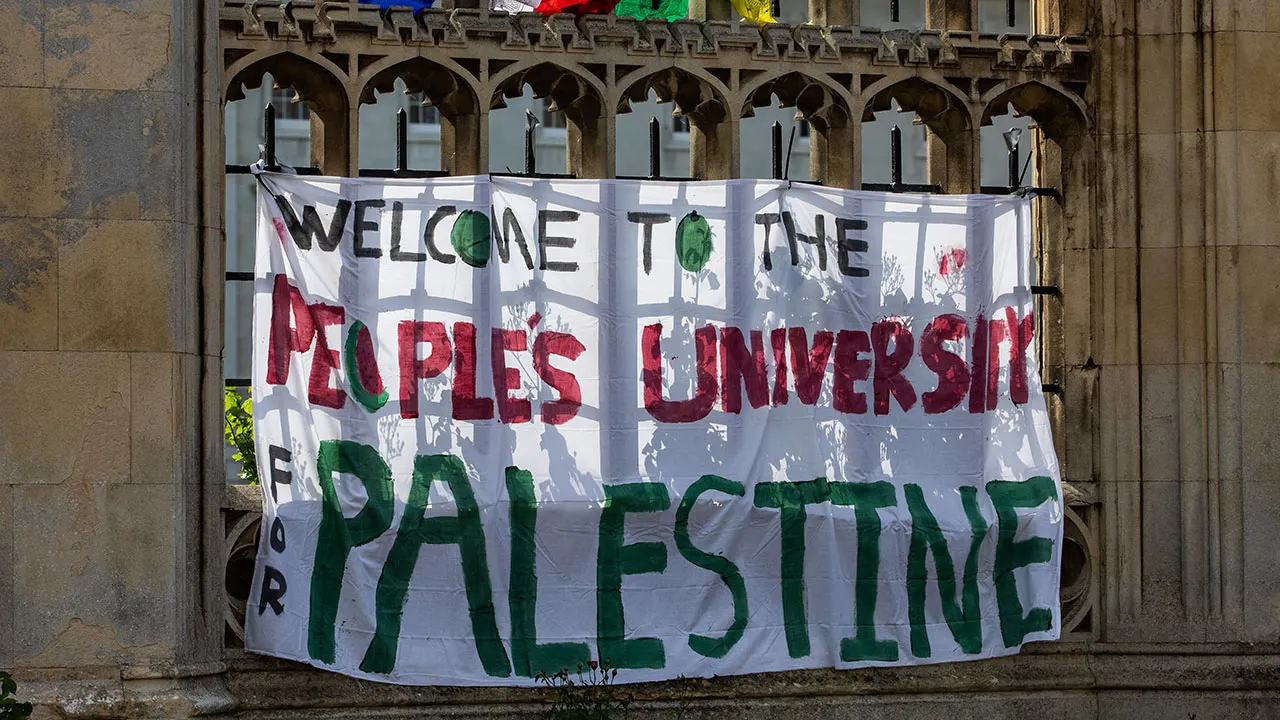
The timing of the UAE’s decision comes as UK universities face increasing scrutiny over campus protests and activities related to the Israel-Hamas conflict. A “Welcome to the People’s University for Palestine” banner was recently displayed at King’s College at the University of Cambridge, reflecting the kind of campus activism that concerns Emirati officials.
According to the Financial Times report, during the 2023-24 academic year, 70 students at UK universities were reported for possible referral to the government’s deradicalization program, underscoring the UAE’s concerns about the potential for extremist influences.
This diplomatic fracture could have significant implications for the UK’s higher education sector, which has traditionally been popular among Gulf students seeking international education. British universities have long benefited from international students, particularly from wealthy Gulf states, who often pay premium tuition fees.
The UAE, known for its strict policies against Islamist movements, has positioned itself as a moderate voice in the Middle East while maintaining zero tolerance for what it considers extremism. This approach has sometimes created tension with Western allies who take different positions on organizations like the Muslim Brotherhood.
Education experts suggest the UAE’s decision could prompt other Gulf states with similar concerns to reevaluate their educational partnerships with the UK, potentially redirecting students to universities in the United States, Australia, or other European countries.
The move represents a significant shift in UAE-UK relations, with educational cooperation having previously been a cornerstone of bilateral ties. It remains unclear whether diplomatic channels are working to resolve the impasse, or if this signals a longer-term realignment in the UAE’s approach to international education for its citizens.
Fact Checker
Verify the accuracy of this article using The Disinformation Commission analysis and real-time sources.

8 Comments
Interesting move by the UAE to address concerns about radicalization on UK university campuses. Maintaining academic integrity and student safety is crucial, though the long-term implications could be concerning for UK institutions.
I understand the UAE’s worries, but denying accreditation for UK degrees seems like a heavy-handed approach. Hopefully there can be constructive dialogue to address the root issues.
This is a tricky situation. The UAE has legitimate worries about student radicalization, but cutting off access to UK universities could have unintended consequences. Robust security measures and cross-cultural exchange may be a better path forward.
I agree. Both sides should work together to address the concerns while preserving educational opportunities for Emirati students in the UK.
This decision highlights the complex geopolitical tensions between the UAE and UK over issues like the Muslim Brotherhood. While security is a priority, limiting educational opportunities could hamper cultural exchange and academic collaboration.
You raise a good point. Striking the right balance between security concerns and maintaining open academic ties will be crucial going forward.
Withdrawing scholarships and devaluing UK degrees is a drastic step by the UAE. While campus safety is paramount, this move could harm academic and cultural ties between the two countries. Dialogue and nuanced policies may be a wiser approach.
The UAE’s move to suspend funding for Emirati students in the UK is concerning. Universities should be places of open dialogue and learning, not breeding grounds for radicalization. I hope the two countries can find a diplomatic solution.