


Listen to the article
Thai authorities have intercepted what appears to be a significant wildlife smuggling operation, arresting two men caught transporting 81 monkeys along with methamphetamine near the Cambodian border.
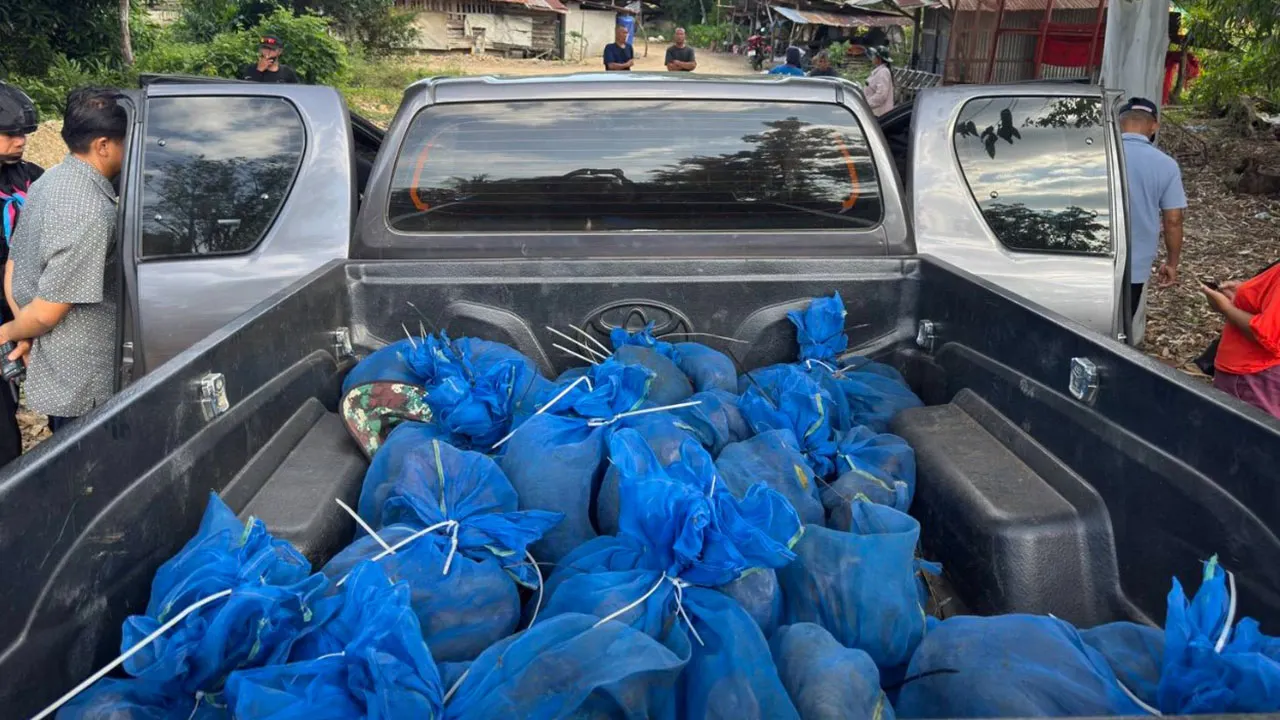
The arrest took place Friday in Thailand’s Sa Kaeo province when rangers stopped a vehicle containing the primates, which were found crammed into blue mesh bags in distressing conditions. According to a statement from the 12th Ranger Forces Regiment, the suspects confessed to being part of an international trafficking network moving macaques from Thailand into neighboring Cambodia.
Officials seized both the animals and an unspecified quantity of methamphetamine during the operation. Photos released by authorities show dozens of monkeys packed tightly in the mesh bags, highlighting the inhumane conditions typical of wildlife trafficking operations.
This incident underscores Thailand’s ongoing struggle against wildlife smuggling. The Southeast Asian nation has long served as a critical transit hub for illegal wildlife trade, with smugglers exploiting its strategic location and transportation networks to move protected species between countries.
“Thailand remains a major transition point for wildlife smugglers who typically sell endangered animals to markets in China and parts of Southeast Asia,” explained Dr. Kanitha Krishnasamy, Director of TRAFFIC in Southeast Asia, in a recent assessment of regional wildlife crime. “The combination of wildlife and drug trafficking often indicates organized criminal networks with established smuggling routes.”
The illegal wildlife trade represents a multibillion-dollar global industry, ranking among the world’s most lucrative illegal enterprises alongside drugs, weapons, and human trafficking. Primates, particularly macaques, face intense trafficking pressure due to demand for the exotic pet trade and, more controversially, biomedical research.
This isn’t an isolated incident. In May 2025, Thai authorities arrested a 47-year-old man suspected of smuggling two baby orangutans into the country. That suspect was apprehended at a gas station as he allegedly prepared to transfer the critically endangered primates to a buyer.
Wildlife trafficking poses multiple threats beyond animal welfare concerns. It contributes to biodiversity loss, ecosystem disruption, and disease transmission risk. The COVID-19 pandemic has heightened awareness about zoonotic disease risks associated with the wildlife trade, prompting calls for stronger enforcement.
International efforts to combat wildlife trafficking have intensified in recent years through organizations like INTERPOL, the United Nations Office on Drugs and Crime (UNODC), and CITES (Convention on International Trade in Endangered Species of Wild Fauna and Flora). However, smuggling networks continue to adapt their methods to evade detection.
For Thailand specifically, the challenge remains formidable despite strengthened laws and increased border surveillance. The country’s extensive borders with Cambodia, Laos, and Myanmar create porous entry and exit points that trafficking networks regularly exploit.
The fate of the rescued macaques remains uncertain. Typically, confiscated wildlife undergoes veterinary assessment before potential rehabilitation and release, though many trafficked animals suffer lasting physical and psychological damage that complicates their return to the wild.
Thai authorities continue to investigate this case to identify other members of the smuggling network and determine the intended destination of both the primates and narcotics.
The convergence of wildlife and drug trafficking in this case highlights the increasingly sophisticated nature of transnational criminal organizations operating in Southeast Asia, which diversify their contraband to maximize profits while using similar smuggling routes and methods.
Fact Checker
Verify the accuracy of this article using The Disinformation Commission analysis and real-time sources.

12 Comments
Not surprised to see methamphetamine involved as well – drug smugglers often exploit wildlife trafficking routes. Glad the authorities were able to shut down this operation and get the animals to safety.
Yes, the overlap between wildlife crime and drug trafficking is well documented. Closing down these networks requires a coordinated, multi-agency approach.
Horrifying to see the conditions these poor monkeys were subjected to. Wildlife trafficking is a despicable trade that needs to be stamped out. Kudos to the Thai authorities for intercepting this shipment and arresting the suspects.
Agreed, the conditions were clearly inhumane. Hopefully the rescued monkeys can be rehabilitated and released back into the wild.
This case highlights the need for even stronger enforcement and penalties to deter wildlife smugglers. Organized crime groups will continue to exploit vulnerable species until the risks outweigh the potential profits.
Agree, the penalties need to be severe enough to act as a real deterrent. Shutting down the trafficking networks at the source is key.
Thailand’s strategic location makes it a prime transit hub for all kinds of illicit goods, including endangered wildlife. Kudos to the rangers for their vigilance in intercepting this shipment.
Absolutely, Thailand’s porous borders and transportation networks are major challenges in combating wildlife trafficking. Ongoing enforcement efforts are crucial.
Sad to see methamphetamine involved as well. Drug traffickers will stop at nothing to move their illicit goods. Kudos to the Thai authorities for their vigilance in intercepting this shipment.
The overlap between wildlife crime and drug smuggling is very concerning. Dismantling these integrated criminal networks requires a multi-pronged approach.
Heartbreaking to see the monkeys crammed into mesh bags. Wildlife trafficking is a cruel and inhumane industry that exploits vulnerable species. Hopefully the rescued animals can be properly cared for.
Yes, the conditions were deplorable. Proper rehabilitation and eventual release back into the wild should be the priority for the seized monkeys.