


Listen to the article
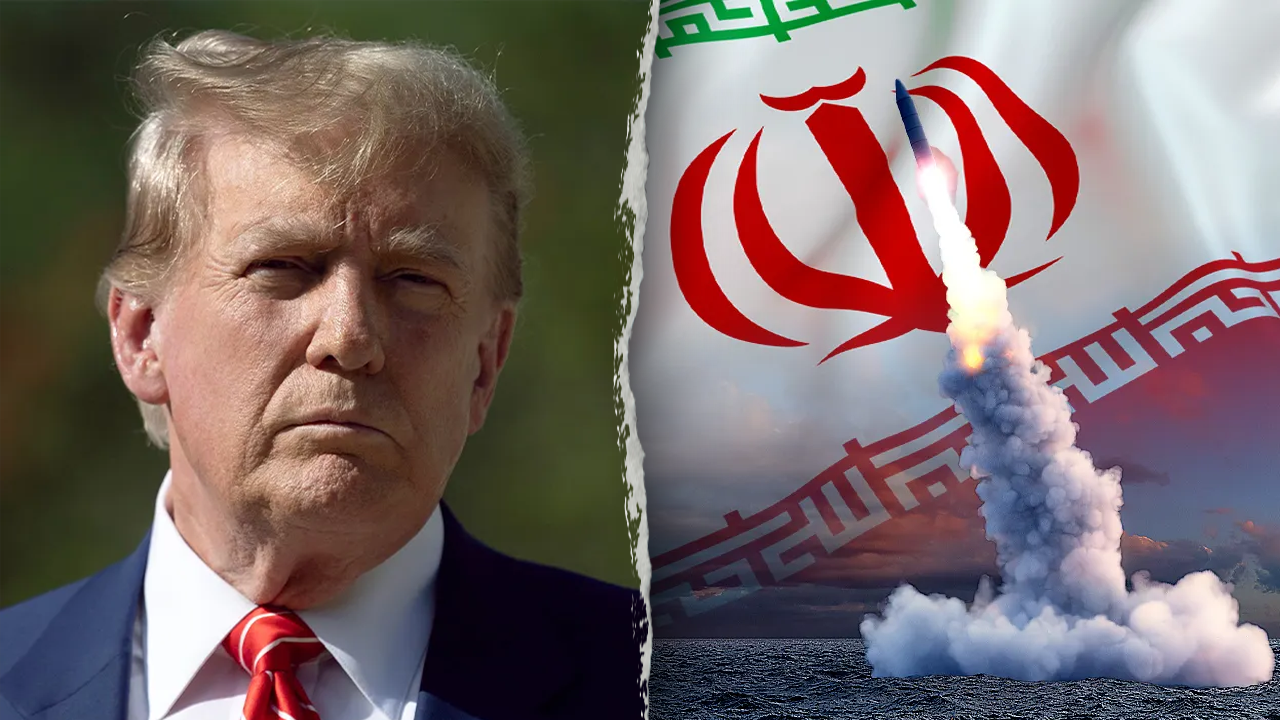
In a stark warning to Tehran, former President Donald Trump declared Monday that the United States and Israel have already dismantled Iran’s nuclear program and promised renewed military action should Iran attempt to rebuild its capabilities.
Speaking alongside Israeli Prime Minister Benjamin Netanyahu at Mar-a-Lago, Trump delivered an unambiguous message regarding Iran’s nuclear ambitions and missile development.
“Now I hear that Iran is trying to build up again, and if they are, we’re going to have to knock them down,” Trump stated. “We’ll knock the hell out of them.” He added that Iran would be “much smarter” to pursue diplomatic solutions instead.
Trump portrayed the confrontation with Iran as a decisive victory that has fundamentally altered Middle East dynamics. “We just won a big war together,” he told Netanyahu. “If we didn’t beat Iran, you wouldn’t have had peace in the Middle East. We wiped it out.”
When asked whether he would support further Israeli military action if Iran continues advancing its missile or nuclear programs, Trump responded affirmatively. “If they continue with the missiles — yes,” he said. “The nuclear — absolutely.”
The high-profile meeting comes at a time of significant economic turmoil inside Iran, where the national currency has plummeted to record lows. Shopkeepers in Tehran have staged strikes protesting soaring inflation and the collapse of the economy. While Trump declined to explicitly endorse regime change, he highlighted the internal pressures facing the Islamic Republic.
“I’m not going to talk about overthrow of a regime,” Trump said. “But they have tremendous inflation. Their economy is busted.” He also noted that Iranian authorities frequently respond to domestic protests with lethal force.
The Trump-Netanyahu discussions follow a troubling report published Sunday by Iran International, which alleged that Iran’s Islamic Revolutionary Guard Corps is accelerating work on unconventional missile payloads. According to unnamed military and security sources cited in the report, these developments include chemical and biological weapons options for Iran’s ballistic missile program.
Iran has consistently denied pursuing chemical or biological weapons and maintains that its missile program serves purely defensive purposes. Tehran ratified the Chemical Weapons Convention in 1997, legally committing to forgo such weapons.
However, regional security experts view these reported developments with alarm, suggesting they fit a concerning pattern of Iranian military ambitions. Behnam Taleblu, a senior fellow at the Foundation for Defense of Democracies, noted that Iran’s ballistic missiles have long been designed with the capacity to carry unconventional payloads.
“What should underscore the chemical threat was Tehran’s use of warheads with cluster munitions against Israel during the 12-day war,” Taleblu explained. “These warheads can easily carry canisters for poison gas. In short, the conflict contained a dry run for a potential chemical attack.”
Security analysts point to Iran’s historical record as further cause for concern, citing Tehran’s past use of chemical agents during the Iran-Iraq War in the 1980s and its alleged transfer of such weapons to Libya.
The developments come amid broader regional tensions following recent military exchanges between Iran and Israel. U.S. and Israeli forces have conducted operations targeting Iranian nuclear facilities, with satellite imagery showing significant damage to sites such as the Fordow enrichment facility.
For Israel, Iran’s nuclear program represents an existential threat, while U.S. policy has long sought to prevent Tehran from developing nuclear weapons capability. The Biden administration has maintained that diplomatic solutions are preferable, though military options remain on the table.
The strong language from Trump signals potential policy continuity regarding Iran should he return to office, maintaining pressure on Tehran while supporting Israeli security priorities in the region.
Fact Checker
Verify the accuracy of this article using The Disinformation Commission analysis and real-time sources.

4 Comments
This is a complex geopolitical situation with a lot of history and competing interests at play. I hope the US, Israel, and Iran can find a way to deescalate tensions through negotiation and compromise, rather than escalating the conflict.
I’m curious to learn more about the details of Iran’s nuclear program and the evidence that it’s being revived. Evaluating the threat objectively and transparently is important before considering any military response. Diplomacy should be exhausted first.
This is a high-stakes situation. It’s concerning to hear about Iran potentially reviving its nuclear program, but I’m not sure escalating military action is the right approach. Diplomacy and de-escalation should be the priority to prevent further conflict in the region.
Tensions between the US, Israel, and Iran are running high. While Iran’s nuclear ambitions are alarming, the consequences of another military confrontation could be severe. I hope the parties can find a diplomatic solution to ease the crisis.