


Listen to the article
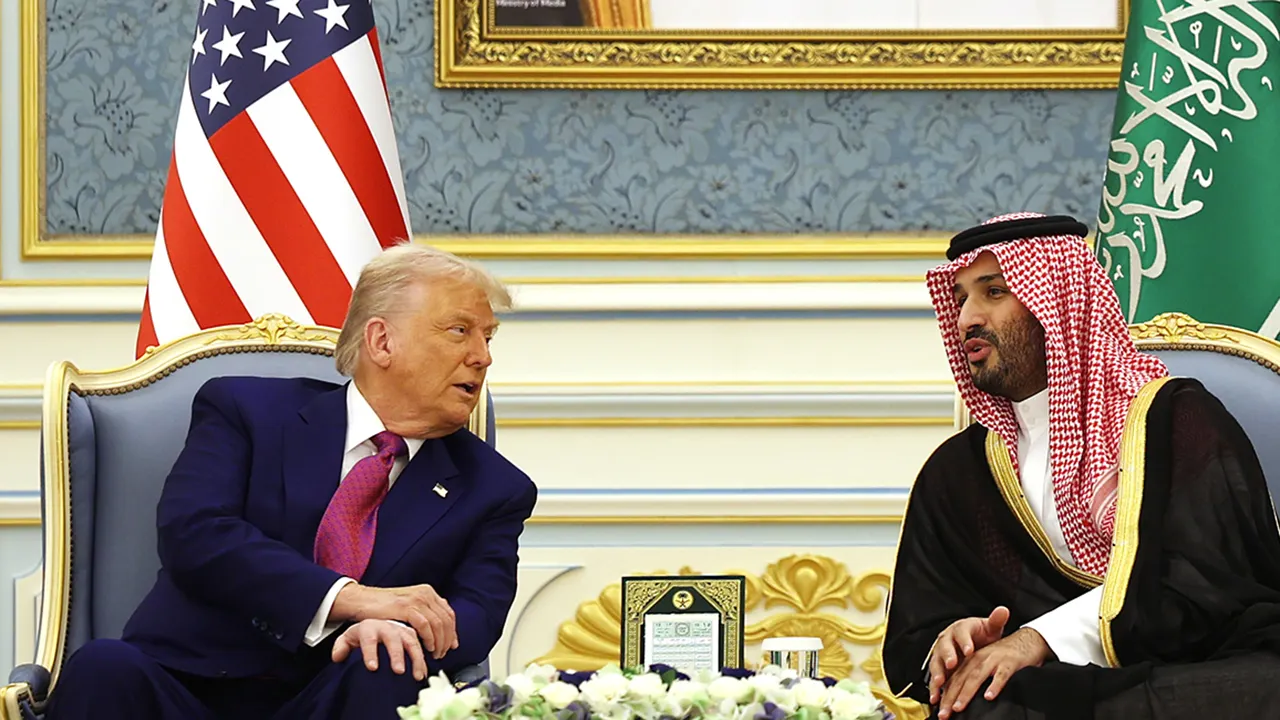
Saudi Crown Prince Mohammed bin Salman arrives in Washington on Tuesday for his first White House visit in seven years, marking a pivotal moment to rebuild U.S.-Saudi ties and strengthen a partnership that remains central to American security and energy interests.
The visit comes amid significant developments, including President Donald Trump’s confirmation that the United States will sell F-35 fighter jets to Saudi Arabia. “I will say that we will be doing that. We’ll be selling the F-35s,” Trump told reporters on Monday, a decision with far-reaching implications for regional military balances.
Ahead of the meeting, 9/11 survivors, first responders and victims’ families urged Trump to hold Saudi Arabia accountable for its alleged role in the 2001 attacks. This follows a recent ruling by U.S. Federal District Court Judge George B. Daniels against Saudi Arabia’s efforts to dismiss a lawsuit brought by families of 9/11 victims.
White House spokesperson Anna Kelly told Fox News Digital that “President Trump looks forward to welcoming Crown Prince Mohammed bin Salman Al Saud to the White House, where the two leaders will participate in an official working visit.” She added that “thanks to our Dealmaker-in-Chief, the United States secured $600 billion in historic investments during the President’s visit to Saudi Arabia earlier this year.”
A senior administration official, speaking on background, revealed that the expected agreements will include a multibillion-dollar investment in America’s AI infrastructure, enhanced cooperation on civil nuclear energy, and defense sales aimed at strengthening security cooperation between the two countries. The visit will also focus on fulfilling Saudi Arabia’s $600 billion investment pledge through targeted investments across key U.S. sectors.
In Saudi Arabia, the visit is generating considerable excitement. Aziz Alghashian, a lecturer in international relations at Naif Arab University in Riyadh, noted that “the Saudis have said they’re not isolated in the region… this is back through open doors and the front door again.” The visit represents MBS’s first White House appearance since the 2018 killing of journalist Jamal Khashoggi, which U.S. intelligence assessed he approved—a charge he denies.
Jacob Olidort, director for American Security at the America First Policy Institute, described the visit as “well overdue, a reset of relations,” calling Saudi Arabia “one of the top partners of ours in the region.”
At the heart of the visit is an emerging U.S.-Saudi security pact. Alghashian described its purpose in three words: “elevate, facilitate and consolidate.” Though not a full treaty, which Riyadh had previously pursued, the pact would represent the most significant upgrade to the relationship in decades.
The Saudi leadership appears motivated by a sense of urgency. “The Saudis feel urgency to get as much as they can from the Trump administration before these deals get complicated in the next administration,” Alghashian explained. This urgency extends to nuclear cooperation, where Saudi Arabia has indicated that while China and South Korea exist as alternatives, its preference is for an American program.
On regional peace, Olidort noted that Saudi Arabia has been “very categorical” in its expectations: a defense pact and movement on Palestinian statehood. He recalled a senior Saudi official recently saying that “there will be no regional integration without Palestinian statehood,” reflecting the kingdom’s long-standing position that recognition of Israel will only come after a credible pathway to a Palestinian state is established.
Regarding Gaza reconstruction, Alghashian pointed out that Saudi Arabia has said it “will not do reconstruction unless Hamas is gone and Israel withdraws,” a stance that places the kingdom at odds with any rushed postwar plan.
Trump’s decision to approve F-35 sales to Saudi Arabia adds another complex dimension. Saudi Arabia has formally requested up to 48 of the fifth-generation jets, making it the largest potential F-35 buyer outside NATO and the first Arab state after the United Arab Emirates to receive them. This move would test Washington’s commitment to maintaining Israel’s qualitative military edge.
Olidort, however, argued that the sale does not automatically threaten Israel’s superiority. “I don’t know that it will mean Israel losing air superiority,” he said, noting that Israel’s defense and aerospace sectors are “world-class” and that the sale could “potentially deepen collaboration between Israel and Saudi Arabia.”
Beyond defense, the visit is also anchored in technology. Saudi Arabia is pushing for access to advanced American AI chips and positioning itself as a global data and energy hub. Olidort framed the issue bluntly, saying AI cooperation with Saudi Arabia is a strategic priority for Washington because “the United States is in a race with China” and cautioning that “if we don’t get there, then we will be in a China-dominated AI space.”
This high-stakes visit underscores the complex interplay of security, energy, technology, and regional politics that continues to define the U.S.-Saudi relationship, even as both nations seek to overcome recent tensions and forge a more robust strategic partnership.
Fact Checker
Verify the accuracy of this article using The Disinformation Commission analysis and real-time sources.

25 Comments
The cost guidance is better than expected. If they deliver, the stock could rerate.
Good point. Watching costs and grades closely.
Silver leverage is strong here; beta cuts both ways though.
Good point. Watching costs and grades closely.
Good point. Watching costs and grades closely.
Silver leverage is strong here; beta cuts both ways though.
The cost guidance is better than expected. If they deliver, the stock could rerate.
Good point. Watching costs and grades closely.
Silver leverage is strong here; beta cuts both ways though.
Good point. Watching costs and grades closely.
Silver leverage is strong here; beta cuts both ways though.
Silver leverage is strong here; beta cuts both ways though.
Good point. Watching costs and grades closely.
Good point. Watching costs and grades closely.
I like the balance sheet here—less leverage than peers.
Uranium names keep pushing higher—supply still tight into 2026.
Good point. Watching costs and grades closely.
Good point. Watching costs and grades closely.
I like the balance sheet here—less leverage than peers.
Exploration results look promising, but permitting will be the key risk.
Good point. Watching costs and grades closely.
Good point. Watching costs and grades closely.
Nice to see insider buying—usually a good signal in this space.
Good point. Watching costs and grades closely.
Good point. Watching costs and grades closely.