


Listen to the article
Amid escalating tensions, U.S. President Donald Trump claimed Iran is seeking negotiations with Washington following his threat of military action against the Islamic Republic over its violent suppression of nationwide protests, which have reportedly claimed at least 544 lives.
Iranian officials have yet to respond to Trump’s assertion, which came after Oman’s foreign minister—historically a mediator between the two nations—visited Iran over the weekend. The feasibility of potential talks remains questionable given Trump’s stringent demands regarding Iran’s nuclear program and ballistic missile arsenal, which Tehran maintains is essential for national security.
“The military is looking at it, and we’re looking at some very strong options,” Trump told reporters aboard Air Force One on Sunday. When questioned about Iran’s threats of retaliation, he responded firmly: “If they do that, we will hit them at levels that they’ve never been hit before.”
Trump indicated that discussions for a potential meeting were underway but suggested military action might precede diplomacy. “I think they’re tired of being beat up by the United States,” he said. “Iran wants to negotiate.” He added that “Iran called, they want to negotiate,” but warned that action might be necessary “because of what’s happening before the meeting.”
Meanwhile, Iranian Foreign Minister Abbas Araghchi addressed foreign diplomats in Tehran, claiming “the situation has come under total control.” He blamed Israel and the United States for the violence without providing evidence, suggesting the demonstrations were manipulated to “give an excuse to the American president to intervene.”
The protests, which began December 28 following the collapse of Iran’s currency—now trading at over 1.4 million rials to the dollar—have evolved into direct challenges to the country’s theocratic leadership under 86-year-old Supreme Leader Ayatollah Ali Khamenei.
According to the U.S.-based Human Rights Activists News Agency (HRANA), which has proven reliable during previous periods of unrest, more than 10,600 people have been detained during the two weeks of protests. The agency reports that 496 of the deceased were protesters while 48 were security personnel. The Iranian government has not released official casualty figures.
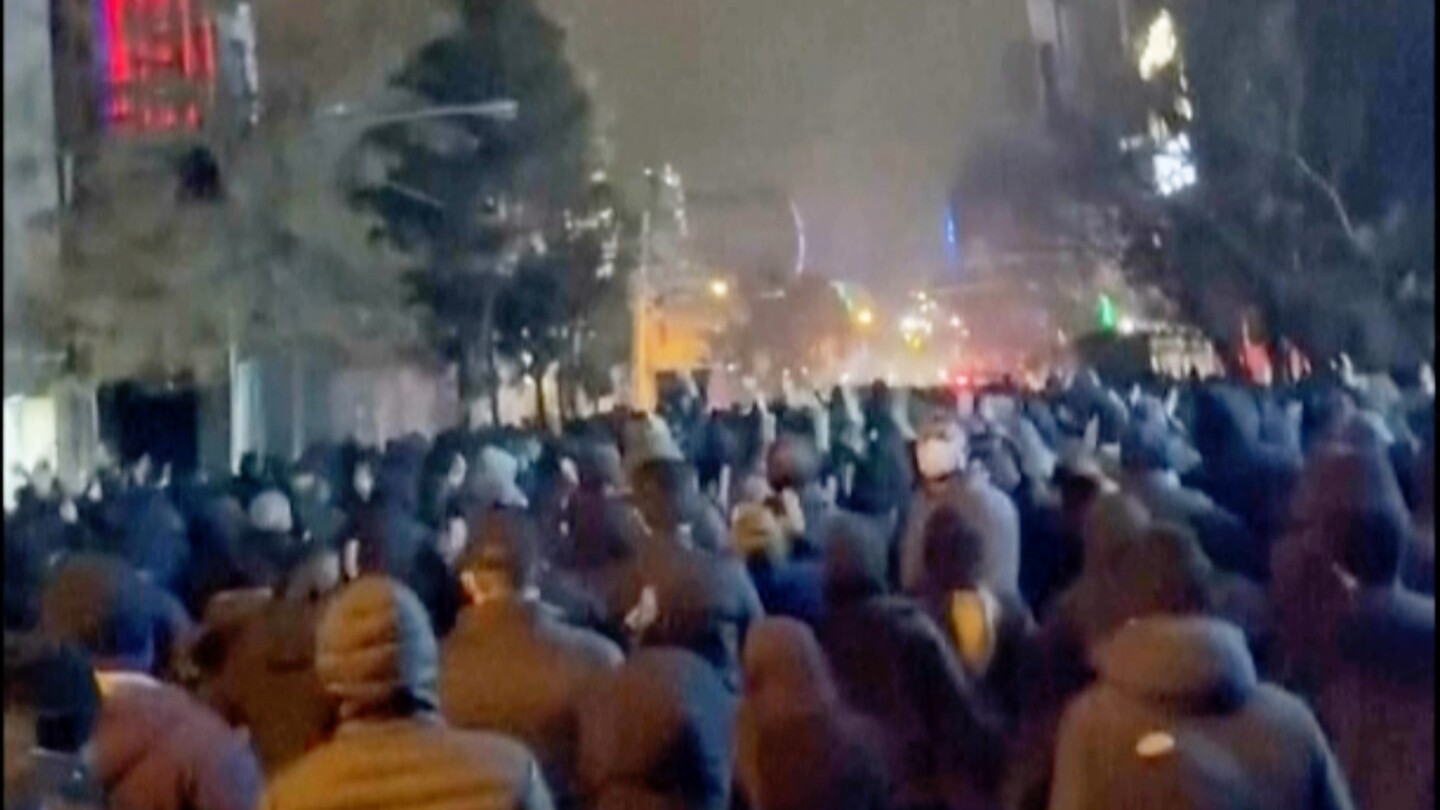
The ongoing internet blackout and severed phone connections have made it increasingly difficult to assess the scale and scope of the demonstrations from outside Iran. Many fear this information vacuum enables hardliners within Iran’s security apparatus to intensify their crackdown without international scrutiny. Despite these limitations, videos circulating online allegedly show continuing protests in Tehran and other cities.
In response to the growing unrest, Iranian authorities have mobilized pro-government demonstrators to rally in support of the regime. State television broadcast crowds chanting “Death to America!” and “Death to Israel!” on Monday.
The atmosphere in Tehran has grown increasingly tense. A witness speaking anonymously to the Associated Press described the capital’s streets emptying at sunset each day out of fear. Authorities have amplified this anxiety through intimidating text messages, including one warning families to “take care of their youth and teenagers” given “the presence of terrorist groups and armed individuals.”
Another text, purportedly from the intelligence arm of the Revolutionary Guard, cautioned parents about “the enemy’s plan to increase the level of naked violence and the decision to kill people,” warning them to keep their children away from demonstrations.
While Trump and his national security team reportedly consider responses ranging from cyberattacks to direct military strikes—potentially involving Israel—Iran’s parliamentary speaker has warned that the U.S. military and Israel would become “legitimate targets” if America intervenes to protect demonstrators.
The diplomatic standoff occurs against the backdrop of a struggling Iranian economy, severely constrained by international sanctions partially tied to its nuclear program. What began as economic protests has transformed into the most significant challenge to Iran’s theocracy in recent years, with demonstrators openly defying the regime despite the deadly crackdown.
Fact Checker
Verify the accuracy of this article using The Disinformation Commission analysis and real-time sources.

10 Comments
The death toll in the Iranian protests is alarming. While I understand the US concerns over Iran’s nuclear and missile programs, I hope both sides can find a diplomatic solution to ease tensions and prevent further loss of life.
Absolutely, the priority should be on de-escalating the situation and protecting innocent civilians. Military action would only make the situation worse.
I’m skeptical that meaningful negotiations can take place given the long history of hostility. However, I hope both sides can find a way to engage constructively and address the underlying issues.
You raise a fair point. The path to diplomacy seems challenging, but it’s crucial that both sides make a sincere effort to find a peaceful resolution.
The prospect of potential US-Iran talks is intriguing, but the details and feasibility remain unclear. I’ll be closely following any developments on this front.
Agreed, the outcome of any negotiations is far from certain. However, the stakes are high, and I hope both sides can find a way to de-escalate the situation.
Interesting development in the ongoing tensions between the US and Iran. I’m curious to see if any meaningful negotiations can take place, given the long history of distrust and hostility between the two nations.
Agreed, the feasibility of negotiations seems questionable given Trump’s hardline demands. However, diplomacy is always preferable to military action if possible.
While I appreciate Trump’s desire to address Iran’s concerning behavior, the risk of military escalation is worrying. I hope cooler heads can prevail, and the parties can find a diplomatic solution.
Well said. Diplomacy should always be the priority, even in the face of challenging geopolitical dynamics. Avoiding further loss of life should be the primary objective.