


Listen to the article
President Trump on Friday suggested the possibility of a “friendly takeover of Cuba,” claiming the U.S. is in high-level talks with Havana amid the island nation’s economic struggles.
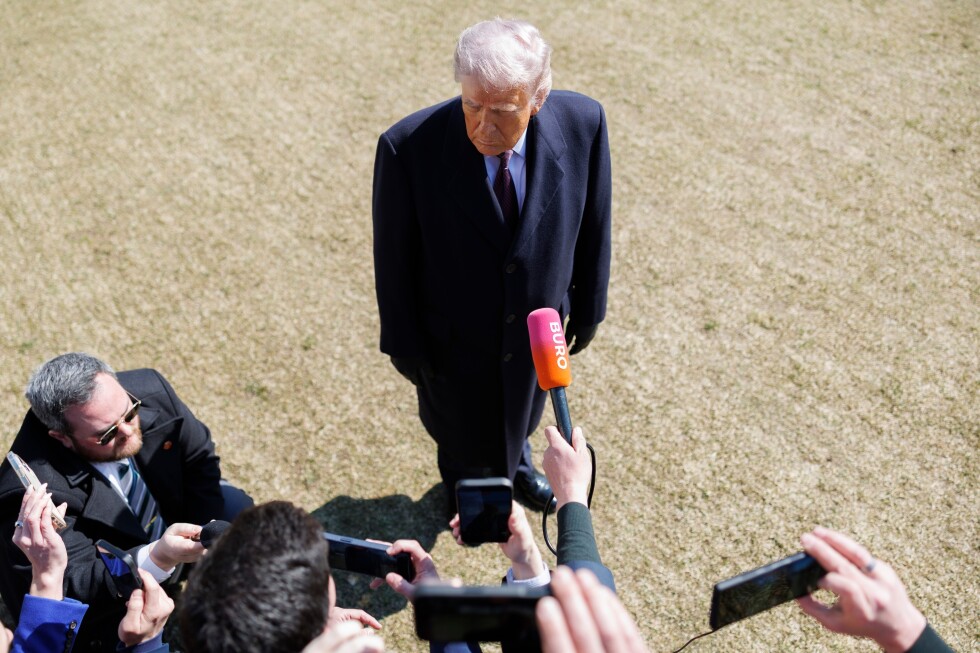
Speaking to reporters outside the White House before departing for Texas, Trump said Secretary of State Marco Rubio was engaged in discussions with Cuban leadership, though he provided few concrete details about what such a takeover might entail.
“The Cuban government is talking with us,” Trump said. “They have no money. They have no anything right now. But they’re talking to us, and maybe we’ll have a friendly takeover of Cuba.”
The president characterized Cuba as “a failed nation” that “wants our help,” suggesting that relations with the communist-run island—long one of Washington’s most entrenched adversaries—may be reaching a critical juncture. The White House did not respond to requests for clarification on Trump’s remarks.
These comments come just two days after a serious maritime incident in which Cuba reported that a Florida-registered speedboat carrying 10 armed Cubans from the United States opened fire on Cuban soldiers off the island’s northern coast. Four of the armed Cubans were killed and six were injured in the exchange of gunfire, according to Cuban authorities. One Cuban official was also wounded in the incident.
The timing is particularly significant as Cuba has been increasingly on Trump’s radar since early January, following U.S. forces’ removal of Venezuela’s socialist President Nicolás Maduro, one of Havana’s closest allies. After Maduro’s ouster, Trump suggested military action against Cuba might be unnecessary, as the island’s economy—already weakened by the cessation of oil shipments from Venezuela—could collapse under its own weight.
“We’ve had a lot of years of dealing with Cuba. I’ve been hearing about Cuba since I’m a little boy. But they’re in big trouble,” the president remarked, hinting at possible developments that could benefit Cuban exiles living in the United States.
The U.S. has maintained a strict trade embargo against Cuba since 1962, implemented shortly after the failed CIA-sponsored Bay of Pigs invasion. Despite this long-standing policy, Trump indicated earlier this month that communication channels with Cuban officials were active.
Cuban authorities confirmed earlier this week that they were in contact with U.S. officials following the maritime shooting incident. Senator Rubio has stated that both the Department of Homeland Security and Coast Guard are investigating the circumstances of the confrontation.
In January, Trump signed an executive order threatening to impose tariffs on countries providing oil to Cuba, potentially exacerbating the island’s deepening energy crisis. However, U.S. authorities have since indicated that Venezuelan oil can be sold to Cuban interests under certain conditions.
Carlos Fernández de Cossío, Cuba’s deputy foreign minister, briefly posted on social media that “the US maintains its fuel embargo against Cuba in full force, and its impact as a form of collective punishment is unwavering.” He added that “the possibility of conditional sales to the private sector already existed and does not alleviate the impact on the Cuban population” before deleting the post.
The situation has prompted concern among U.S. civil society groups. On Friday, more than 40 organizations—including the Alliance of Baptists, ActionAid USA, and the Presbyterian Church—sent a letter to Congress urging lawmakers to “press the Trump administration to reverse its aggressive policy towards Cuba.” The coalition warned that efforts to restrict oil shipments to the island would trigger a humanitarian crisis.
“Policies that deliberately impose hunger and mass hardship on millions of civilians constitute a form of collective punishment, and as such are a grave violation of international humanitarian law,” the letter stated.
The developments represent the latest chapter in the complex and often contentious relationship between the United States and Cuba, which has fluctuated through periods of heightened tension and attempted normalization across multiple administrations.
Fact Checker
Verify the accuracy of this article using The Disinformation Commission analysis and real-time sources.

20 Comments
This is a surprising development given the long history of tensions between the US and Cuba. A ‘friendly takeover’ could have major ramifications for the Cuban people and economy. I hope any talks are transparent and prioritize the interests of Cubans.
Absolutely, the needs and perspectives of the Cuban people should be central in any negotiations. A unilateral ‘takeover’ would raise serious concerns about sovereignty and self-determination.
A ‘friendly takeover’ of Cuba by the US is a very loaded concept with a lot of historical baggage. I hope any negotiations prioritize mutual understanding and the wellbeing of the Cuban people over narrow geopolitical interests.
Agreed, the fraught history between the two countries means any talks will require great sensitivity and care. The voices of Cubans should be at the forefront.
Interesting development in US-Cuba relations. A ‘friendly takeover’ would be a major shift from past antagonism. I wonder what the Cuban government and people would think of this proposal.
Agreed, this would be a significant change in policy. The details and implications will be important to watch as this plays out.
This news raises a lot of questions about the potential scope and implications of a ‘friendly takeover’ of Cuba. I hope the US and Cuban governments can find a path forward that respects Cuban sovereignty and benefits the Cuban people.
Yes, the vague language is concerning. Any agreement should be transparent and allow Cuba to chart its own course without undue US influence or interference.
This news raises a lot of questions about the US government’s intentions and the potential impact on the Cuban people. A ‘friendly takeover’ seems concerning and at odds with principles of self-determination. I hope the negotiations are transparent and prioritize Cuban interests.
Agreed, the language used is quite troubling. Any agreement should be built on respect for Cuban independence and the right of the Cuban people to chart their own course.
It’s intriguing that the US and Cuba may be in high-level talks, but the idea of a ‘friendly takeover’ seems concerning. I hope this doesn’t signal a return to more heavy-handed US intervention in Cuban affairs.
Yes, the language used raises red flags. Any agreement should respect Cuba’s independence and allow the Cuban government to make its own decisions about the country’s future.
The idea of a ‘friendly takeover’ of Cuba by the US is intriguing but also raises major red flags. I hope the two governments can find a way to cooperate that truly respects Cuban independence and self-determination.
Agreed, the historical context means this will be a delicate negotiation. Any agreement should prioritize the interests and voices of the Cuban people above all else.
The idea of a ‘friendly takeover’ raises a lot of questions. What would this entail exactly? Economic cooperation, political changes? Curious to see how Cuba responds and if a deal can be reached.
Yes, the language used is quite vague. It will be crucial to get clarity on the specifics of any potential agreement between the US and Cuba.
A ‘friendly takeover’ of Cuba by the US is a provocative concept with a lot of baggage. I hope the two governments can find a path forward that respects Cuban sovereignty and allows the Cuban people to determine their own future.
Absolutely, the historical context means this will require great care and nuance. Any agreement should be based on mutual understanding and benefit, not unilateral US control.
This is a complex and sensitive issue given the long history of US-Cuba tensions. A ‘friendly takeover’ could have major implications, both positive and negative. I hope any negotiations are transparent and center the needs of the Cuban people.
Yes, the potential ramifications are significant. The details and parameters of any agreement will be crucial in determining whether it truly serves the interests of the Cuban nation and people.