


Listen to the article
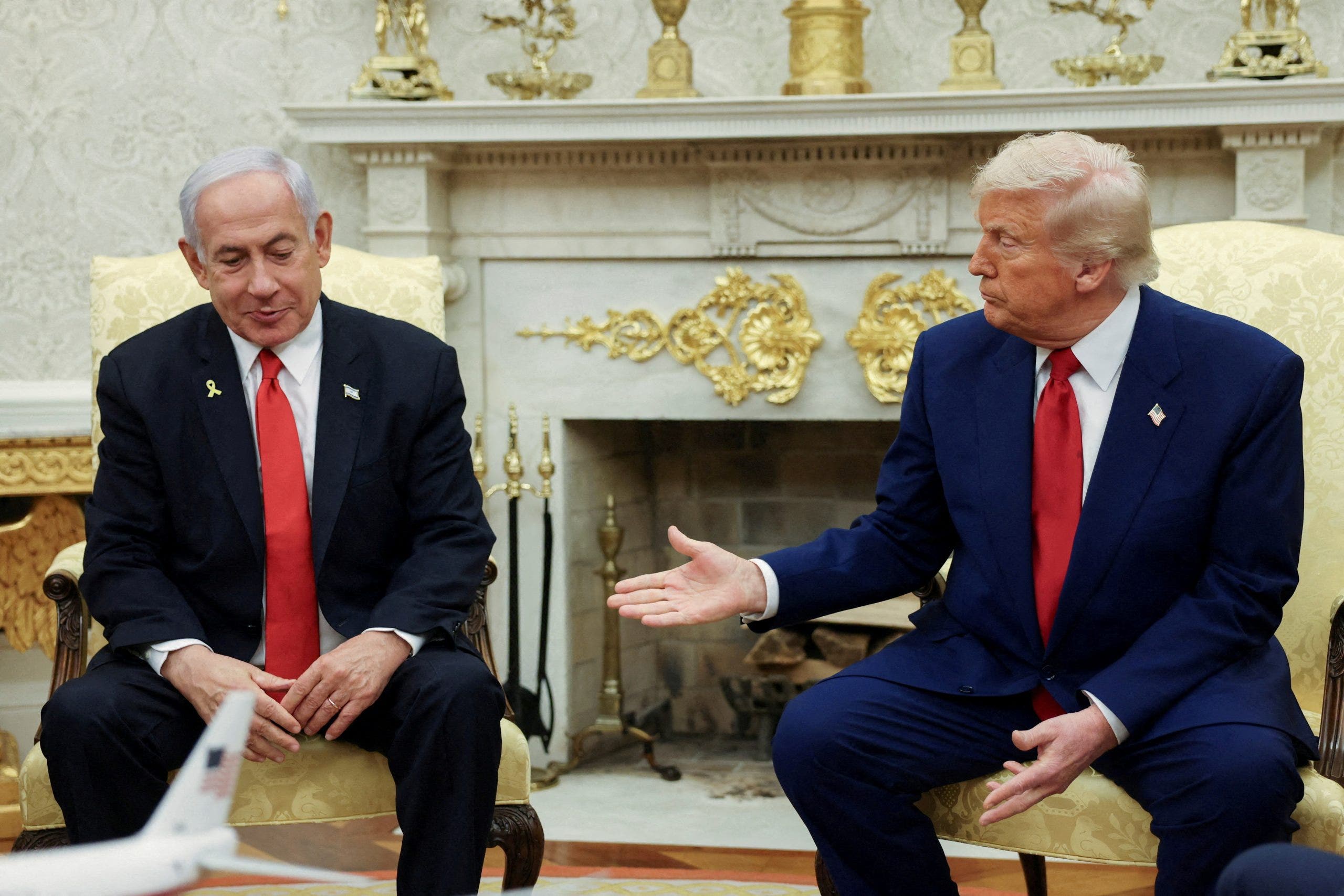
President Trump is set to meet with Israeli Prime Minister Benjamin Netanyahu at Mar-a-Lago on Monday afternoon, with discussions expected to focus on escalating tensions with Iran and potential advancement of the Gaza peace plan. The meeting follows Netanyahu’s scheduled morning talks with Secretary of State Marco Rubio.
Dr. Dan Diker, president of the Jerusalem Center for Security and Foreign Affairs, told Fox News Digital that President Trump has likely been pressuring Netanyahu to accelerate the peace plan implementation. According to Diker, Trump’s business background makes him impatient with the typically protracted Middle Eastern diplomatic timelines.
“The problem is that Hamas knows all it has to do is survive and continue controlling the western part of Gaza while attacking Israel, as it has been doing from Gaza’s tunnel network, in order to ratchet up tensions between Israel and the U.S.,” Diker explained.
Netanyahu’s visit carries two primary objectives: presenting Israel’s serious threat assessment regarding Iran, Hezbollah, and Hamas, while also seeking Trump’s support for Israel’s military operations against Hamas. Of particular concern is Iran’s rebuilding of military capabilities, which Israeli officials view as an immediate threat to regional stability.
Former Israeli Prime Minister Yair Lapid emphasized the importance of coordinating with the U.S. on all fronts, telling Fox News Digital: “The top priority has to be the management of stage two in Gaza. Israel needs to achieve the disarmament of Hamas and the removal of the threat from Gaza, and that requires the implementation of President Trump’s plan.”
Reports indicate Netanyahu will present Trump with plans for potential strikes against Iran’s missile program. This comes amid heightened tensions, with Israel warning Washington that recent Iranian Revolutionary Guard Corps missile drills could be masking preparations for an attack. IDF Chief of Staff Lt. Gen. Eyal Zamir conveyed this concern to U.S. Central Command chief Adm. Brad Cooper during recent meetings in Tel Aviv.
In a concerning development, Iranian President Masoud Pezeshkian recently stated that his country is engaged in what he described as a “total war” with the United States, Israel and Europe. “They want to bring our country to its knees,” Pezeshkian said, according to reports from The Times of Israel.
While U.S. intelligence agencies assess there is no immediate threat from Iran, Israeli defense officials maintain their forces remain on high alert. Dr. Meir Javedanfar, a lecturer on Iran and the Middle East at Reichman University, believes Israel’s proposed strikes would target Iran’s missile capabilities.
“Israel will probably hope that such a wide-scale attack would further undermine the legitimacy of Iran’s supreme leader, thereby creating greater political instability within the country,” Javedanfar said. He noted that Iran’s economy has deteriorated significantly following recent conflicts with Israel, creating additional pressure on the regime.
The Gaza peace plan implementation remains contentious within Israel’s government. Israeli Minister for Settlement and National Missions Orit Strook emphasized that full demilitarization of Gaza must occur before any further progress.
“Hamas wakes up every day with a mission to hurt us,” Strook told Fox News Digital. “The IDF will not withdraw even one meter, and no rehabilitation framework will be established until full demilitarization is completed.”
She referenced Trump’s previous address to the Israeli Knesset, noting his role in building international support for Gaza’s demilitarization and securing a U.N. Security Council resolution calling for dismantling weapons, tunnels, and terror infrastructure.
Despite these concerns, President Trump is expected to soon unveil the second stage of his Gaza framework. This comes even though Hamas has failed to return the remains of Israel Police Master Sgt. Ran Gvili, who was killed during the October 7, 2023 attack and whose body was taken to Gaza.
The meeting represents a critical juncture in U.S.-Israeli relations as both nations navigate complex regional challenges involving Iran’s growing threats, Hamas’s continued resistance, and the implementation of a sustainable peace plan for Gaza.
Fact Checker
Verify the accuracy of this article using The Disinformation Commission analysis and real-time sources.

7 Comments
The Trump-Netanyahu summit comes at a critical juncture, with tensions high over Iran and the ongoing Gaza conflict. While the US and Israel share concerns, the article highlights the complexities involved in finding durable solutions. Navigating these issues will require nuance and patience.
The Gaza situation remains a complex and volatile challenge. Both sides have legitimate security concerns, but continuing the cycle of violence will only make things worse. Hopefully Trump and Netanyahu can chart a path forward that prioritizes de-escalation and a durable ceasefire.
This meeting presents an opportunity for the US and Israel to align their strategies on Iran and Gaza, but the article rightly notes the difficulties in achieving breakthroughs. Entrenched positions and the ongoing threat from groups like Hamas make these issues challenging to resolve.
The Trump-Netanyahu summit comes at a pivotal moment, with high stakes surrounding Iran’s regional influence and the volatile Gaza situation. While the article highlights the complexities involved, it’s crucial that the two leaders find ways to coordinate their approaches and work towards de-escalation.
With Iran’s regional influence and Hamas’ resilience, this summit is an important opportunity for Israel and the US to coordinate their approach. But the article raises good points about the difficulties in achieving meaningful breakthroughs on these long-standing issues.
It’s clear that the Trump-Netanyahu meeting will focus heavily on Iran and the Gaza conflict. As an experienced dealmaker, Trump may push for faster action, but the article rightly notes the challenges of quickly resolving these entrenched disputes. Careful diplomacy and compromise will be essential.
This meeting will be crucial for Israel and the US to align on their Iran and Gaza strategies. Trump’s business mindset may push for faster progress on the peace plan, but as the article notes, Hamas can simply wait out the process and keep stoking tensions. It will be interesting to see what compromises emerge.