


Listen to the article
In a surprising diplomatic reversal, President Donald Trump has dramatically shifted his stance toward Colombian President Gustavo Petro, announcing a cordial phone conversation and extending a White House invitation just days after making pointed accusations against the South American leader.
“It was a Great Honor to speak with the President of Colombia, Gustavo Petro, who called to explain the situation of drugs and other disagreements that we have had,” Trump wrote on his social media platform. “I appreciated his call and tone, and look forward to meeting him in the near future.”
This conciliatory message stands in stark contrast to Trump’s comments just days earlier following the U.S. operation targeting Venezuelan President Nicolás Maduro. On Sunday, Trump had declared that “Colombia is very sick too” and accused Petro of “making cocaine and selling it to the United States.”
The former president’s remarks aboard Air Force One had taken on an ominous tone when he added that Petro is “not going to be doing it very long, let me tell you.” When asked whether U.S. intervention was possible, Trump responded, “Sounds good to me” – language that sparked immediate concern throughout Latin America about potential military action.
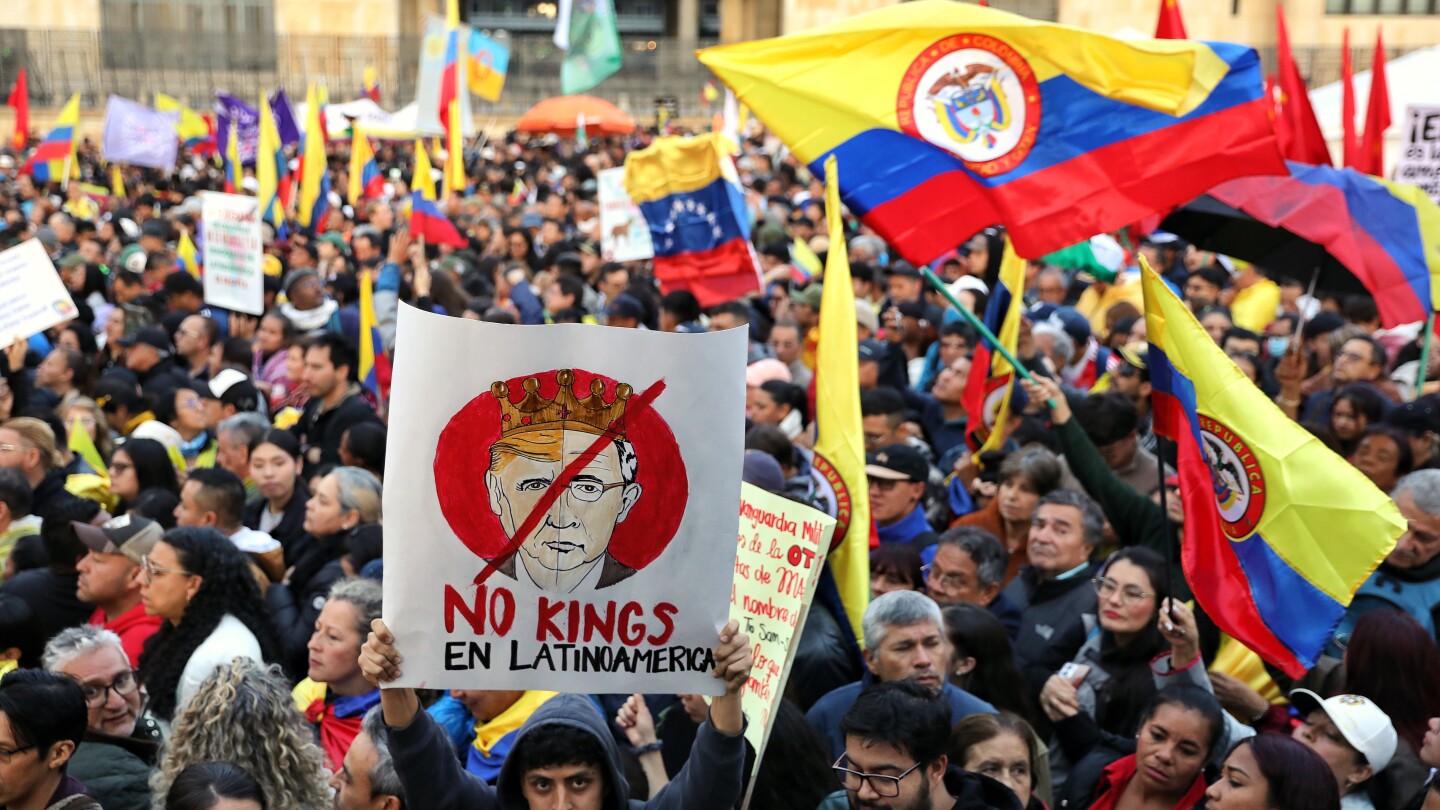
Petro later addressed the conversation during a rally in downtown Bogotá, where thousands had gathered to protest U.S. military threats. Speaking to demonstrators who had moments earlier chanted anti-American slogans at his encouragement, Petro claimed the hour-long call covered two main topics: Venezuela and drug trafficking.
The Colombian president told the crowd that certain Colombian politicians with alleged narco-trafficking ties had deliberately misled Trump about Petro’s record. “Those people are responsible for this crisis — let’s call it diplomatic for now, verbal for now — that has erupted between the U.S. and Colombia,” Petro explained.
Trump’s sudden warming toward Petro is particularly noteworthy given the Colombian leader’s harsh criticism of recent U.S. actions in Venezuela. Petro characterized the operation as an “abhorrent” violation of Latin American sovereignty, comparing it to Nazi Germany’s 1937 bombing of Guernica, Spain, and suggesting it was committed by “enslavers” and constituted a “spectacle of death.”
The diplomatic tension represents a significant shift in what has historically been one of America’s strongest alliances in Latin America. For three decades, Colombia has been a cornerstone of Washington’s counternarcotics strategy abroad, with both countries working closely to combat drug trafficking, counter rebel groups, and promote rural economic development.
Relations between the two nations had been deteriorating for months before Trump’s conciliatory post. In October, the Trump administration imposed sanctions on Petro, his family, and a member of his government, accusing them of involvement in the global drug trade. Colombia remains the world’s largest producer of cocaine.
Trump’s pressure campaign against Maduro had initially included ordering dozens of lethal strikes on alleged drug smuggling boats launched from Venezuela in the Caribbean. These operations eventually expanded to target suspected vessels in the eastern Pacific originating from Colombia as well.
In a further sign of deteriorating relations, the U.S. in September added Colombia to a list of nations failing to cooperate in the drug war for the first time in almost 30 years. This designation resulted in significant cuts to U.S. assistance to Colombia, which had long been the top recipient of American aid in the region.
“He has cocaine mills and cocaine factories,” Trump had said of Petro just days ago. “He’s not going to be doing it.”
The abrupt tonal shift raises questions about the future direction of U.S.-Colombia relations and whether this represents a genuine diplomatic reset or merely a temporary easing of tensions. Analysts note that Colombia’s strategic importance in regional security and anti-narcotics operations makes maintaining workable relations vital for both countries despite ideological differences between their current leaders.
Fact Checker
Verify the accuracy of this article using The Disinformation Commission analysis and real-time sources.

7 Comments
This flip-flop in tone is quite puzzling. One wonders what prompted Trump’s change of heart after his previous tough talk. Perhaps there are important strategic considerations at play that the public isn’t privy to.
Trump’s invitation to the Colombian president is an interesting diplomatic move, especially given his previous hardline rhetoric. It will be worth watching how this plays out and whether it leads to any tangible progress on regional issues.
Interesting diplomatic shift from Trump. It’s good to see leaders open to dialogue, even after harsh rhetoric. Hopefully this leads to constructive discussions on the complex issues of drug trafficking and regional stability.
Shifting from threats to an invitation is an unusual approach. One wonders if there are political considerations or other factors behind this sudden change in tone. Careful diplomacy will be needed to address the complex challenges in the region.
It’s intriguing to see the Trump administration’s stance evolve on the Colombia-Venezuela situation. Diplomacy and cooperation will likely be more effective than threats in addressing the region’s drug trade and security concerns.
The drug trade and regional security challenges in South America require nuanced, collaborative solutions. Threats of military action are rarely productive. I hope this White House meeting can foster a more constructive dialogue.
The back-and-forth between Trump and the Colombian president highlights the delicate geopolitical dynamics at play. Hopefully this meeting can foster a more constructive dialogue, rather than escalating tensions further.