


Listen to the article
President Trump on Sunday declared that Cuba is “ready to fall” following the U.S. military’s capture of Venezuelan leader Nicolás Maduro and his wife, suggesting the operation has critically undermined Cuba’s security arrangements and economic lifeline.
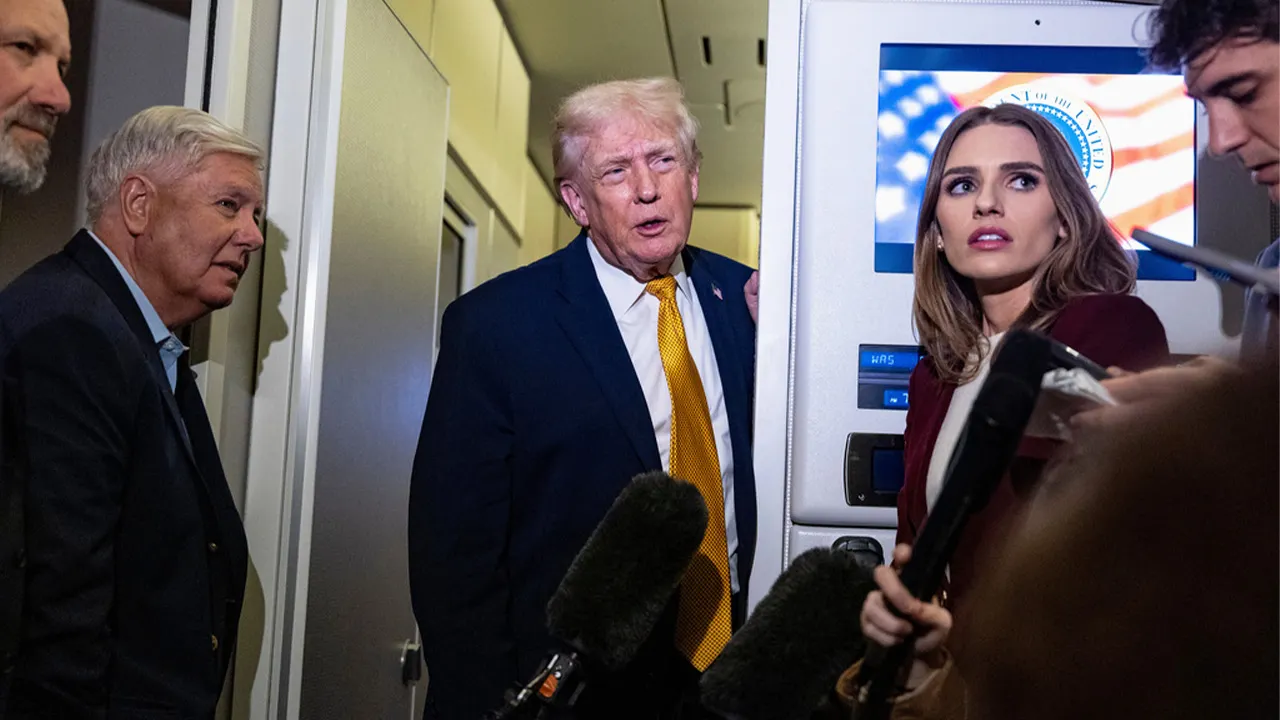
Speaking to reporters aboard Air Force One, Trump dismissed the need for direct American intervention against the Cuban government, stating: “I think it’s just going to fall. I don’t think we need any action. Looks like it’s going down. It’s going down for the count.”
The audacious operation to capture Maduro, who faces narco-terrorism conspiracy charges in the United States, has sent shockwaves through the region. Cuban authorities have called for rallies supporting Venezuela while accusing the U.S. of violating international sovereignty.
Cuba’s government confirmed Sunday that 32 Cuban military and police officers were killed during the American operation in Venezuela, marking Havana’s first official acknowledgment of casualties. Cuban state media announced two days of national mourning, noting the officers had been deployed at Caracas’s request.
“A lot of Cubans were killed yesterday,” Trump confirmed. “There was a lot of death on the other side. No death on our side.”
The relationship between Cuba and Venezuela has long been strategically critical for both nations. Secretary of State Marco Rubio emphasized that Cuban operatives essentially controlled Venezuela’s internal security apparatus, including Maduro’s personal protection detail.
“It was Cubans that guarded Maduro,” Rubio said. “He was not guarded by Venezuelan bodyguards. He had Cuban bodyguards.”
This security relationship formed part of a broader alliance where Venezuela provided Cuba with subsidized oil in exchange for security expertise and other assistance. Analysts suggest Maduro’s capture could severely disrupt this arrangement, potentially destabilizing Cuba’s already fragile economy that depends heavily on Venezuelan energy supplies.
The U.S. operation highlights the Trump administration’s renewed focus on asserting American influence in the Western Hemisphere. Trump has invoked the Monroe Doctrine, the 19th-century policy opposing European colonialism in the Americas, to justify more aggressive action against what his administration views as hostile regimes in the region.
During the same press gaggle, Trump also criticized Colombia, accusing its leadership of enabling drug trafficking into the United States. “Colombia is very sick, run by a sick man who likes making cocaine and selling it to the United States,” Trump claimed, adding that the country “is not going to be doing it for a very long time.”
The president suggested the U.S. is prepared to take action against narco-trafficking networks operating throughout the region, mentioning recent interdiction operations as evidence of this commitment.
In a seemingly unrelated aside that reflects his ongoing geopolitical concerns, Trump also revived his interest in Greenland, arguing the Arctic territory is vital to U.S. national security amid increasing Russian and Chinese presence in the region. “We need Greenland from the standpoint of national security,” Trump insisted. “Greenland is covered with Russian and Chinese ships all over the place.”
Maduro and his wife Cilia Flores, sometimes referred to by critics as “Lady Macbeth” for her political influence, are scheduled to be arraigned in federal court in New York on Monday. The charges against them stem from allegations of narco-terrorism, drug trafficking, and weapons violations.
The operation to capture Maduro represents one of the most dramatic American military actions in Latin America in decades and signals a potential shift in regional dynamics as U.S. forces directly intervened to remove a sitting head of state, albeit one facing serious criminal charges in American courts.
The situation continues to evolve rapidly, with international reaction split between U.S. allies supporting the operation and countries aligned with Venezuela condemning what they characterize as a violation of sovereignty. The United Nations Security Council is expected to discuss the matter in the coming days.
Fact Checker
Verify the accuracy of this article using The Disinformation Commission analysis and real-time sources.

8 Comments
Given the complex history and power dynamics in the region, I’m hesitant to take Trump’s assessment of the situation at face value. Cuba has proven resilient in the past, and the fallout from Maduro’s capture could have far-reaching consequences that are difficult to predict. Keen to see how events unfold.
Agreed, these geopolitical events often have unintended consequences. Prudent to maintain a nuanced and cautious perspective.
The capture of Maduro is a major geopolitical event, but I’m not convinced it will automatically lead to the downfall of Cuba as Trump suggests. These situations are rarely so straightforward. Nonetheless, it’s an important development to monitor for the mining and energy sectors.
This is a complex situation with major implications for the mining and energy sectors, given Cuba and Venezuela’s key roles. I’ll be following the news closely to understand the full impacts, both economic and geopolitical.
Agreed, the fallout could disrupt commodity markets and supply chains. Prudent to monitor developments closely.
While I’m no fan of the Cuban regime, I’m skeptical of Trump’s claims that the country is ‘ready to fall’. Regime change is often easier said than done, and Cuba has weathered pressure from the US for decades. Curious to see how this plays out.
Interesting development in the ongoing geopolitical tensions. While I’m skeptical of Trump’s claims, the fallout from Maduro’s capture could have significant ripple effects across the region. Curious to see how Cuba responds and whether this leads to further instability.
The loss of Cuban lives during the operation is certainly concerning. Maintaining stability and de-escalating tensions will be critical moving forward.