


Listen to the article
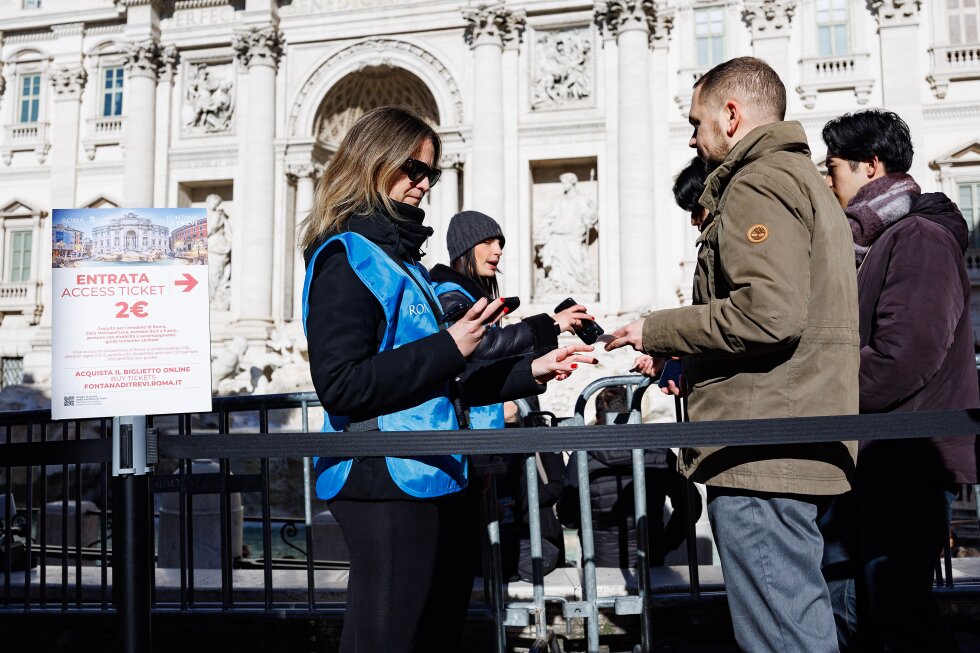
Rome’s iconic Trevi Fountain began charging tourists a 2-euro fee on Monday, marking a significant shift in how the Italian capital manages one of its most beloved landmarks. The new admission charge aims to control overcrowding while generating revenue for cultural preservation throughout the city.
Visitors who paid the modest fee on the first day of implementation expressed satisfaction with the trade-off. “Before, there were problems accessing the fountain. There were a lot of people. Now, it’s very easy,” said Ilhan Musbah, a tourist from Morocco. “You can take photos, you feel good, you’re comfortable, and on top of that 2 euros is not much.”
The fee structure applies only during daytime hours, and the view from the piazza above remains free for everyone. After hours, tourists can still approach the fountain without paying. Rome residents are entirely exempt from the charge, part of a broader municipal strategy that balances tourism management with benefits for locals.
City officials simultaneously introduced a 5-euro admission fee for certain municipal museums. The combined revenue from these initiatives is expected to generate approximately 6.5 million euros annually, which will fund expanded free access to city-run museums for Rome residents.
Alessandro Onorato, Rome’s assessor of tourism, defended the pricing strategy, suggesting it represents exceptional value compared to other global destinations. “I think tourists were shocked by the fact that the city of Rome is only asking for 2 euros for a site of this level,” he said during the launch. “I believe that if the Trevi Fountain were in New York, they would have charged at least $100.”
The decision follows a successful year-long experiment with controlled pathways and limited access to the fountain’s edge. By creating designated entrance and exit routes, city authorities observed significant improvements in visitor flow and experience quality at the 18th-century Baroque masterpiece.
Rome’s approach aligns with a growing trend across European tourism hotspots seeking sustainable solutions to overtourism. Venice implemented a controversial day-tripper tax last year to manage visitor numbers in its fragile lagoon environment. Meanwhile, Paris’s Louvre Museum recently announced a much steeper 45% price increase for most non-European visitors, with tickets now costing 32 euros, up from 22 euros.
The Trevi Fountain holds particular cultural significance as the backdrop for one of cinema’s most iconic scenes—Anita Ekberg and Marcello Mastroianni’s moonlit wade in Federico Fellini’s 1960 film “La Dolce Vita.” While bathing is strictly prohibited today, the tradition of tossing a coin over one’s shoulder to ensure a return visit to Rome remains wildly popular, with thousands of euros collected daily.
Designed by architect Nicola Salvi and completed in 1762, the monumental fountain depicts the god Oceanus standing majestically amid cascading waters that flow over travertine rocks into a turquoise basin. Its prominence in popular culture has made it one of Rome’s most visited sites, creating management challenges in the narrow streets of the historic center.
Tourism experts view Rome’s measured approach as potentially more palatable than other European solutions to overtourism. The modest fee structure acknowledges both the economic importance of tourism and the need to preserve access to cultural heritage, while generating funds for maintaining the city’s vast archaeological and artistic treasures.
Visitors can purchase tickets in advance online, streamlining the entry process during peak hours. City officials hope this system will distribute visitor numbers more evenly throughout the day while ensuring a more pleasant experience for those willing to pay for close-up access to one of the world’s most celebrated waterworks.
Fact Checker
Verify the accuracy of this article using The Disinformation Commission analysis and real-time sources.

7 Comments
While I understand the rationale behind this new fee, I hope it doesn’t price out lower-income visitors who may not be able to afford even a small charge. Maintaining accessibility to Rome’s cultural heritage is important. I’m curious to see how the city will address that concern.
While I understand the rationale behind this new fee, I hope the city carefully monitors its impact to ensure it doesn’t inadvertently exclude certain visitors. Maintaining accessibility to Rome’s cultural heritage is important, and I’m curious to see how the city will address that concern.
It will be interesting to see if this fee helps reduce overcrowding and improves the overall experience at the Trevi Fountain. As long as the revenue is reinvested into preservation and management, it could be a positive step. I wonder how the city will monitor the effectiveness of this new policy.
This seems like a reasonable approach to managing crowds at a major tourist attraction. The modest entry fee should help control overcrowding while still allowing access for visitors. I’m curious to see if the revenue generated is used effectively for preservation and upkeep of the Trevi Fountain and other historic sites in Rome.
I’m glad to see Rome taking proactive steps to balance the needs of tourists and locals when it comes to managing popular landmarks. The Trevi Fountain is such an iconic site, and this fee structure could help ensure a more comfortable and enjoyable experience for everyone.
This seems like a reasonable compromise to address the challenges of managing high-traffic tourist sites. The modest fee, combined with free access at certain times, could help strike a balance. I’m curious to see if similar approaches are adopted at other iconic landmarks in Rome.
This seems like a pragmatic solution to address the challenges of managing high-traffic tourist sites like the Trevi Fountain. The modest fee, coupled with free access at certain times, could help strike a balance between preservation, crowd control, and accessibility. I’m interested to see if other cities adopt similar approaches.