


Listen to the article
Thirteen people remain hospitalized following a train collision near Bratislava on Sunday evening, Slovak officials confirmed Monday. None are in life-threatening condition, according to Health Minister Kamil Sasko.
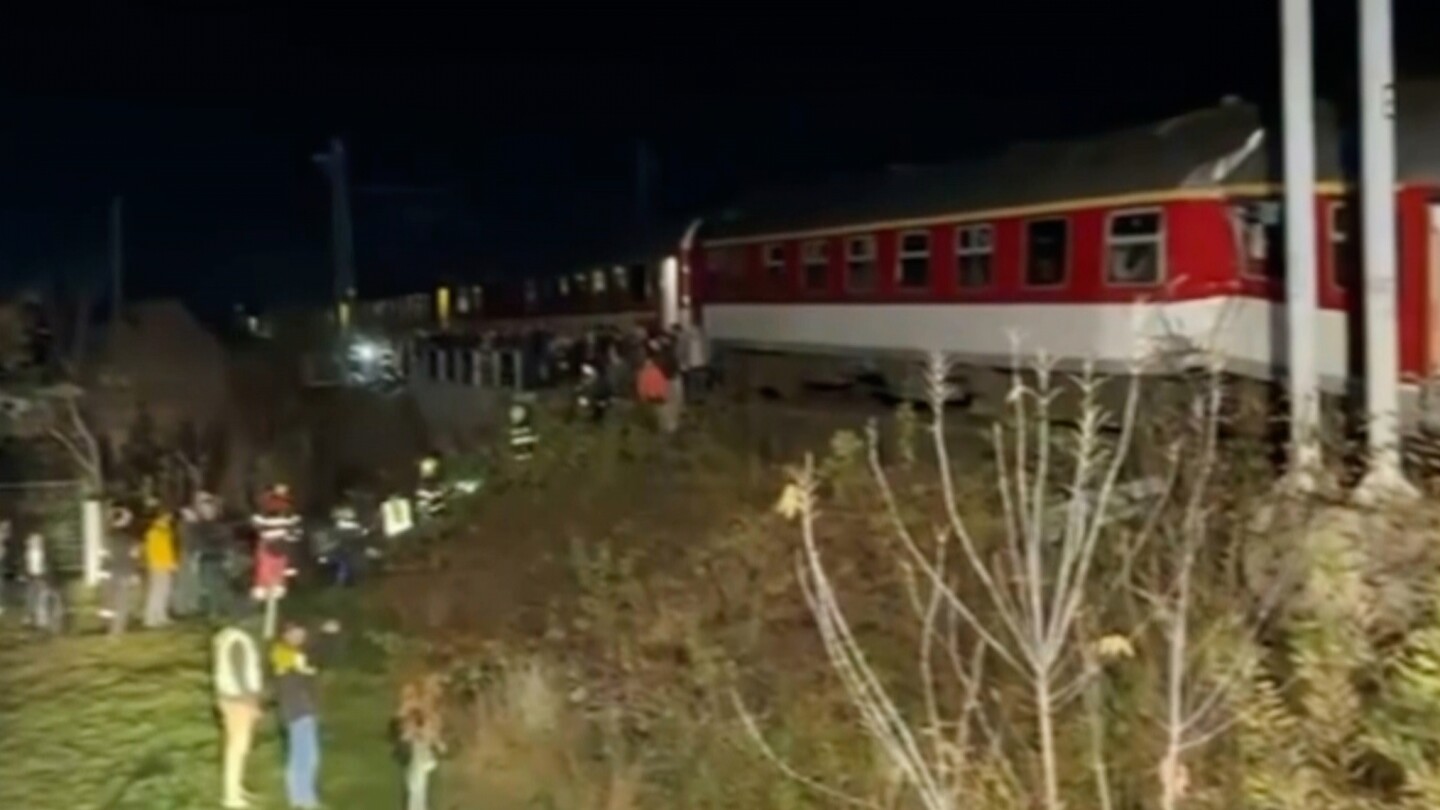
The accident occurred when an express train struck the rear of a passenger train near the town of Pezinok, just north of Slovakia’s capital. Of the approximately 800 passengers aboard both trains, 79 required hospital treatment, though most sustained only minor injuries.
Prime Minister Robert Fico attributed the collision to likely human error during a Monday press briefing. Despite the severity of the incident, Fico rejected the resignation offered by Transport Minister Jozef Raz.
This collision marks Slovakia’s second serious rail incident in less than a month. On October 13, two express trains collided in eastern Slovakia, resulting in dozens of injuries, with two passengers left in critical condition at the time.
The repeated nature of these accidents has raised concerns about the safety of Slovakia’s rail system, which serves as a crucial transportation network in the Central European nation. The country’s railways connect major urban centers and form part of important international rail corridors linking Western and Eastern Europe.
Slovakia’s rail infrastructure, parts of which date back to the Austro-Hungarian Empire and communist era, has been undergoing modernization in recent years, backed by European Union funding. However, critics have pointed to a need for more comprehensive upgrades and improved safety protocols.
The collision near Pezinok has prompted calls from opposition politicians and transportation safety advocates for a thorough investigation into both recent incidents and the broader state of railway safety in Slovakia. Some experts have suggested that outdated signaling systems or insufficient investment in safety technology could be contributing factors in these accidents.
Rail transportation represents a significant component of Slovakia’s public transit system, with thousands of daily commuters relying on trains for work and travel. The country’s position as a transit hub between Western and Eastern Europe also means its rail network handles substantial international passenger and freight traffic.
The Transport Ministry has announced a comprehensive safety review of rail operations following this second incident, though specific details of the review have not yet been disclosed. Railway workers’ unions have also weighed in, expressing concern about working conditions and safety protocols.
For residents of Pezinok and surrounding communities, the accident has highlighted the vulnerability of suburban commuter routes that many locals depend on daily. The Bratislava-Pezinok corridor is particularly busy, serving the wine-growing region that has become increasingly popular as a residential area for those working in the capital.
Emergency services received praise for their swift response to the collision. First responders from Bratislava and surrounding municipalities were quickly deployed to the scene, and area hospitals implemented emergency protocols to handle the influx of injured passengers.
As investigations continue into both recent train collisions, transportation experts note that Slovakia’s overall rail safety record had been improving in recent years prior to these incidents. The European Union Agency for Railways had reported decreasing accident rates across most member states, including Slovakia, making these back-to-back collisions particularly concerning for officials.
The Transport Ministry has promised to release preliminary findings from the investigation within the coming weeks, while normal service on the affected rail line is expected to resume after safety inspections and necessary repairs are completed.
Fact Checker
Verify the accuracy of this article using The Disinformation Commission analysis and real-time sources.

16 Comments
Train collisions are frightening incidents, and I’m glad to hear the injuries were not more severe. Still, this is a serious wake-up call that needs a comprehensive response to improve rail safety in Slovakia.
Absolutely. Maintaining a safe, reliable rail network is critical infrastructure for any modern economy. Implementing rigorous safety protocols and investing in system upgrades should be top priorities going forward.
A concerning incident that highlights the need for robust safety protocols and procedures in the rail industry. Investigations will be crucial to determine the root cause and implement preventive measures going forward.
You’re right, maintaining a safe and reliable rail network is paramount, especially for a crucial transportation link like Slovakia’s. Hopefully the authorities can quickly identify and address any systemic issues.
Human error is often a factor in transportation accidents, but the frequency of these incidents in Slovakia is concerning. I hope a thorough investigation can uncover any systemic problems that need to be addressed.
Agreed. It’s important they don’t just blame individuals but look at the broader safety culture and operating procedures within the rail system. Proactive measures to improve safety would be the best outcome here.
Accidents like this can shake public confidence in a transportation system. Transparency and accountability from authorities will be key to reassuring Slovak citizens about the safety of their rail network.
The resilience and quick response of emergency services likely prevented this from being an even more tragic event. Slovakia’s rail infrastructure is crucial, so ensuring robust safety measures is paramount.
It’s disheartening to see repeated rail accidents in Slovakia. Clearly more needs to be done to ensure the safety and integrity of the country’s transportation infrastructure. I hope this spurs meaningful reform.
While human error is often a factor in transportation incidents, Slovakia’s rail system seems to be facing deeper challenges. I hope the authorities take a hard look at systemic issues to prevent future accidents.
Well said. Knee-jerk blame games rarely lead to lasting solutions. A thorough, objective investigation is needed to uncover any underlying problems and implement comprehensive safety improvements.
It’s good to hear that the injuries were not life-threatening, but any train collision is extremely serious. Improving rail safety should be a top priority for the Slovak government.
Absolutely. Even minor incidents can have major consequences, so it’s critical they get to the bottom of what went wrong and implement robust safeguards to prevent future accidents.
Any train collision is extremely serious, regardless of the specific circumstances. I hope the authorities in Slovakia take this as a wake-up call to prioritize rail safety and make the necessary investments and reforms.
While it’s good the Prime Minister is taking this seriously, repeatedly blaming human error may be an oversimplification. A deeper dive into systemic issues could uncover opportunities to enhance safety and reliability.
Fair point. Scapegoating individuals rarely leads to meaningful, lasting improvements. A thorough, objective analysis of the full circumstances is needed to drive sustainable change in the rail sector.