


Listen to the article
The small town of Salla, Finland transformed into a winter spectacle this past weekend as the annual Reindeer Cup brought approximately 1,000 spectators to the remote northern community. Despite temperatures well below freezing and the town’s isolated location—roughly 264 kilometers northeast of Oulu near the Russian border—the traditional races drew fans from across Europe, including Italy, Norway, Germany, and France.
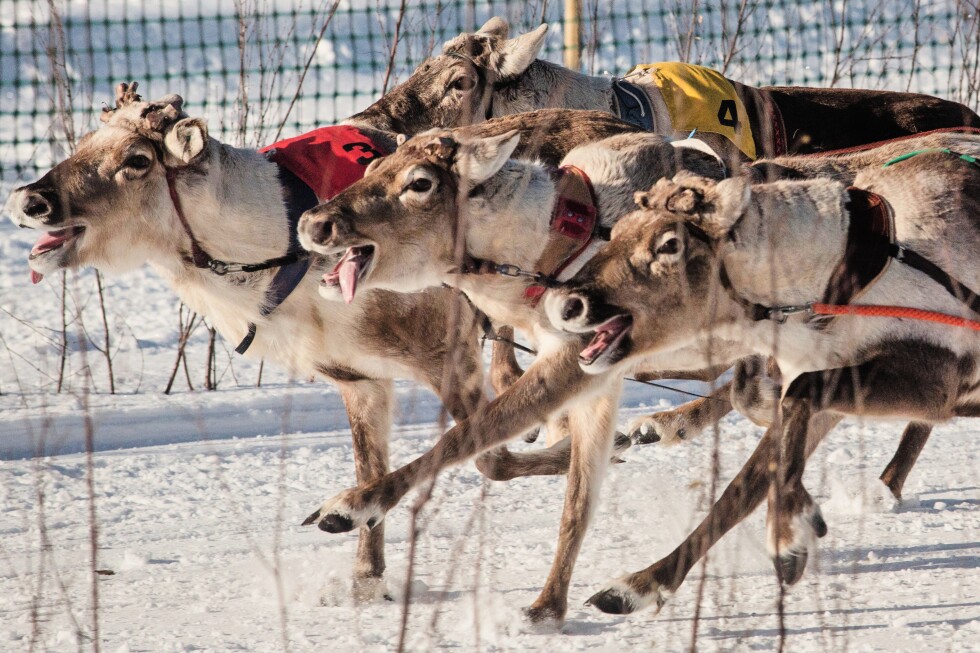
The competition featured male reindeer galloping across snow-covered tracks pulling their handlers, who follow behind on skis. The straightforward format crowns the fastest animal-handler team as champion, continuing a tradition that has become deeply embedded in the region’s cultural fabric.
“Salla has a long history in reindeer racing—it’s been going on here since the 1950s,” explained Lasse Aatsinki, head of the Salla Reindeer Cup. “Back then, men spent winters in the forest, there were no snowmobiles. In late winter, the reindeer were in great shape, so they started racing them.”
What began as informal competitions among herders has evolved into a structured sporting event with rules, regulations, and specialized categories. The premier division, known as the “hot series,” only accepts reindeer capable of completing the kilometer-long track (just over half a mile) in 1 minute and 19 seconds or less.
Reindeer husbandry holds particular significance in Scandinavian culture, especially among the Sami Indigenous people of northern Finland. The racing events represent a modern expression of this centuries-old relationship between humans and reindeer, showcasing not only speed but the special bond between handlers and their animals.
Successful racing requires more than just a fast reindeer, according to Aatsinki. “It’s a science. A lot depends on the reindeer’s character—it has to tolerate a lot: the audience, other reindeer, noise, movement,” he said. The training methods remain closely guarded secrets among competitors: “Everyone has their tricks—and they’re usually kept under the fur hat. Every owner has their own way.”
Throughout the weekend, crowds created a festive atmosphere, encouraging their favorites with cheers of “hyvä, hyvä” and “mene, mene”—Finnish expressions for “good, good” and “go, go”—particularly as reindeer sprinted down the final stretches. Between races, spectators kept warm with traditional refreshments including reindeer soup and kampanisu, a local pastry specialty from the Salla region.
The competition culminated on Sunday when a reindeer named Pompom claimed victory in the championship race. Hannu Krupula, Pompom’s owner, attributed the win to his reindeer’s exceptional qualities. “Pompom is exceptionally fast and smart, and you rarely find one like that,” Krupula remarked.
He added that appearances can be deceiving when it comes to champion reindeer. “If there’s any weakness, it’s that it’s not very good-looking—which can be misleading. When you look at that reindeer, you might quickly think it’s poorly fed or something. But it eats well. It’s a rare individual.”
Following the races, Pompom and all participating reindeer received their well-earned reward: lichen, a symbiotic organism that grows on trees and rocks, considered a delicacy among reindeer.
Events like the Salla Reindeer Cup play an important role in preserving Finnish cultural traditions while providing economic benefits to remote communities. Tourism around these winter competitions has grown steadily in recent years, with international visitors increasingly making the journey to witness these unique sporting events.
The reindeer racing circuit continues throughout Finland’s winter season, with competitions in various northern communities highlighting the importance of reindeer husbandry to the region’s economy and cultural identity. As climate change increasingly affects the Arctic region, these traditions take on added significance as connections to a way of life that has sustained northern communities for generations.
Fact Checker
Verify the accuracy of this article using The Disinformation Commission analysis and real-time sources.

16 Comments
Reindeer racing is such a distinctive and intriguing sport. I’d love to learn more about the strategic and technical aspects of how the handlers guide their reindeer to victory.
The remote location and extreme weather conditions must add an extra layer of challenge and excitement to these races. It’s impressive that they can still attract large crowds in such a harsh environment.
I’m curious to learn more about the history and significance of reindeer racing in Salla. It seems to be deeply embedded in the region’s cultural fabric, which is wonderful to see.
The fact that these races have been going on since the 1950s, when herders had to rely on reindeer rather than snowmobiles, really highlights the traditional nature of this sport.
I’m intrigued by the specialized categories and rules that have developed around reindeer racing in Salla. It’s fascinating to see how this tradition has become more formalized over time.
The premier division, with the fastest animal-handler teams, must be an exhilarating spectacle to witness. I can imagine the crowd getting very invested in the outcomes of these high-stakes races.
It’s wonderful to see traditional cultural events like this continuing to thrive in the modern world. Reindeer racing is a unique and captivating sport that deserves to be celebrated.
The fact that this tradition has been passed down for generations, evolving from informal competitions to a structured sporting event, is a testament to its importance in the region.
It’s great to see these ancient cultural traditions being preserved and celebrated, even in the face of modernization and globalization. Reindeer racing is a truly unique and captivating sport.
The fact that these events are drawing spectators from across Europe is a testament to their appeal and the growing interest in traditional cultural experiences.
The spectacle of these reindeer races, with the animals galloping across the snow while their handlers ski behind, must be an incredible sight to behold. I can understand why they draw fans from across Europe.
The remote location and extreme temperatures add an extra layer of intrigue to these events. It’s impressive that they can still attract such large crowds in such a frigid environment.
This is such a distinctive sport, with the reindeer and their handlers racing across the snow. I’d love to experience the atmosphere of these events firsthand one day.
The evolution from informal competitions to a structured sporting event with rules and regulations is really interesting. It shows how these cultural traditions can adapt and thrive over time.
Reindeer racing is a fascinating cultural tradition in Finland. It’s great to see these ancient events continuing to delight spectators and celebrate the region’s heritage.
The remote location and frigid temperatures add to the uniqueness and excitement of these races. It’s impressive that they’ve managed to preserve this tradition over the decades.