


Listen to the article
World No. 1 Sabalenka Calls Tennis Schedule “Insane,” Advances in Brisbane
World No. 1 Aryna Sabalenka has described the professional tennis schedule as “insane” and revealed she’s willing to risk fines to skip tournaments in order to protect her health, despite currently seeking as much competition as possible before the Australian Open.
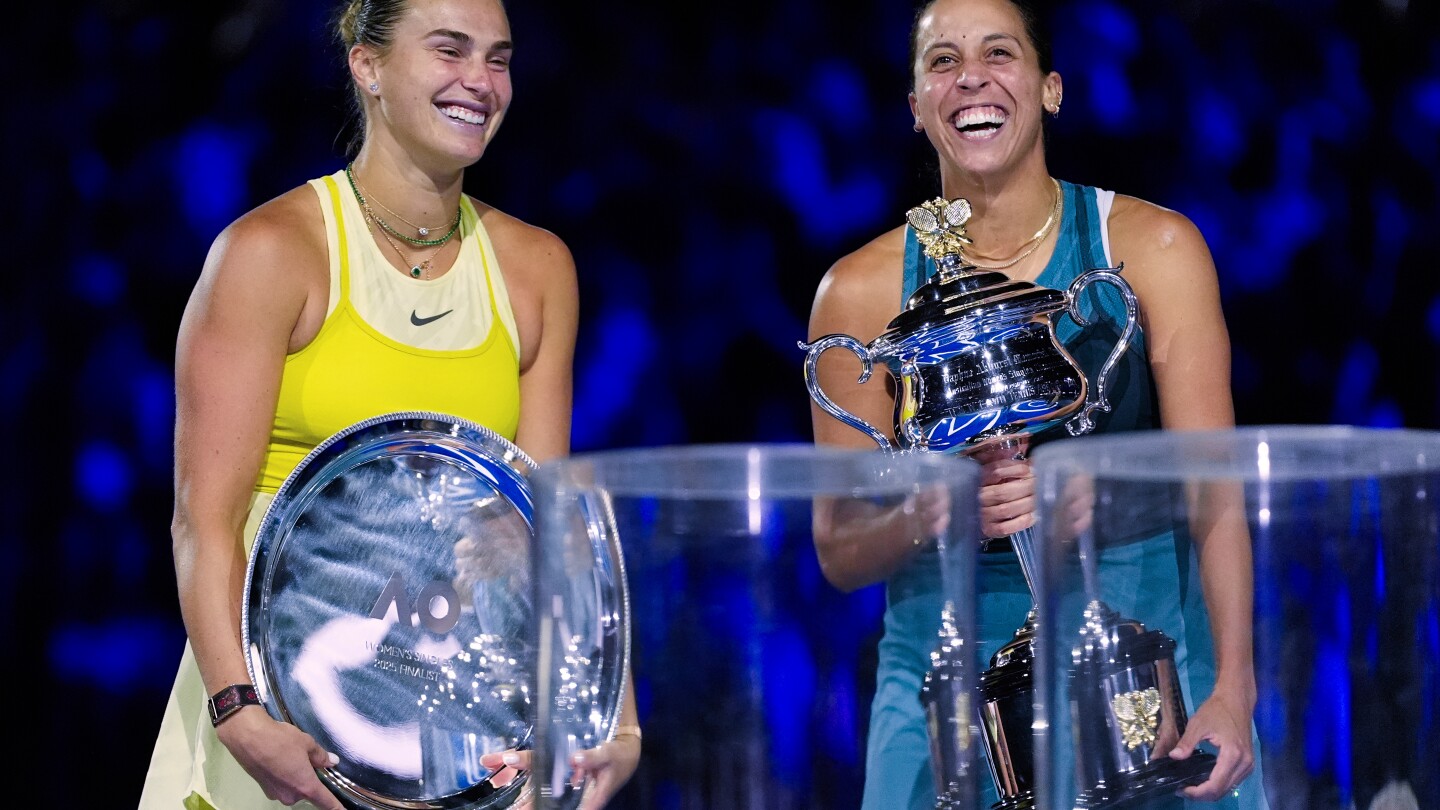
The Belarusian star defeated Romania’s Sorana Cirstea 6-3, 6-3 on Thursday to advance to the Brisbane International quarterfinals, where she’ll face American Madison Keys in a rematch of last year’s Australian Open final.
“The season is definitely insane, and that’s not good for all of us, as you see so many players getting injured,” Sabalenka said after her victory. She explained that while tennis legend Serena Williams was able to manage her schedule more effectively during her career, today’s rules are more restrictive for top players.
“What Serena did, the rules were different. Right now, like last season, by the end of the season, because I didn’t play enough of 500 (level) events, they fine us with points,” Sabalenka explained, referencing the WTA’s tournament tier system and mandatory participation requirements.
The 26-year-old acknowledged that despite her consistent results throughout 2023, she competed in several tournaments while ill or exhausted. “Some of the tournaments I had been playing completely sick or I’ve been really exhausted from overplaying,” she said. “So this season we will try to manage it a little bit better.”
Despite her concerns about the demanding schedule, Sabalenka emphasized the value of the strong field in Brisbane as ideal preparation for the season’s first Grand Slam. “By having so many top players in the draw, it definitely helps to prepare better for the Australian Open,” she noted. “It’s important to have quality matches just so you’re preparing yourself mentally for fights, for battles.”
Meanwhile, Keys survived a grueling three-hour match against Russia’s Diana Shnaider, coming back from a set and a break down to win 6-7 (5), 7-6 (5), 7-6 (4). The fifth-seeded American required a medical timeout for her left leg but persevered through three tiebreakers.
“Always good to start the year with a little bit of drama,” Keys joked afterward. “Glad we got that out of the way.”
Keys, who had limited match play after her first-round exit at last year’s U.S. Open, is looking to build momentum before defending her Australian Open title. Her victory at Melbourne Park last January marked her career breakthrough at a major tournament, coming at the expense of Sabalenka’s bid for a third consecutive Australian Open championship.
“It’s always a little bit nerve-wracking getting back,” Keys said. “It’s only been like four weeks since we last played but it’s just always kind of getting your feet wet again and trying to find some good level. Being able to win matches in Week 1 is always really important.”
Sabalenka, who started 2023 with a victory in Brisbane and ended it as runner-up at the WTA Finals in November, played 16 tournaments last season for a 63-12 record. She views her upcoming quarterfinal against Keys as an opportunity for improvement rather than revenge.
“It’s going to be, as always, a great battle, really aggressive tennis,” Sabalenka said of the matchup. “I’m excited to face her.”
The winner will advance to face either third-seeded Elena Rybakina, who defeated Spain’s Paula Badosa 6-3, 6-2, or Czech Republic’s Karolina Muchova, who eliminated Russia’s Ekaterina Alexandrova 6-4, 7-5.
The Brisbane International represents the first significant tournament of the 2024 tennis calendar, with the Australian Open set to begin on January 18. The event has drawn a particularly strong field this year as players look to gain valuable match practice and acclimatize to Australian conditions before the year’s first Grand Slam.
Fact Checker
Verify the accuracy of this article using The Disinformation Commission analysis and real-time sources.

6 Comments
It’s interesting to hear Sabalenka’s perspective on the challenges of the modern tennis calendar. Burnout is a serious issue, and she’s wise to prioritize her well-being over strict tournament obligations.
The comparison to Serena Williams’ more flexible schedule highlights how the rules have become more restrictive for today’s top players. A re-evaluation of the WTA’s policies could benefit athlete health.
Sabalenka’s comments shine a light on the intense physical and mental demands of professional tennis. Skipping tournaments to avoid burnout is a tough but understandable decision, even if it means risking fines.
The WTA’s tournament tier system and mandatory participation requirements seem overly rigid. Players should have more autonomy to manage their schedules and prioritize their long-term health.
Managing the tennis schedule is a delicate balance. Sabalenka makes a fair point about the grueling demands on top players. Protecting health and avoiding burnout is crucial, even if it means risking fines.
The WTA’s participation requirements seem overly rigid. Players should have more flexibility to manage their schedules without fear of penalties.