


Listen to the article
In the shadow of war, Kherson’s resilience endures three years after Russian occupation ended. The southern Ukrainian port city that once erupted in jubilation now exists in a state of wary stillness, with daily life largely unfolding behind walls or underground.
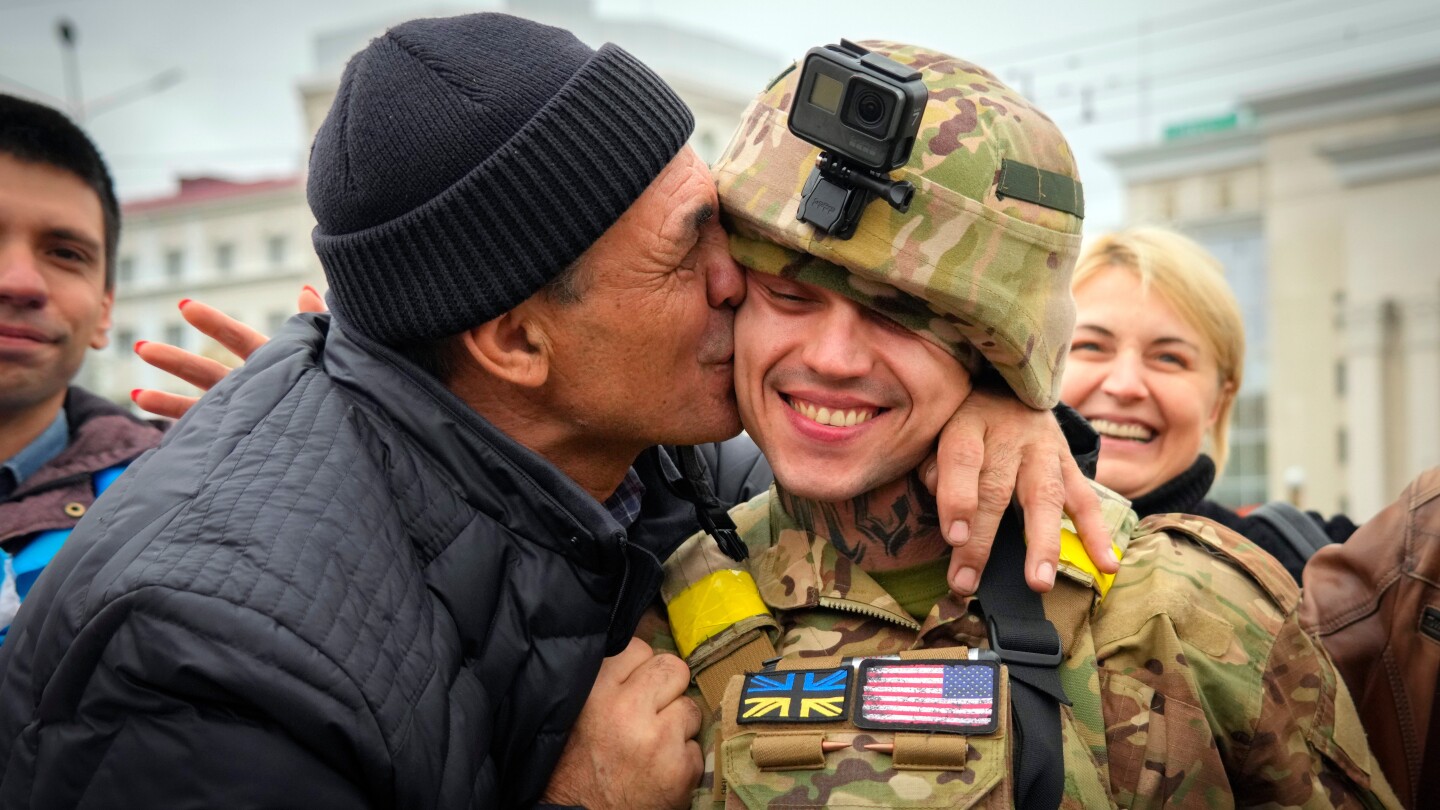
November 11, 2022 marked a momentous day as residents flooded the main square, waving Ukrainian flags and embracing soldiers who had liberated them after nine months under Russian control. The celebration, however, was short-lived. The war simply transformed rather than ended, with Russian troops now launching regular attacks from across the Dnipro River while surveillance drones constantly patrol the skies above a city characterized by broken windows and deserted courtyards.
Despite these hardships, residents who chose to remain insist that life in a largely empty, shuttered city is preferable to Russian occupation. A recent visit by Hollywood actress Angelina Jolie provided a welcome morale boost, highlighting the daily survival challenges faced by citizens who now navigate streets protected by overhead mesh designed to shield them from drone surveillance.
Once home to nearly 280,000 people, Kherson has become a forgotten section of the front line. Daily explosions echo beneath billboards that still proudly proclaim it a “City of strength, freedom and resilience.”
Olha Komanytska’s small flower kiosk stands as a defiant splash of color against the bomb-scarred center of Kherson. At 55, she displays red and white roses in tall buckets on a corner that once bustled with customers but now sees few patrons.
“Hardly anyone buys flowers,” she says quietly. “We’re just trying to make it through.”
For nearly three decades, Komanytska and her husband cultivated flowers in Kherson’s countryside. The kiosk represents all that remains after their greenhouses were destroyed. Wearing a black headscarf in mourning for her husband, who died of a heart condition she believes was exacerbated by the war, Komanytska can’t stay at his grave for more than five minutes due to the constant drone danger.
Like many residents, she has adapted to the city’s new survival rules. She can identify every weapon by sound—artillery, rockets, bombs—but considers drones the most threatening. She closes early and walks home pressing herself against buildings, sometimes hiding under trees to evade drone detection.
“They’re always searching,” she says, mimicking their low, screeching whine. “At night I walk home, and they’re above me. You just run. Before, you could hide under trees. Now… I don’t know where to hide.”
Her somber expression transforms only when recalling the liberation. “That day was amazing,” she repeats, as if trying to recapture the moment.
Throughout Kherson, municipal workers stretch plastic construction mesh above streets—repurposed to shield civilians from drone surveillance. One hospital entrance is entirely wrapped in protective netting, with only a narrow passage remaining for staff and patients. Officials prioritize such public gathering sites, which are frequently targeted.
Despite the constant tension, Kherson persists. Post offices continue operations, though their entrances are fortified with concrete blast barriers. Bus stops feature small cement bunkers—stark reminders that shelling can occur without warning.
An invisible electronic shield protects the city from above. Max, 28, who declined to provide his full name for security reasons, serves with the 310th Separate Marine Electronic Warfare Battalion responsible for this critical defense. His front-line post resembles a programmer’s workspace—computer screens displaying maps and data feeds while communication from neighboring units fills the room.
“Our job is to detect targets and ensure they fail their missions,” Max explains, whether they’re “drones hunting civilians, infrastructure, vehicles or even humanitarian convoys.”
He reveals that up to 250 FPV drones can approach Kherson in just half a day, but his unit intercepts more than 90% from his gamer-style workstation. They can even access live feeds from Russian drones to monitor enemy operations in real time.
“When you see a strike hit a soldier or a civilian, it hurts you—it weighs on your soul. You want to do everything possible to make sure it never happens,” he says. “I think they simply want to destroy us as a nation—not just the military, but everyone—so that we cease to exist.”
To maintain some semblance of normality, many activities—particularly those involving children—have relocated underground. Former apartment basements have been transformed into cozy spaces with carpets and colorful decorations.
Once weekly, a children’s club gathers to play chess and checkers. Chess coach Oksana Khoroshavyna notes that while training would normally be more rigorous, for the past two years the club has primarily served as a social outlet where Kherson’s children can interact face-to-face.
“These kids stay home all the time,” she explains. “They study online; everything in their lives is remote.”
Until recently, the children could travel to tournaments in Mykolaiv, spending every available moment outdoors—a freedom no longer possible in Kherson. Even these trips have now ceased as the connecting road has become too dangerous.
In another basement, 16-year-old Artem Tsilynko, who hopes to study dentistry after graduation, practices boxing with peers. “For me, this place is about unity,” he says. “Even though life in Kherson is so limited—social life, sports life—we still have a chance to train.”
Having spent nearly a quarter of his life in wartime conditions, Tsilynko admits his fear has diminished over time—but returns during nighttime shelling. “When you’re sitting in the basement, your heart races,” he confesses. “After that, it’s hard to fall asleep.”
In Kherson, adaptation has become synonymous with survival as residents continue to forge lives amid uncertainty, demonstrating remarkable resilience in the face of ongoing threats.
Fact Checker
Verify the accuracy of this article using The Disinformation Commission analysis and real-time sources.

14 Comments
The situation in Kherson is a poignant reminder that the end of active hostilities does not necessarily mean the end of a conflict. The city’s transformation from jubilation to wary stillness highlights the complex challenges faced by communities trying to rebuild in the shadow of ongoing threats. I hope the Ukrainian forces can find a way to provide the necessary security and stability for the people of Kherson to truly move forward.
It’s heartbreaking to see Kherson facing such hardship even after liberation. The residents’ resilience in the face of ongoing attacks is truly inspiring. I hope the Ukrainian forces can secure the city and provide the stability the people desperately need.
Agreed. The constant threat from Russian forces across the river must make daily life incredibly difficult. I admire the residents who have chosen to stay and rebuild despite the risks.
It’s heartbreaking to see the residents of Kherson facing such continued hardship after their hard-won liberation. The city’s transformation from celebration to a state of wary stillness is a sobering testament to the enduring impact of war. I hope the Ukrainian government and the international community can come together to provide the necessary support and resources to help Kherson and its people fully recover and thrive once again.
Absolutely. The resilience and determination of the Kherson residents is truly inspiring, but they shouldn’t have to shoulder this burden alone. Securing the city and addressing the needs of the remaining population should be a top priority for all those committed to Ukraine’s recovery and long-term stability.
The situation in Kherson is a stark example of how the effects of war can linger long after the fighting has stopped. The city’s transformation from jubilation to wary stillness is a powerful reminder of the fragility of peace and the importance of sustained efforts to rebuild and restore communities affected by conflict.
It’s disheartening to see Kherson facing such ongoing challenges after its liberation. The residents’ resilience in the face of continued threats from Russian forces is truly admirable. I hope the Ukrainian government and the international community can provide the necessary support to help the city fully recover and thrive once again.
Absolutely. The people of Kherson deserve stability and security after enduring such hardship. Securing the city and addressing the needs of the remaining residents should be a top priority for the Ukrainian authorities and their international partners.
The transformation of Kherson from jubilation to wary stillness is a sobering reminder of the lasting impact of war. While the liberation was a triumph, the city now faces a new kind of siege that requires immense fortitude from its people.
Absolutely. Even with the Russian troops pushed back, the city remains under threat, both physically and psychologically. Maintaining hope and normalcy in such an environment is a true test of the human spirit.
The sight of Kherson’s broken windows and deserted courtyards is a sobering reminder of the immense toll that war takes on civilian populations. While the liberation was a significant victory, the city now faces a new set of challenges that will require immense resilience and determination to overcome.
You’re right. The people of Kherson have shown incredible fortitude, but the ongoing threat from Russian forces across the river must be incredibly demoralizing. I hope the Ukrainian government can find ways to bolster the city’s defenses and provide much-needed support to the residents.
The situation in Kherson is a poignant reminder that the end of active hostilities does not necessarily mean the end of a conflict. The city’s transformation from jubilation to wary stillness highlights the complex challenges faced by communities trying to rebuild in the shadow of ongoing threats. I hope the Ukrainian forces can find a way to provide the necessary security and stability for the people of Kherson to truly move forward.
Kherson’s situation highlights the complex challenges faced by cities caught in the crossfire of conflict. Restoring a sense of security and stability will be crucial for the city to recover and thrive once more. I hope the international community can provide the necessary support.