


Listen to the article
Syrian authorities investigating the theft of six ancient Roman statues from Damascus’s National Museum believe the heist was likely executed by an individual rather than an organized group, officials revealed Wednesday.
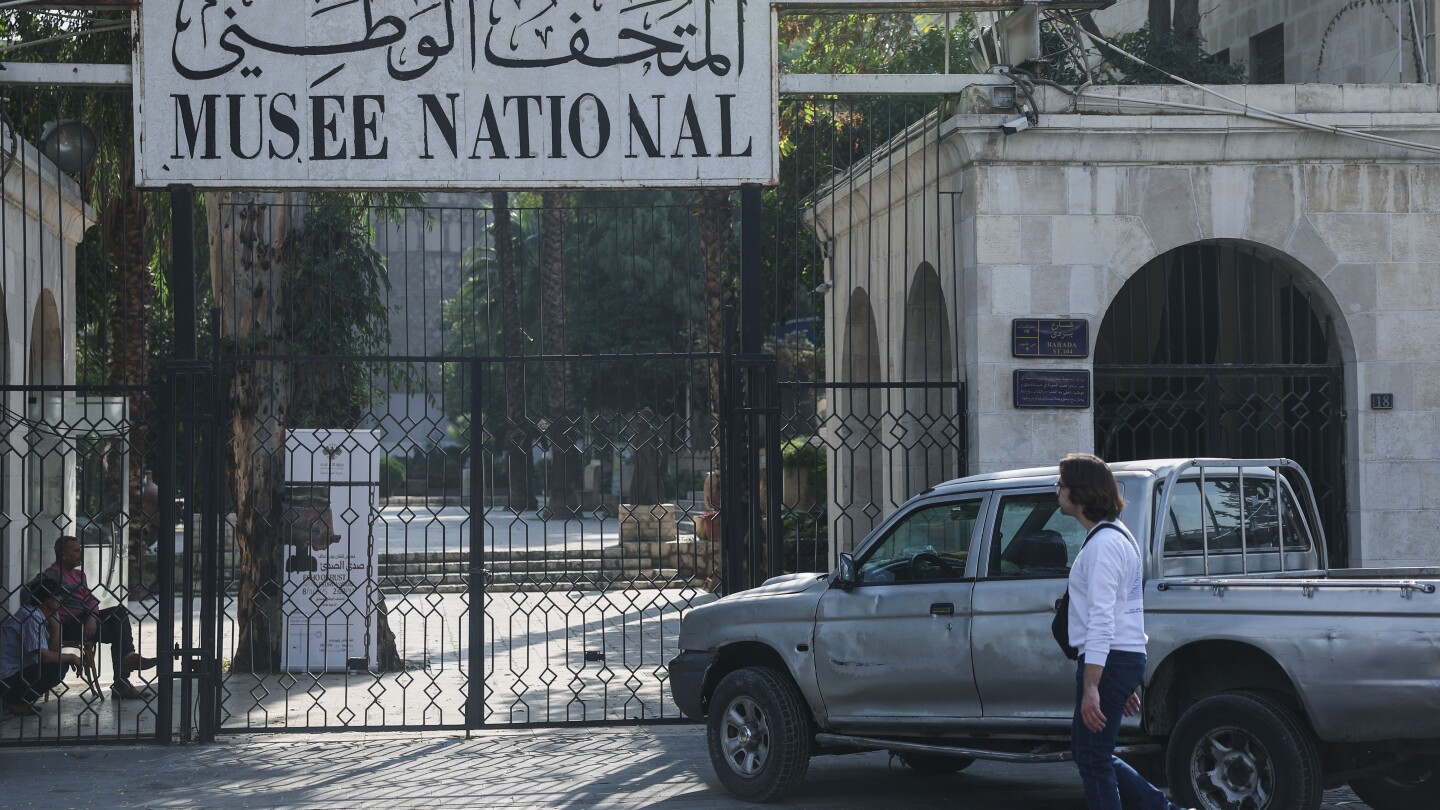
The museum, which houses priceless antiquities representing Syria’s rich cultural heritage, was closed immediately after the theft was discovered early Monday morning. Security vehicles and guards surrounded the facility in central Damascus as the investigation intensified, with the public barred from entering despite earlier claims that the museum remained open to visitors.
“God willing we will reach good results,” said one official from Syria’s Directorate-General for Antiquities and Museums, speaking on condition of anonymity due to the sensitive nature of the ongoing investigation.
The stolen artifacts are six statues of Venus, the Roman goddess of love, according to a statement released by the Culture Ministry late Wednesday. The ministry provided detailed descriptions of the missing pieces, including their museum registration numbers and dimensions, noting that the tallest statue measures approximately 16 inches in height. Officials have established a dedicated telephone hotline and email address for anyone with information about the theft.
The timing of the theft is particularly significant as the museum had only reopened on January 8, just one month after rebels ousted President Bashar Assad, ending five decades of Assad family rule in Syria. The museum’s reopening was considered a symbolic moment in the country’s recovery and transition to a post-Assad era.
Damascus residents expressed outrage over the theft, viewing it as an attack on Syria’s cultural identity during a vulnerable period of national rebuilding.
“This is not only an aggression on the Syrian state, but an aggression on Syrian civilization,” local resident Waddah Khalifeh told reporters. He voiced concerns that the thieves might attempt to smuggle the statues abroad to sell them on the international black market for antiquities.
Another resident, Hussein Abu al-Kheir, emphasized the importance of recovering the statues for the nation’s future: “I hope that these pieces will be returned, because this is good for the new Syria.”
Syria’s cultural heritage has suffered enormously throughout the country’s devastating 14-year civil war, which resulted in approximately 500,000 deaths. The conflict created ideal conditions for widespread looting and destruction of archaeological sites across the country.
When the civil war erupted in March 2011, museum officials took protective measures by enhancing security with metal gates and surveillance cameras. They also relocated hundreds of artifacts from vulnerable regions to Damascus for safekeeping.
Despite these efforts, Syria’s archaeological treasures remained targets. Perhaps most notoriously, Islamic State militants occupied the UNESCO World Heritage site of Palmyra in 2015, deliberately destroying ancient mausoleums and damaging the site’s 2,000-year-old Roman colonnades and other irreplaceable ruins.
The theft at the National Museum represents a significant setback in Syria’s efforts to preserve its cultural patrimony and rebuild its tourism sector as the country emerges from conflict. For a nation with some of the world’s oldest continuously inhabited cities and archaeological sites dating back thousands of years, such losses resonate beyond mere economic value.
The international art and antiquities market has long struggled with illicitly obtained artifacts from conflict zones. Syrian pieces have appeared in auction houses and private collections worldwide despite international conventions prohibiting such trade.
As the investigation continues, Syrian authorities face the challenging task of recovering these treasures while simultaneously addressing the broader security concerns that continue to affect the country’s vast archaeological heritage.
Fact Checker
Verify the accuracy of this article using The Disinformation Commission analysis and real-time sources.

8 Comments
It’s troubling to see these Roman statues stolen from such an important cultural institution. I wonder if the theft was motivated by the black market for antiquities or if there was some other reason behind it. In any case, I hope the authorities can get to the bottom of this crime.
The theft of these ancient Roman statues is a sad loss for Syria’s cultural heritage. I’m curious to learn more about the museum’s security protocols and whether there were any vulnerabilities that allowed this to happen. Protecting these irreplaceable artifacts should be a top priority.
You raise a good point. Strengthening security measures at the museum to prevent future thefts should be a key focus of the investigation and recovery efforts.
The Damascus National Museum houses many irreplaceable artifacts that represent Syria’s long and storied past. This theft is a setback, but I’m glad the authorities are taking it seriously and working to solve the crime and recover the stolen items.
Yes, the museum’s collections are invaluable. Hopefully the perpetrator is quickly apprehended and the statues returned to their rightful place.
This is a concerning theft, especially given the cultural significance of these Roman statues. I hope the authorities are able to recover the artifacts and identify the individual responsible. It’s important to protect Syria’s rich history and heritage.
Agreed, the theft of these ancient treasures is a terrible loss. I hope the investigation leads to the safe return of the statues.
This is really disheartening news. The National Museum in Damascus houses so many invaluable treasures that represent Syria’s rich history. I hope the authorities are able to quickly identify and apprehend the individual responsible for this theft and that the stolen statues can be recovered.