


Listen to the article
Innovative Battery System Powers Air Conditioners During Peak Demand, Easing Grid Strain
When summer heat waves strike, millions of air conditioners switch on simultaneously, straining electrical grids and increasing the risk of power outages while driving up consumer bills. Rather than asking residents to sweat through higher thermostat settings, a novel pilot program in New York City is testing a different approach: portable batteries that keep air conditioners running while taking pressure off the overtaxed grid.
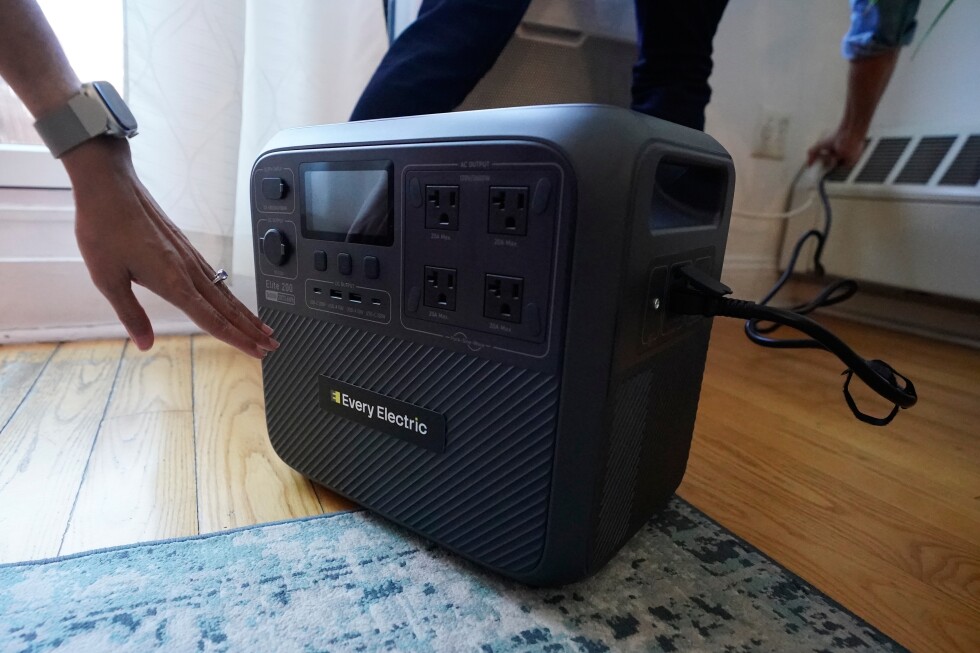
“It’s basically a souped up version of the power bank that you would use to charge your phone when you go out,” explains Andrew Wang, CEO of Every Electric, the company behind the initiative. The program, conducted in partnership with Con Edison, New York City’s energy provider, is expanding to more than 1,000 homes this summer.
The microwave-sized devices charge when electricity demand is low and then power window AC units for several hours during peak demand periods. Participants receive cash rebates for contributing to grid stability.
Energy experts view this initiative as part of a broader transition toward “virtual power plants,” where numerous small, distributed energy resources work in concert to reduce strain during peak demand periods. When implemented at scale, such solutions could significantly improve power reliability and affordability.
The economics of grid management explain why such innovations matter. When electricity demand surges during extreme heat, utilities typically activate backup power plants that operate less frequently and are generally less efficient and more polluting, explains Kevin Brehm, a manager at RMI, a nonprofit researching energy systems and clean power transition.
Over time, these demand peaks can force utilities to build additional power plants—often fossil fuel-based—with costs eventually transferred to consumers.
“There’s a question of emissions, and then there’s also a really important question around affordability,” Brehm notes.
While utilities frequently ask residents to conserve energy during heatwaves and implement higher rates during peak hours to discourage consumption, these strategies “can be hard to rely on because they don’t know exactly how consumers are going to behave,” Brehm adds.
As climate change makes heat waves more frequent and intense, utilities and governments are increasingly seeking innovative approaches to manage rising electricity demand. Con Edison’s demand response program, which includes the Every Electric initiative, pays customers to reduce or shift electricity use during high-demand periods.
Virtual power plant programs represent another expanding solution. These systems connect thousands of small energy devices like home batteries or smart appliances and coordinate them to return power to the grid during demand spikes. This approach eases strain without requiring construction of new power plants.
California is developing one of the world’s largest virtual power plants, compensating hundreds of thousands of participants who send stored energy back to the grid during extreme weather events. However, most such programs are limited to homeowners with solar panel installations.
Every Electric’s program stands out by specifically targeting renters with window AC units, who traditionally have fewer options to participate in grid flexibility programs. While it doesn’t export power back to the grid, it effectively reduces demand by using stored battery power instead.
“I can’t put solar panels on my roof,” says Bianca Pasternack, a New York City renter enrolled in the program. “This is at least something that’s accessible and easy. It was very set-it-and-forget-it.”
The system is straightforward: the battery connects to the AC unit and then to a wall outlet. A smartphone app detects when demand is low, charging the battery during off-peak hours and using it to power the air conditioner during peak times—usually between 1-4 p.m. or 4-8 p.m. during summer months.
Participants earn financial rewards roughly equivalent to a July electric bill. Pasternack received a $100 gift card at the end of the season.
The company says its pilot is expanding from about 200 kilowatts of flexible capacity last year to approximately 2 megawatts this summer. Though this remains small compared to California’s 200+ megawatt program, Wang indicates the company is looking to expand to other cities.
“It’s a matter of how we’re able to get to that scale,” Brehm says, noting that widespread adoption depends on how easily the technology can be deployed and integrated into the grid. He emphasizes that Every Electric’s installation process is particularly accessible: “It’s plug-and-play and you don’t need a ton of permissions.”
Fact Checker
Verify the accuracy of this article using The Disinformation Commission analysis and real-time sources.

8 Comments
Clever idea to leverage household batteries to ease grid strain during peak AC demand. This could be a win-win for utility providers and eco-conscious renters looking to cut their energy bills.
I’m curious to see how this portable AC battery program scales up and how the cash rebates incentivize broader participation. Reducing grid stress through distributed energy resources seems like a smart approach.
Agreed, the rebates will be key to driving broader adoption. Anything that can lower energy costs for renters while also supporting grid stability is worth exploring further.
As an apartment dweller, I’d be very interested in a program like this. Anything that can help cut my AC costs while also supporting the grid is quite appealing.
Interesting to see utilities piloting innovative demand response programs like this. It’s a creative solution to the challenge of peak summer AC loads straining the grid.
Absolutely, innovative utility programs that empower consumers to participate in grid stability are a positive step. This could serve as a model for other regions looking to address similar challenges.
I’m a bit skeptical about how well these portable AC batteries will hold up over extended heatwaves. Curious to see the real-world performance data and reliability over time.
This ‘virtual power plant’ concept is an intriguing model. Leveraging the untapped capacity of many small distributed batteries could be a game-changer for grid management and renewable energy integration.