


Listen to the article
Celestial Spectacle as Supermoon and Meteor Shower Coincide This Weekend
The night sky will host a rare astronomical convergence this weekend as the year’s first supermoon coincides with the Quadrantid meteor shower, though the pairing may prove less than ideal for stargazers.
The Quadrantid meteor shower reaches its peak intensity Friday night into Saturday morning, according to the American Meteor Society. Under optimal viewing conditions, observers typically witness approximately 25 meteors per hour during this annual event. However, this year’s display faces significant competition from Saturday’s supermoon, which will likely reduce visibility to fewer than 10 meteors per hour.
“The biggest enemy of enjoying a meteor shower is the full moon,” explained Mike Shanahan, planetarium director at Liberty Science Center in New Jersey. The moon’s bright illumination will wash out many of the fainter meteors that would otherwise be visible.
Meteor showers occur when Earth passes through streams of cosmic debris, causing space rocks to collide with our atmosphere. These particles, typically no larger than grains of sand, burn up upon entry, creating the characteristic luminous streaks commonly known as “shooting stars.” While random meteors can be spotted on any clear night, these predictable showers happen when Earth intersects particularly dense debris fields.
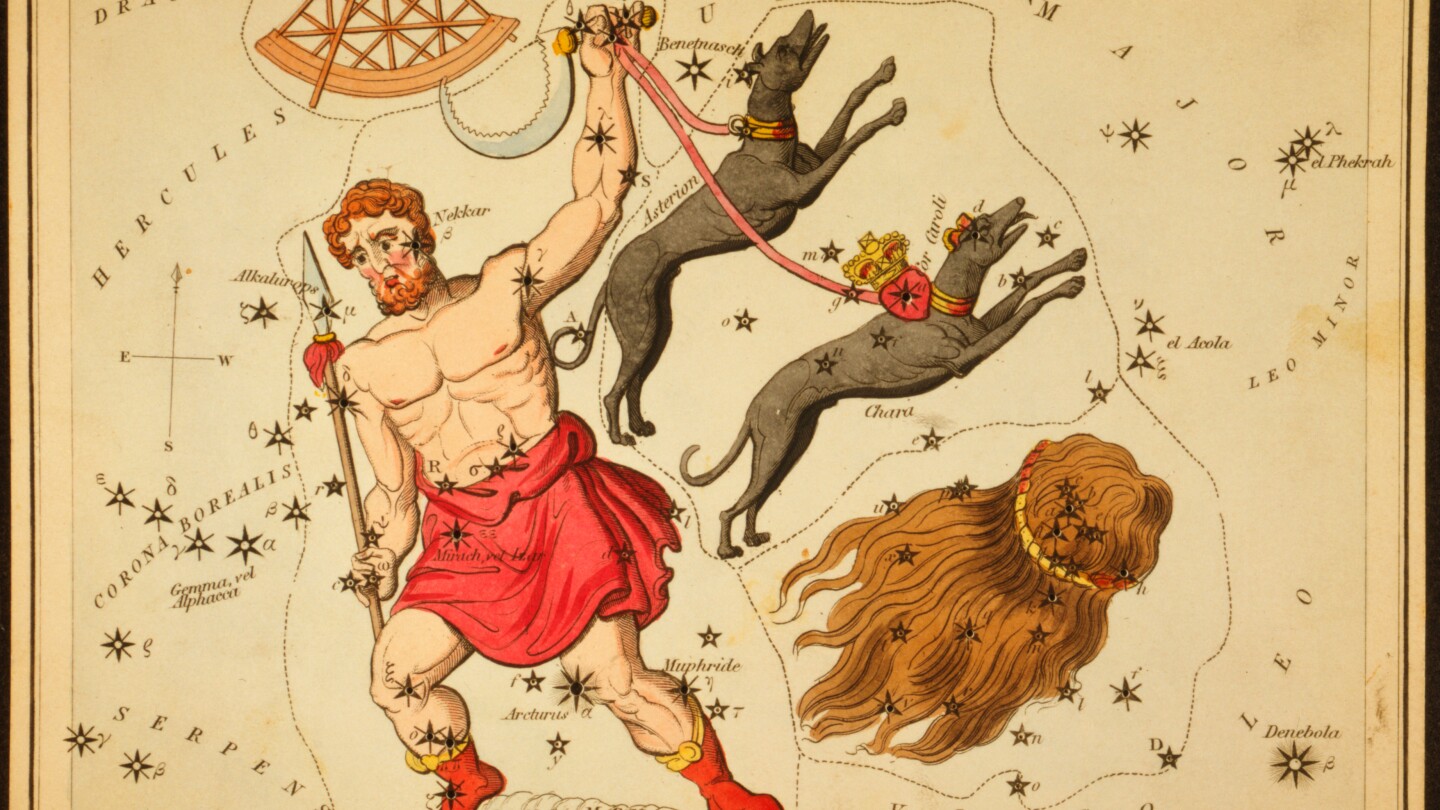
The Quadrantid shower is unique among major meteor displays. Unlike most meteor showers that originate from comets, the Quadrantids come from asteroid 2003 EH1, which some astronomers believe may be an extinct comet. The shower is named for Quadrans Muralis, a constellation no longer officially recognized by the International Astronomical Union.
Supermoons, meanwhile, occur when a full moon coincides with the moon’s closest approach to Earth in its elliptical orbit. This proximity makes the lunar disk appear up to 14% larger and 30% brighter than when the moon is at its farthest point, according to NASA. While this difference can be subtle to casual observers, photography often captures the enhanced visual impact.
For those hoping to catch the Quadrantids despite the challenging conditions, Jacque Benitez of the Morrison Planetarium at the California Academy of Sciences recommends venturing out during early evening hours Friday, before the moon rises too high. “Find a location away from city lights and give your eyes at least 20 minutes to adjust to the darkness,” Benitez advised.
Another viewing opportunity may come during the pre-dawn hours on Sunday, when the moon begins to set. Observers should avoid using smartphones or flashlights, as even brief exposure to artificial light can reset night vision adaptation. The meteors will appear to radiate from the northern sky but can be spotted in any part of the celestial dome.
Unlike the meteor shower, which favors Northern Hemisphere observers, the supermoon will be visible worldwide wherever skies are clear and it’s nighttime. No special equipment is necessary to view either phenomenon, though binoculars or telescopes can enhance the moon-watching experience.
This weekend’s supermoon marks the conclusion of a four-month streak that began in October 2023. Astronomy enthusiasts will have to wait until late 2026 for the next supermoon series, as the lunar orbit gradually shifts relative to Earth.
For meteor enthusiasts disappointed by the Quadrantids’ compromised visibility, the next major shower will be the Lyrids in mid-April. With the moon in a different phase by then, conditions should prove more favorable for observing those celestial fireworks.
This cosmic convergence serves as a reminder of the dynamic nature of our solar system and the regular celestial performances available to those willing to look up—even when conditions aren’t perfect.
Fact Checker
Verify the accuracy of this article using The Disinformation Commission analysis and real-time sources.

9 Comments
Interesting that the supermoon will negatively impact the meteor shower visibility. I wonder if there are any tricks or vantage points that could help maximize the experience, even with the bright moonlight. Might be worth doing some research before heading out.
Good point. Might be worth looking into any tips from experienced stargazers on ways to optimize viewing during a supermoon. Even small adjustments to your location or viewing angle could make a difference.
I find it fascinating how celestial events can interact and impact one another like this. The supermoon washing out the meteor shower is a good reminder of how dynamic and interconnected the cosmos can be. Should be a beautiful, if slightly diminished, display nonetheless.
As much as I enjoy meteor showers, I’m a bit bummed that the supermoon will reduce the number of visible meteors. Still, it’ll be a beautiful sight overall, and a rare chance to see these two events converge. Might have to recruit some friends to make a night of it.
Definitely a good idea to make it a social event. Viewing astronomical phenomena is always more fun with a group. Even if the meteor count is lower, the supermoon backdrop will make for a magical experience.
Sounds like quite the celestial show! Even with the supermoon washing out some of the fainter meteors, it’ll still be an impressive sight. Can’t wait to catch a glimpse of this unique cosmic convergence.
Absolutely, the supermoon and meteor shower together will create a stunning visual. It’s a shame the bright moonlight will obscure some of the fainter meteors, but there should still be plenty to see.
What an amazing confluence of astronomical events! Catching the Quadrantid meteor shower during a supermoon is a rare treat, even if the full moon dampens visibility a bit. I’ll have to make sure to bundle up and head outside for a look.
Definitely a must-see celestial event. The supermoon will be beautiful on its own, and even with the reduced meteor count, it’ll still be a spectacular show. Just hope the weather cooperates!