


Listen to the article
Russia has accused Ukraine of orchestrating a series of high-profile attacks against prominent Russians since the invasion began almost four years ago. While Ukrainian officials have occasionally hinted at involvement, they frequently avoid direct claims of responsibility, maintaining strategic ambiguity in many cases.
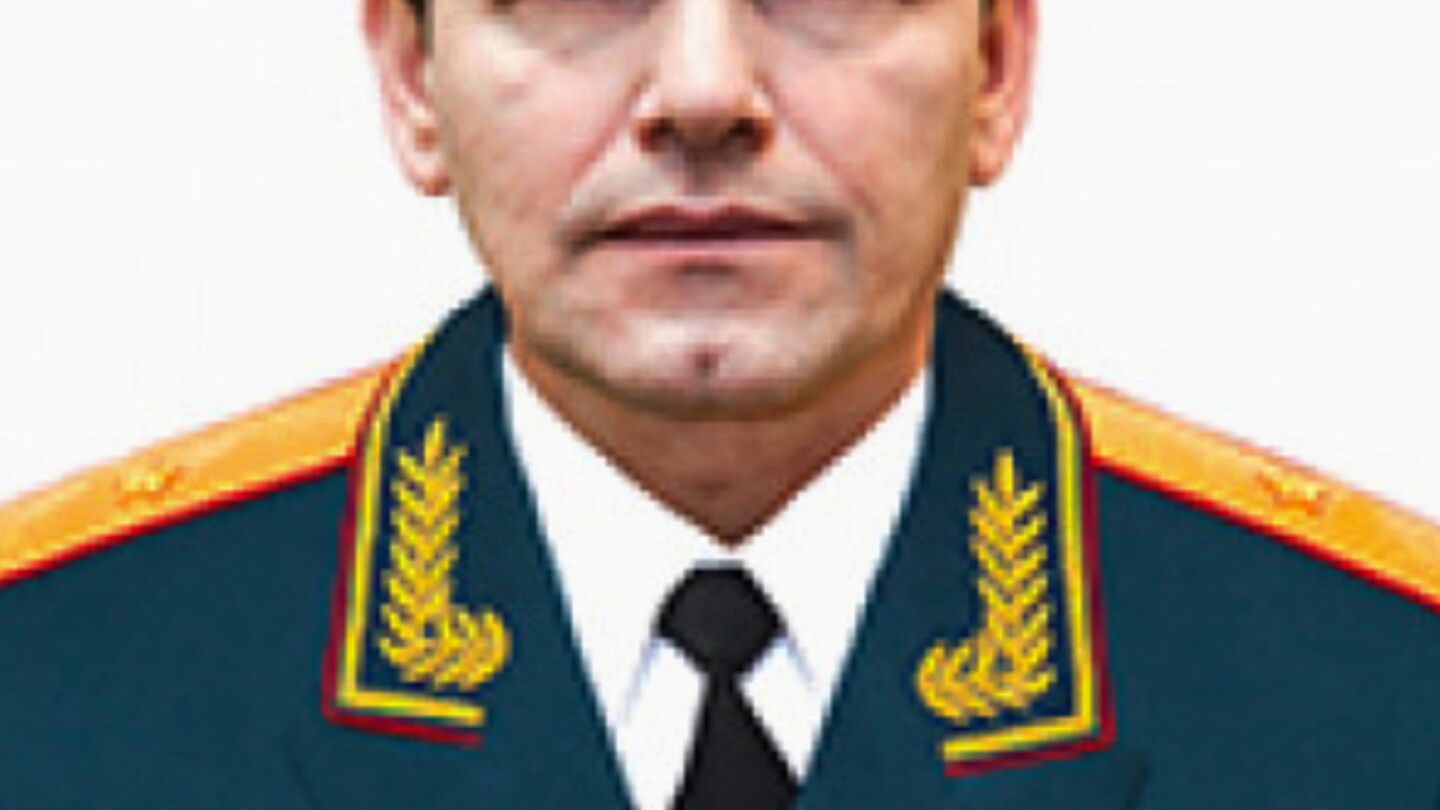
The latest incident occurred Monday when Russian Lieutenant General Fanil Sarvarov was killed by a car bomb in Moscow. Investigators are examining possible Ukrainian involvement, though Kyiv has not yet commented on the attack. This bombing adds to a growing list of similar incidents targeting Russian military officials and public figures.
Earlier this month, Lieutenant General Igor Kirillov, who headed Russia’s nuclear, biological and chemical protection forces, was killed alongside his assistant when a bomb planted on a scooter exploded outside a Moscow apartment building. Ukraine’s Security Service (SBU) later claimed responsibility for the attack, which came just one day after Ukrainian authorities had charged Kirillov in absentia with “ordering the use of banned chemical weapons against Ukraine’s Defense Forces.” Russian authorities arrested an Uzbek man who they claim carried out the attack on behalf of Ukrainian intelligence.
In April 2025, Lieutenant General Yaroslav Moskalik, a deputy head of the General Staff’s main operational department, died when a bomb placed under his car detonated near his residence outside Moscow. While not directly claiming responsibility, Ukrainian President Volodymyr Zelenskyy made a cryptic statement days later about the “elimination of senior command personnel of Russia’s armed forces.” A Russian man reportedly confessed to carrying out the attack, claiming Ukrainian security services had paid him.
The pattern extends beyond military officials. In July 2023, former submarine commander Stanislav Rzhitsky was shot while jogging in Krasnodar. Ukrainian media identified Rzhitsky as one of six submarine commanders capable of launching missiles that had previously struck Vinnytsia, Ukraine, killing 23 people and wounding over 100. Kyrylo Budanov, head of Ukrainian military intelligence, denied involvement but curiously released specific details about the killing. A dual Russian-Ukrainian citizen was later convicted of the murder.
Russian nationalist writer Zakhar Prilepin narrowly escaped death in May 2023 when a car bombing in Russia’s Nizhny Novgorod region killed his driver and left him hospitalized with serious injuries. A Ukrainian national was sentenced to life imprisonment for the attack, with Russian investigators claiming he acted on Kyiv’s orders. SBU chief Lieutenant General Vasyl Maliuk later declined to claim responsibility but demonstrated detailed knowledge of Prilepin’s injuries.
In another high-profile case, military blogger Vladlen Tatarsky was killed in April 2023 when a bomb concealed in a small statue exploded at a St. Petersburg cafe where he was speaking. The woman who presented him with the statue, Darya Trepova, received a 27-year prison sentence, though she maintained she was unaware it contained an explosive. The SBU chief later described Tatarsky as a Russian propagandist who had “paid a karmic price before the Ukrainian people.”
Ukrainian lawmaker Illia Kyva, who had fled to Ukraine shortly after the invasion and was later convicted in absentia for treason, was found dead near Moscow in December 2023 with a gunshot wound to the head. While Ukraine did not directly claim responsibility, military intelligence spokesman Andriy Yusov ominously remarked that “the same fate will befall other traitors of Ukraine.”
One of the earliest such incidents occurred in August 2022, when Darya Dugina, daughter of ultranationalist philosopher Alexander Dugin, was killed by a remote-controlled bomb in her SUV outside Moscow. Although widely believed that her father was the intended target, Ukraine denied responsibility, with President Zelenskyy stating Ukraine was “not interested in her.” Russian security services named two Ukrainian citizens as suspects but said they had escaped abroad.
These attacks highlight the shadowy, covert dimension of the Russia-Ukraine conflict that extends far beyond the conventional battlefield, with both nations engaging in asymmetric warfare and targeted operations against individuals deemed strategic assets or threats.
Fact Checker
Verify the accuracy of this article using The Disinformation Commission analysis and real-time sources.

8 Comments
While the loss of life is tragic, the apparent targeting of Russian military officials does raise questions about the security situation in Moscow. It will be interesting to see how Russia responds and what evidence, if any, emerges about Ukrainian involvement.
These types of targeted attacks are deeply concerning, regardless of who is responsible. The potential for escalation is high, and it’s important that all parties involved exercise restraint and pursue diplomatic solutions where possible.
The series of assassinations Russia blames on Ukraine highlights the heightened tensions and instability in the region. It’s a delicate situation that warrants close monitoring and careful analysis from all sides.
Absolutely. With so much at stake, balanced and objective reporting will be crucial in understanding the full context of these events.
Interesting that Russia is quick to blame Ukraine for these targeted attacks, though Ukraine seems to maintain strategic ambiguity. It suggests a complex geopolitical situation with high stakes on both sides.
Yes, the strategic ambiguity from Ukraine is intriguing. It likely provides them more flexibility in their actions and messaging.
The killing of Russian military leaders is certainly concerning, but it’s difficult to assess the full context and motivations without more information. These types of incidents often have complex geopolitical underpinnings.
Agreed, these types of attacks tend to be very nuanced. Jumping to conclusions without a full picture could be unwise.