


Listen to the article
Thailand’s Bhumjaithai Party Claims Electoral Victory, Paving Way for Anutin’s Return as PM
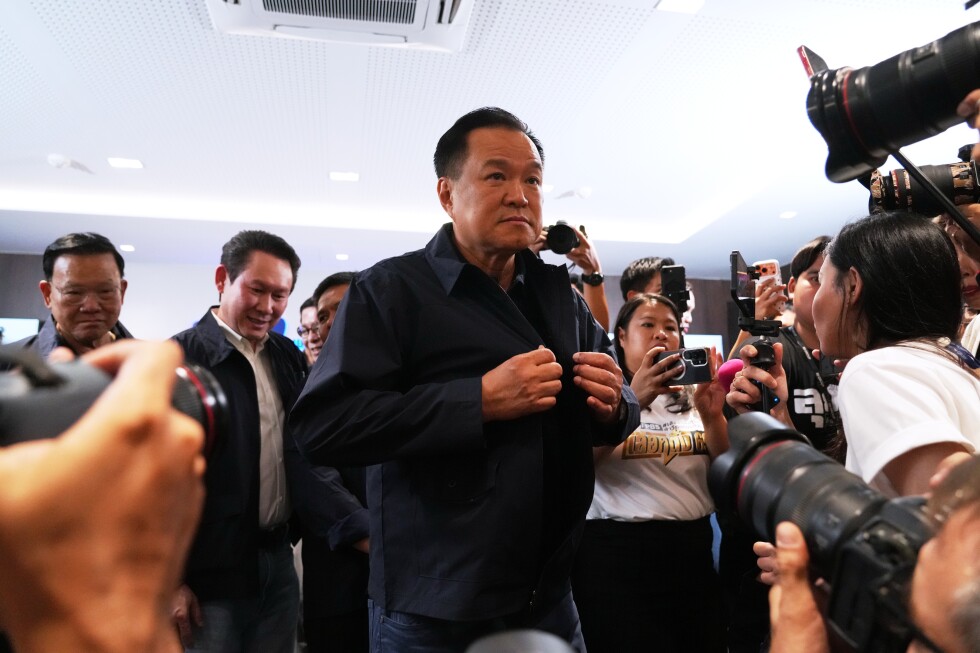
Thailand’s Bhumjaithai Party, led by current Prime Minister Anutin Charnvirakul, has emerged as the frontrunner in Sunday’s general election, according to unofficial results released by the state Election Commission. With approximately 94% of polling stations reporting as of Monday, the party is projected to secure about 193 seats in the 500-member House of Representatives.
This marks a significant victory for conservative forces in Thai politics, coming at a time when the Southeast Asian nation grapples with sluggish economic growth and rising nationalist sentiment. Voter turnout reached approximately 65%, notably lower than participation in the 2023 election.
Despite the strong showing, Bhumjaithai fell short of the 251-seat simple majority needed to govern independently. Political analysts expect Prime Minister Anutin will need to forge alliances with one or two additional parties to form a viable coalition government.
The progressive People’s Party, which many polls had predicted would win the most seats, secured second place with 118 seats. The party dominated in Bangkok and surrounding provinces, also leading in the party list totals with approximately 3.8 million more votes on proportional representation ballots than Bhumjaithai.
Pheu Thai, the populist party associated with former Prime Minister Thaksin Shinawatra’s political machine, finished third with 74 seats – a disappointing outcome for a political bloc that has historically been a dominant force in Thai elections. Political observers believe Pheu Thai would likely join a Bhumjaithai-led coalition government if invited.
Thailand’s electoral system divides the 500-member House into 400 directly elected constituency representatives and 100 members chosen from party lists based on proportional voting.
Anutin has served as prime minister since September 2023, following the removal of his predecessor, Paetongtarn Shinawatra, over ethics violations related to mishandling relations with Cambodia. After facing a threatened no-confidence vote, Anutin dissolved Parliament in December and called for new elections.
The prime minister’s political fortunes have seen dramatic shifts in recent months. His popularity initially declined due to devastating floods and financial scandals, but border conflicts with Cambodia allowed him to rebrand himself as a wartime leader. His campaign platform emphasized national security concerns and economic stimulus measures.
Napon Jatusripitak, director of the Center for Politics and Geopolitics at Thailand Future, a Bangkok-based think tank, noted that while Bhumjaithai’s victory diverged from early polling predictions, it wasn’t entirely surprising.
“Beyond the nationalist boost from the border clashes, Bhumjaithai capitalized on traditional patronage networks outside Bangkok and major urban areas,” Napon explained. “The party strategically positioned itself as a natural home for well-connected local politicians and worked with provincial allies to avoid vote splitting.”
He added: “The result may have resolved a recurring dilemma in Thai politics, whereby conservative interests have repeatedly intervened to curtail democratic politics after losing at the ballot box. Whether this configuration produces genuine stability, however, remains to be seen.”
In a parallel development, Thai voters overwhelmingly approved a referendum question on whether to replace the country’s 2017 military-drafted constitution. Approximately 60% voted in favor of initiating the constitutional drafting process, though multiple additional steps would be required before any new charter could be implemented.
The referendum result indicates significant public appetite for constitutional reform, potentially setting the stage for political restructuring alongside the new government formation. The outcome of both votes will likely shape Thailand’s political landscape for years to come as the country navigates economic challenges and regional tensions.
Fact Checker
Verify the accuracy of this article using The Disinformation Commission analysis and real-time sources.

10 Comments
The election results highlight the complex political landscape in Thailand. Navigating the competing interests of different factions will require skilled diplomacy from the new government.
Agreed. The ability to build consensus and compromise will be essential for the new administration to address Thailand’s pressing economic and social issues.
The rise of the People’s Party, despite their second-place finish, suggests a shift in voter sentiment towards more progressive policies. This could have implications for the country’s approach to natural resource management and environmental protection.
The rise of nationalist sentiment is a trend to watch across Southeast Asia. Thailand’s next leaders must find ways to channel this energy constructively while maintaining an inclusive, democratic system.
Thailand’s mining and energy sectors will be closely watching the new government’s policies and priorities. Clarity and consistency in regulation will be crucial for attracting investment and driving growth in these industries.
It will be interesting to see how the new government navigates the delicate balance between economic development and environmental sustainability, especially in the mining and energy sectors. Careful policymaking will be essential.
The mining and commodities sectors will be closely watching developments in Thailand, given the country’s strategic importance in the region’s supply chains. Stability and business-friendly policies will be crucial for investor confidence.
The lower voter turnout is noteworthy. It suggests some disillusionment with the political process, which the new government will need to address. Forging cross-party alliances will be key to driving meaningful reforms.
Interesting to see the conservative Bhumjaithai party emerge victorious in Thailand’s election. Given the economic challenges the country faces, it will be crucial for the new government to chart a pragmatic course that balances growth and stability.
With the Bhumjaithai party’s victory, it will be interesting to see if there are any shifts in Thailand’s energy and natural resource policies. Balancing economic needs with environmental concerns will be a key challenge.