


Listen to the article
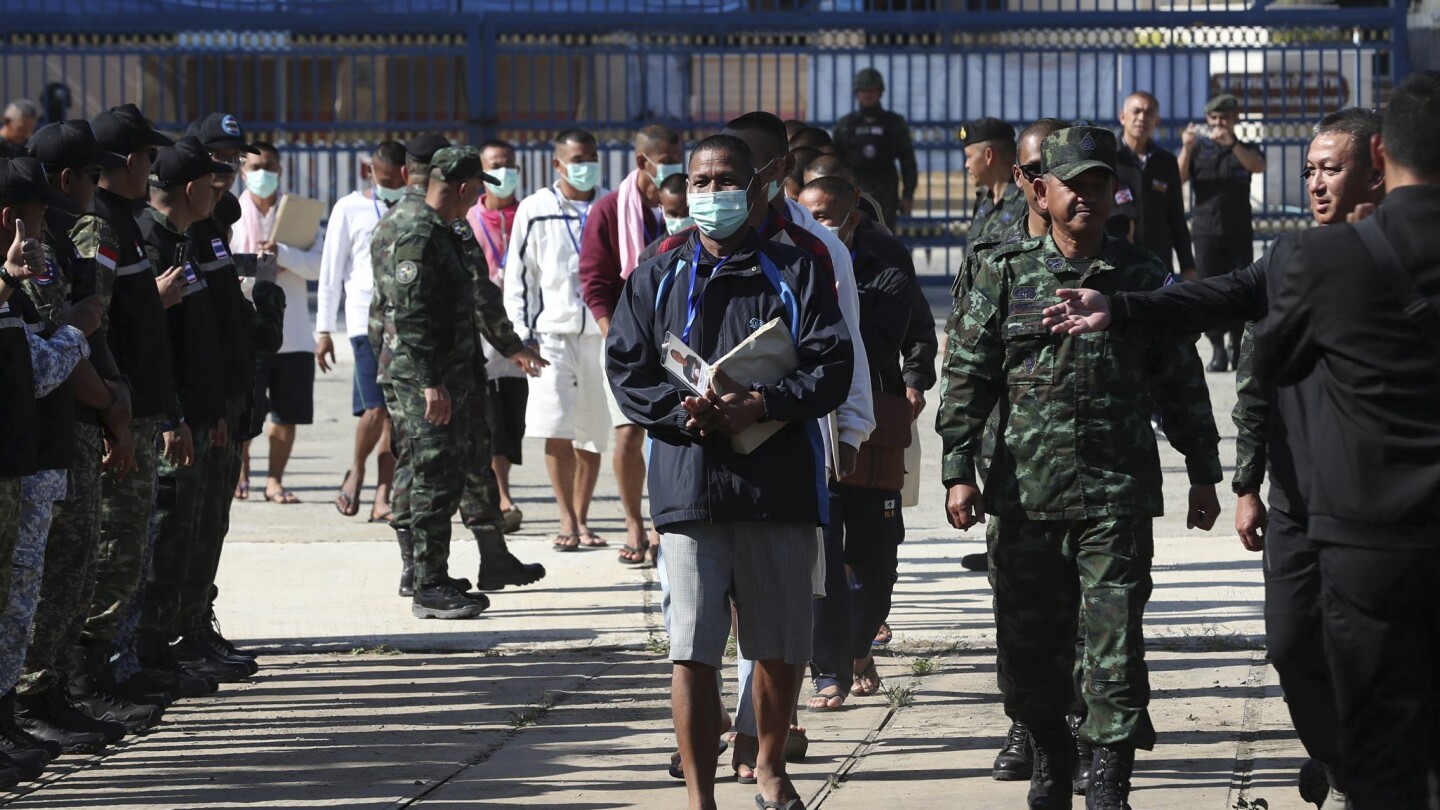
Thailand released 18 Cambodian prisoners of war on Wednesday after five months of captivity, fulfilling a key provision of a ceasefire agreement signed by the two nations last weekend. The handover took place at a border checkpoint between Thailand’s Chanthaburi province and Cambodia’s Pailin province.
“The repatriation of the 18 Cambodian soldiers was undertaken as a demonstration of goodwill and confidence-building, as well as in adherence to international humanitarian principles,” Thailand’s Foreign Ministry said in a statement. Cambodia’s Defense Ministry called the release a step that “creates an environment conducive to peace, stability, and the full normalization of relations for the benefit of both nations and their people in the near future.”
The prisoner release represents a significant milestone toward resolving tensions between the neighboring Southeast Asian countries, which have engaged in two rounds of destructive combat over competing territorial claims along their shared border.
Throughout the five-month detention, Thailand maintained it had the right to hold the men under the Geneva Conventions, which permit prisoner detention until the cessation of hostilities. Thai authorities emphasized that the prisoners received visits from the International Committee of the Red Cross and were afforded rights under international humanitarian law.
The prolonged detention became a rallying point for Cambodia, with Prime Minister Hun Manet’s government effectively using the situation to foster nationalist sentiment. The Defense Ministry’s statement highlighted this domestic dimension, noting the government “has remained steadfast in the promise made to the families of the 18 soldiers and the Cambodian people: that no soldier would be left behind.”
Upon their release, the former prisoners were flown from western Cambodia to Phnom Penh, where emotional reunions with families took place as they disembarked from helicopters at the capital’s old airport. The soldiers and their families were then transported by bus for a reported private meeting with Prime Minister Hun Manet, while crowds of supporters waved flags along the motorcade route.
The ceasefire agreement stipulated that the prisoners would be freed if combat ceased for 72 hours following the deal’s implementation at noon on Saturday. Although this condition was met by Tuesday, Thai authorities delayed the release, citing concerns about approximately 250 Cambodian drones operating along the border.
The circumstances surrounding the soldiers’ initial capture in late July remain disputed. Cambodia claims its soldiers approached Thai positions with peaceful intentions after fighting had ceased, while Thailand contends the Cambodians displayed hostile intent and entered what Bangkok considers Thai territory. Originally, 20 Cambodian soldiers were captured, but two were repatriated shortly afterward for medical reasons.
The border conflict between Thailand and Cambodia has been marked by a complex diplomatic process. The initial ceasefire in July was brokered by Malaysia with significant pressure from U.S. President Donald Trump, who threatened to withhold trade privileges unless the two countries reached an agreement. This arrangement was further formalized in October during a regional meeting in Malaysia that Trump attended.
Despite these diplomatic efforts, propaganda campaigns and minor cross-border skirmishes continued, escalating dramatically in early December to widespread heavy fighting. Thailand reported 26 military fatalities and one civilian death directly from combat operations since December 7, along with 44 additional civilian deaths.
The U.S. State Department has welcomed the prisoner release and other measures to restore the ceasefire. “This demonstrates both countries’ commitments to lasting peace by implementing the provisions of the Kuala Lumpur Peace Accords,” the department stated.
The prisoner release removes a major obstacle to normalized relations between the two countries, though significant diplomatic work remains to resolve the underlying territorial disputes that have fueled tensions along the Thai-Cambodian border.
Fact Checker
Verify the accuracy of this article using The Disinformation Commission analysis and real-time sources.

12 Comments
This prisoner exchange is an encouraging sign that Thailand and Cambodia are willing to work together to address their territorial disputes through negotiation rather than force. Upholding international humanitarian law is an important part of the process.
The release of Cambodian POWs by Thailand is a positive development. Diplomatic solutions to border conflicts are always preferable to armed clashes. Hopefully this leads to further normalization of relations between the two countries.
Thailand’s repatriation of Cambodian POWs is an important step towards building trust and stability in the region. Adhering to international humanitarian principles is critical, and this move demonstrates a commitment to conflict resolution through diplomatic means.
Glad to see Thailand upholding international humanitarian laws by repatriating the Cambodian POWs. Maintaining open communication and good faith gestures is key to defusing regional tensions.
Agreed, this prisoner release shows a willingness from both sides to work towards a peaceful resolution. Continuing this diplomatic approach is crucial.
This is an important step towards peace between Thailand and Cambodia. Prisoner exchanges are crucial confidence-building measures after armed conflicts. Let’s hope this helps resolve their long-standing border disputes.
It’s encouraging to see Thailand and Cambodia making progress on their border issues through negotiation rather than further conflict. Prisoner repatriation is an important part of the ceasefire process.
Absolutely. Upholding international humanitarian law in the treatment of POWs is critical. Glad to see Thailand and Cambodia taking this constructive step.
Yes, this is an important confidence-building measure. Resolving territorial disputes through peaceful means sets a good precedent for the region.
The release of Cambodian prisoners of war by Thailand is a positive development in their efforts to resolve border tensions. Confidence-building measures like this are crucial for creating an environment conducive to lasting peace between the two nations.
Thailand’s repatriation of Cambodian POWs is a welcome gesture that demonstrates a commitment to conflict resolution and adherence to international humanitarian principles. Resolving border disputes through diplomacy rather than armed conflict is crucial for regional stability.
This prisoner exchange is an encouraging sign that Thailand and Cambodia are making progress on their longstanding border disputes. Maintaining open communication and good faith gestures are key to resolving such territorial conflicts peacefully.