


Listen to the article
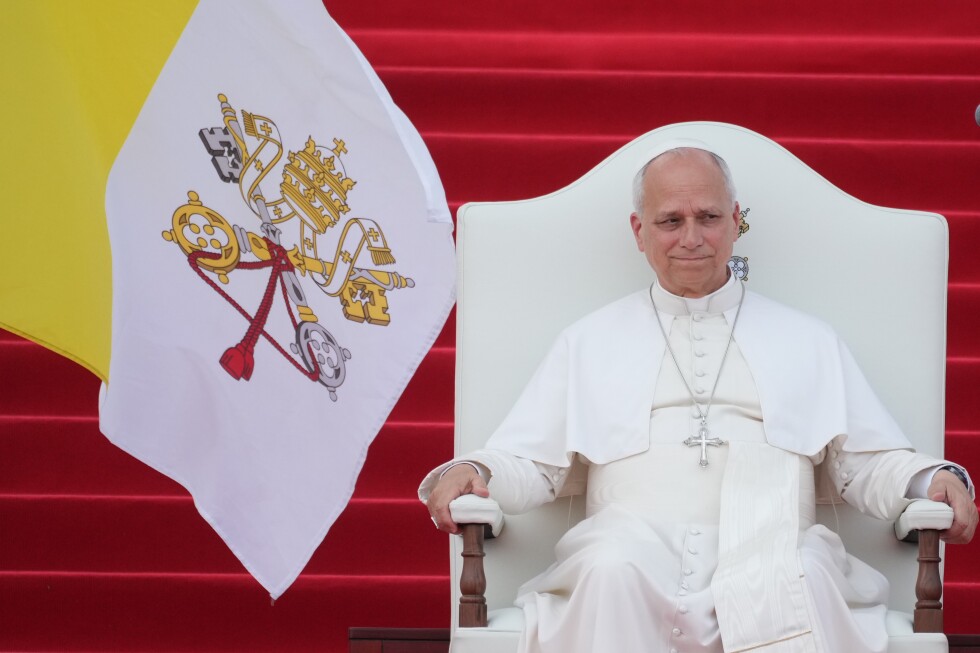
After months of settling into his pontificate, Pope Leo XIV is taking a measured approach to leadership, distinguishing himself from his predecessor Pope Francis who implemented rapid reforms early in his tenure. While Leo has made several significant decisions that indicate his governing style, he appears to be taking a longer-term view of his papacy.
Several upcoming leadership appointments will offer Leo the chance to reshape the Church hierarchy according to his priorities. Chicago Cardinal Blase Cupich, who surpassed the standard retirement age of 75 two years ago, may soon be replaced, giving Leo the opportunity to name a new archbishop for his hometown. Similarly, Los Angeles Archbishop José Gomez turns 75 in December, opening another significant appointment.
The pope has already appointed Archbishop Ronald Hicks to succeed Cardinal Timothy Dolan in New York. According to Michael Moreland, professor of law and religion at Villanova University, Leo’s alma mater, this choice “didn’t ideologically code dramatically one way or the other,” reflecting Leo’s measured approach to leadership decisions.
At the Vatican, several key positions may soon change hands. British Cardinal Arthur Roche, who heads the liturgy office and enforced Francis’s controversial restrictions on the traditional Latin Mass, turned 76 recently. His eventual replacement will be closely watched as an indicator of Leo’s stance on this divisive issue.
American Cardinal Kevin Farrell, though well past retirement age at 78, continues to lead the Vatican’s family and laity office while serving in other sensitive roles. Additionally, Canadian Cardinal Michael Czerny turns 80 in July, making him ineligible to vote in the next conclave. This will reduce the number of voting-age cardinals to 117, below the usual threshold of 120, suggesting Leo may soon announce his first class of new cardinals.
Pope Leo has already made several notable policy adjustments to Francis’s initiatives. In April, he canceled the World Day of Children, an event whose purpose had raised questions. He also dissolved a Holy See fundraising commission established during Francis’s final weeks, replacing it with a new committee to develop more functional fundraising structures.
“The Holy Father was clearly paying attention,” noted Ward Fitzgerald, president of The Papal Foundation, a group of U.S. donors who fund papal charity projects. “He realized that it was not going to be highly functional.”
Leo further modified Francis’s financial policies by issuing a law allowing the Holy See’s investment committee to use banks outside the Vatican when financially advantageous, reversing his predecessor’s concentration of financial power in the Vatican bank. He has also engaged with clergy abuse survivor activists, promising dialogue on implementing worldwide zero-tolerance abuse policies, a departure from Francis’s approach of keeping advocacy groups at arm’s length.
The pope’s private audiences provide insight into his interests and concerns. He has met with figures representing various perspectives within the Church, including Gareth Gore, author of a critical book about Opus Dei; representatives from Courage International, an organization helping people with same-sex attraction live chastely; and authors who conducted a survey about Catholics who attend the traditional Latin Mass.
Two significant challenges loom on the horizon. On July 1, four new traditionalist Catholic bishops from the breakaway Society of St. Pius X are scheduled to be consecrated without Leo’s consent, potentially forcing him to address a schismatic act that could result in automatic excommunication.
Simultaneously, the Vatican faces a potential break with the German Catholic Church over reforms that would create a joint decision-making body of bishops and lay Catholics, contradicting Catholic governance traditions. German proposals to formalize blessings for same-sex couples, which Francis had permitted only informally, also face Vatican opposition.
Looking ahead, Pope Leo’s first encyclical, expected in the coming weeks, will address artificial intelligence and related peace and justice issues. Leo has compared the AI revolution to the labor rights concerns addressed by Pope Leo XIII in his landmark encyclical “Rerum Novarum.”
“Like his namesake Leo XIII with the Industrial Revolution, Leo clearly sees the church as having something important to offer in an era of what may turn out to be epochal technological change,” observed Dan Rober, associate professor of Catholic studies at Sacred Heart University.
Fact Checker
Verify the accuracy of this article using The Disinformation Commission analysis and real-time sources.

12 Comments
The upcoming leadership changes in Chicago, Los Angeles, and New York will be a crucial test for Pope Leo XIV. His selections will reveal a lot about his priorities and governing style.
Appointing a new archbishop in New York is a significant move for Pope Leo XIV. It will be interesting to see if he chooses someone who aligns with his more cautious leadership style or someone who can drive change.
Pope Leo XIV’s measured approach seems prudent, allowing him to assess the landscape before making major changes. Steady leadership can be valuable, but the Church also needs to adapt to modern times.
Pope Leo XIV’s measured approach to leadership decisions is understandable, but the Church faces significant challenges that may require bold action. Curious to see how he balances stability and reform.
With several key leadership positions opening up, Pope Leo XIV has an opportunity to shape the future direction of the Catholic Church. His selections will be closely watched.
Absolutely. The Pope’s choices will signal whether he aims for continuity or a more transformative agenda. A lot is riding on these upcoming appointments.
Appointing a successor to Cardinal Dolan in New York is a significant move for Pope Leo XIV. Maintaining ideological balance while pursuing his agenda will be a key challenge.
It’s interesting to see Pope Leo XIV taking a different approach than his predecessor. A more cautious, long-term vision could be beneficial, but the Church also needs to be responsive to change.
The upcoming appointments in Chicago, Los Angeles, and New York will be crucial for Pope Leo XIV to solidify his priorities and direction for the Church. Curious to see his selections.
Agreed, the new archbishops will signal Leo’s vision. It will be a delicate balancing act to satisfy different factions within the Church.
It will be interesting to see how Pope Leo XIV shapes the Church leadership in the coming years. His measured approach seems to indicate a desire for stability and a long-term vision.
Pope Leo XIV’s approach seems to be about laying the groundwork for the long term rather than rapid, sweeping changes. This could be prudent, but the Church also needs to adapt quickly to societal shifts.