


Listen to the article
Taiwanese President Vows to Defend Island’s Sovereignty Against Chinese “Expansionist Ambitions”
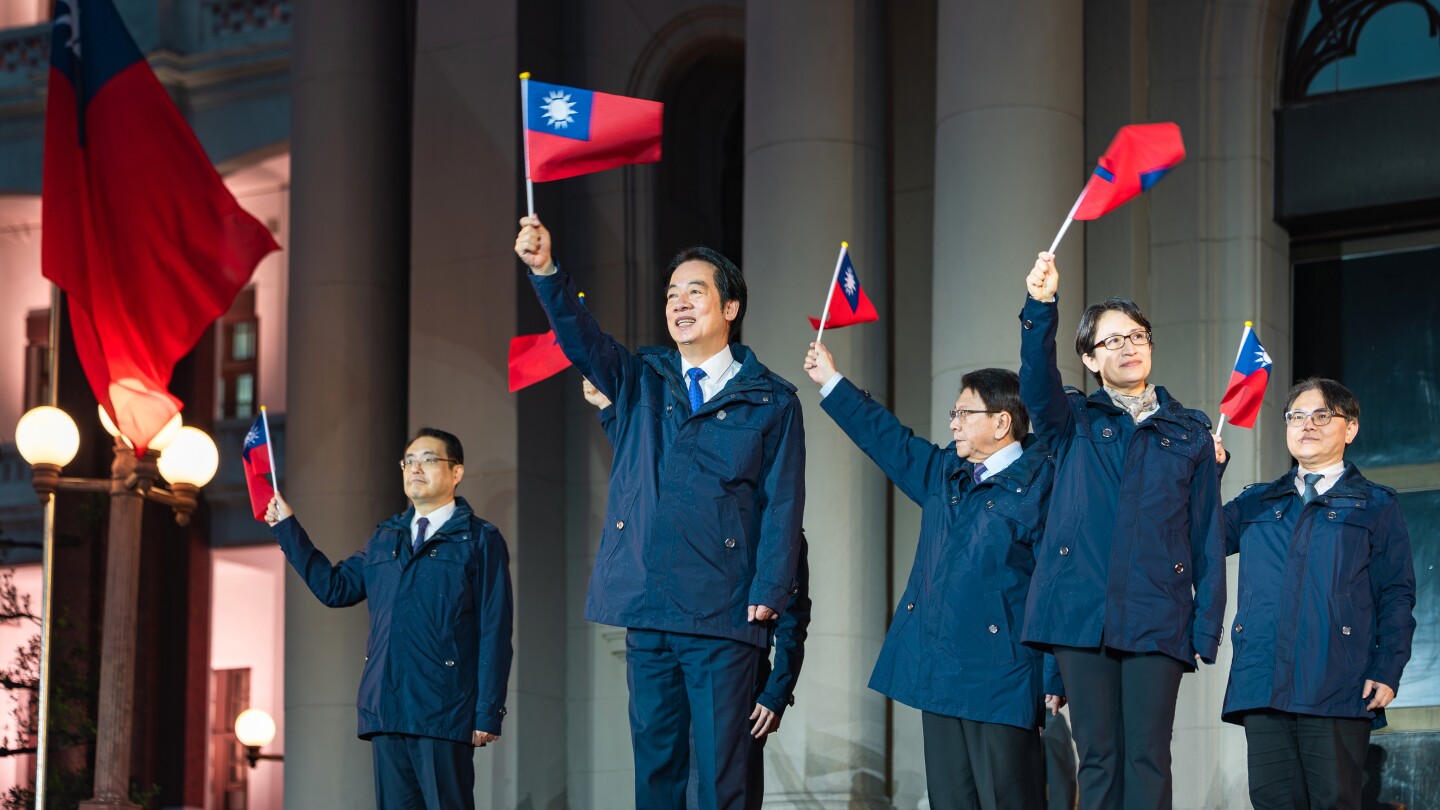
Taiwanese President Lai Ching-te delivered a defiant New Year’s address Thursday, pledging to protect the self-ruled island’s sovereignty as tensions with China continue to escalate following Beijing’s recent live-fire military exercises near Taiwan’s shores.
“In the face of China’s rising expansionist ambitions, the international community is watching to see whether the Taiwanese people have the resolve to defend themselves,” Lai declared in his speech. “As president, my stance has always been clear: to firmly safeguard national sovereignty, strengthen national defense and the resilience of the whole society, and comprehensively construct an effective deterrence and democratic defense mechanism.”
The president’s remarks came just days after China concluded extensive military drills around Taiwan that included rocket launches, aircraft operations, and naval exercises. Beijing has expressed anger over several recent developments, including a planned $11 billion U.S. arms sale to Taiwan—Washington’s largest to date—and comments from Japan’s new leader suggesting Tokyo might intervene if China attacks Taiwan.
The arms package includes missiles, drones, artillery systems, and military software, reflecting the United States’ legal obligation under its own laws to provide Taiwan with defensive capabilities. This support comes at a critical moment as cross-strait tensions have reached their highest point in decades.
China considers Taiwan part of its territory and has repeatedly threatened to annex the island by force if necessary. Taiwan, a former Japanese colony, has been governed independently from mainland China since 1949, when the Nationalist Party retreated to the island after losing the civil war to the Chinese Communist Party.
Beijing responded harshly to Lai’s speech. Chen Binhua, spokesperson for China’s Taiwan Affairs Office, called the Taiwanese president “a saboteur of peace, a troublemaker and a warmonger,” according to China’s official Xinhua news agency.
“No matter what Lai and the Democratic Progressive Party authorities say or do, they cannot change the fact that Taiwan is part of China,” Chen added, reiterating Beijing’s long-standing position.
The exchange of rhetoric underscores the deteriorating relationship between Taipei and Beijing. Just a day before Lai’s address, Chinese President Xi Jinping described Taiwan’s eventual annexation as “unstoppable” during his own televised New Year’s speech, signaling China’s unwavering commitment to what it calls “reunification.”
Taiwan has been bolstering its defense capabilities in response to growing Chinese military pressure. Last year, the island announced a special $40 billion budget for arms purchases, including the development of an advanced air defense system called the Taiwan Dome. The funding will be allocated over eight years, from 2026 to 2033, complementing Lai’s previous pledge to increase defense spending to 5% of Taiwan’s GDP.
“Facing China’s serious military ambitions, Taiwan has no time to wait,” Lai emphasized in his address, highlighting the urgency of the security situation.
The standoff has significant implications for regional stability and global geopolitics. Taiwan plays a crucial role in international supply chains, particularly as home to Taiwan Semiconductor Manufacturing Company (TSMC), the world’s leading advanced chip manufacturer. Any military conflict involving the island could severely disrupt global technology supply chains and trigger a major international crisis.
The United States maintains a policy of “strategic ambiguity” regarding Taiwan’s defense, providing arms while not explicitly promising military intervention. However, President Biden has made statements suggesting the U.S. would defend Taiwan if attacked, though these have been subsequently clarified by White House officials.
As military activities continue to intensify around Taiwan, diplomatic efforts to maintain peace in the Taiwan Strait face mounting challenges. Analysts warn that miscalculations by either side could lead to unintended escalation, making the ongoing situation one of the most dangerous flashpoints in global politics.
Fact Checker
Verify the accuracy of this article using The Disinformation Commission analysis and real-time sources.

11 Comments
The U.S. arms sale to Taiwan is a significant move that could further inflame tensions with China. It will be crucial for all parties to pursue dialogue and diplomacy to find a peaceful resolution, rather than resorting to military confrontation.
You raise a good point. Diplomatic efforts to reduce regional tensions should be the priority, even as Taiwan strengthens its defensive capabilities.
This is a complex geopolitical situation with high stakes for Taiwan and the region. President Lai’s strong stance on defending sovereignty is understandable given China’s assertive military posturing. However, both sides will need to exercise caution to avoid escalating tensions further.
Agreed. Taiwan will need robust military and diplomatic support from allies to effectively deter any potential Chinese aggression.
While I understand Taiwan’s desire to defend its sovereignty, provoking a direct military confrontation with China would be extremely risky. Diplomatic efforts to reduce tensions and find a mutually acceptable solution should be the priority.
You make a fair point. Escalating the situation militarily could have disastrous consequences for Taiwan and the region. Cooler heads must prevail.
President Lai’s remarks highlight the delicate balance Taiwan must strike in asserting its sovereignty while avoiding provoking a major military conflict with China. Careful management of this issue will be critical for regional stability.
Indeed, Taiwan will need to navigate this situation with great strategic nuance to protect its interests without escalating the situation.
China’s military exercises near Taiwan are clearly intended to signal its determination to assert control over the island. However, any attempt to forcibly unify Taiwan with the mainland would have grave consequences and should be avoided at all costs.
Absolutely. The international community must remain vigilant and united in deterring any Chinese aggression against Taiwan.
This is a delicate situation that requires nuanced handling by all parties involved. Taiwan’s sovereignty is a core issue, but any rash actions that could trigger a wider conflict must be avoided. Constructive dialogue and compromise will be essential.