


Listen to the article
Syria Reopens London Embassy as International Reintegration Accelerates
Syria’s Foreign Minister Asaad al-Shibani officially reopened the country’s embassy in London on Thursday, ending a closure that lasted more than a decade. The diplomatic restoration marks a significant milestone in Syria’s ongoing reintegration into the international community following the fall of former President Bashar Assad’s regime.
The London embassy reopening follows a groundbreaking visit to Washington by Syria’s interim President Ahmad al-Sharaa, which made history as the first visit by a Syrian head of state to the United States since Syria gained independence from French control in 1946.
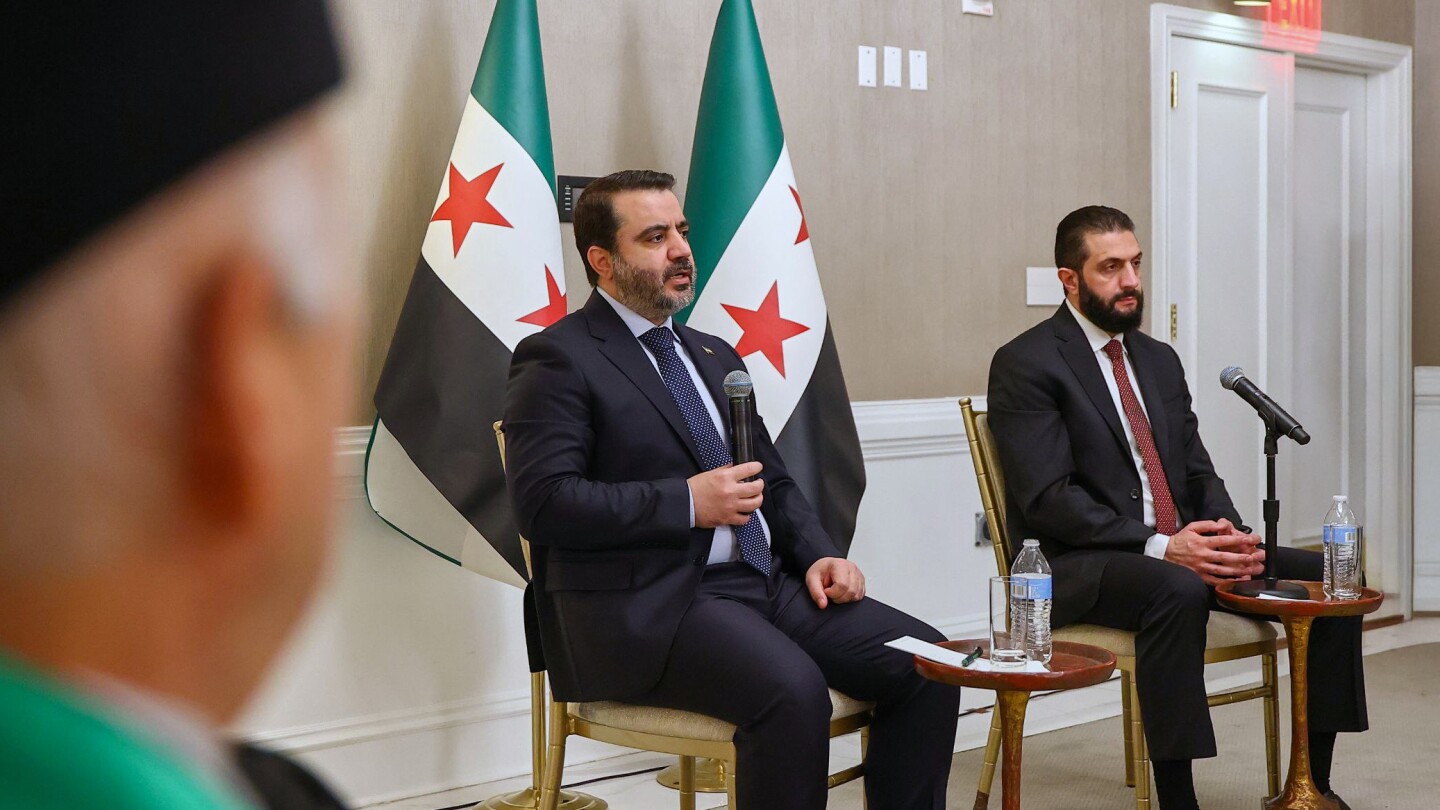
During an event hosted by the prestigious Chatham House international affairs think tank in London, al-Shibani characterized his meeting with British Foreign Secretary Yvette Cooper as “successful” and emphasized the forward momentum in bilateral relations.
“Relations between Syria and Britain are advanced relations and we are not talking about opening a new page — we are talking about deepening these relations,” al-Shibani told attendees at the think tank event.
The foreign minister specifically praised the United Kingdom for its supportive stance toward Syria’s new government. “The United Kingdom had a progressive position compared to other countries,” he noted. “It removed sanctions early and opened relations with the new Syrian government quickly. It supported us in the Security Council and also supported us in several thorny issues.”
This diplomatic thaw represents a dramatic shift from the international isolation Syria faced during Assad’s rule. Following the 2011 government crackdown on protesters, which escalated into a devastating 14-year civil war, most Western nations severed formal ties with Damascus and imposed strict sanctions.
While al-Sharaa’s government has garnered broad international support, his background as a former Islamist militant initially raised concerns among some international observers. Despite these early misgivings, many Western nations have gradually normalized relations with the new Syrian administration.
However, serious challenges remain for the new government, particularly regarding sectarian tensions and the protection of religious minorities. Recent months have seen violent clashes in Syria’s coastal regions and the southern province of Sweida, which tragically evolved into sectarian revenge attacks. Sunni pro-government militias reportedly killed hundreds of civilians from the Alawite and Druze religious minorities, raising alarm among international human rights organizations.
Addressing these concerns during his London appearance, al-Shibani acknowledged the violence and outlined steps being taken to address the situation. He stated that approximately 300 individuals are currently imprisoned for their roles in the coastal violence, and emphasized that the government is actively recruiting Alawites to serve in local police forces to help restore trust.
“The mistakes or crimes that happened are certainly not accepted by the Syrian government,” al-Shibani affirmed, though critics question whether these measures go far enough to address systemic sectarian issues.
The reopening of Syria’s London embassy is part of a broader pattern of diplomatic normalization occurring across Europe and the Middle East. Several Arab states that had previously suspended relations with Assad’s government have reestablished diplomatic missions in Damascus over the past year.
Regional analysts note that this diplomatic shift reflects pragmatic recognition of Syria’s new political reality, though humanitarian organizations continue to express concern about ongoing human rights issues and the precarious situation facing various minority communities across the country.
As Syria works to rebuild international relationships, significant questions remain about reconstruction efforts in a country devastated by nearly a decade and a half of civil conflict. Experts estimate reconstruction costs could exceed $400 billion, presenting a monumental challenge for the new government as it seeks to consolidate power and rebuild the nation’s shattered infrastructure.
Fact Checker
Verify the accuracy of this article using The Disinformation Commission analysis and real-time sources.

14 Comments
The reopening of Syria’s embassy in London is a significant milestone, though concerns over human rights and the country’s past actions will likely linger. Careful diplomacy and transparency will be crucial going forward.
A delicate balance to strike, no doubt. Reintegration should be approached thoughtfully to address past grievances while looking to the future.
Syria’s embassy reopening in London is an intriguing development, but one that raises many questions. The country’s record on human rights and its role in regional conflicts will undoubtedly be scrutinized.
This move signals Syria’s gradual reintegration into the international community, but many will be watching closely to see how it unfolds. Rebuilding trust and addressing regional tensions will be crucial.
Absolutely. Cautious optimism may be warranted, but the path ahead will undoubtedly be challenging.
This move signals Syria’s gradual return to the international fold, but there are still many outstanding issues to resolve. Maintaining open lines of communication is important, even with challenging partners.
Interesting development. Syria’s reintegration into the international community is an important step, though some may remain cautious given the country’s complex history. It will be important to monitor how this evolves and impacts regional dynamics.
Agreed. Rebuilding diplomatic ties takes time, but this could open up new opportunities for engagement and conflict resolution.
Diplomatic relations are often a delicate balancing act. While the reopening of Syria’s embassy in London is noteworthy, it remains to be seen how this will impact regional stability and ongoing concerns.
Well said. Careful, transparent diplomacy will be essential to navigating this sensitive situation effectively.
The reopening of Syria’s embassy in London is an important step, but one that will require careful navigation. Ongoing concerns over human rights and regional stability will need to be addressed through diplomatic channels.
The restoration of Syria’s diplomatic presence in London is a complex issue. It’s important to maintain open channels of communication, but also to address past transgressions and ensure accountability.
The restoration of diplomatic ties between Syria and the UK is a complex development. While it may facilitate dialogue, there are understandable concerns that will need to be carefully navigated.
Absolutely. Rebuilding trust and addressing past grievances will be critical for any meaningful progress.