


Listen to the article
Trump Administration Intensifies Action Against Muslim Brotherhood in Sudan Conflict
The Trump administration has taken significant new steps against the Muslim Brotherhood, this time targeting its branch in Sudan amid the country’s devastating civil war. The State Department on Monday declared the Sudanese Muslim Brotherhood (SMB) a “Designated Global Terrorist” organization, with plans to officially list it as a Foreign Terrorist Organization effective March 16, 2026.
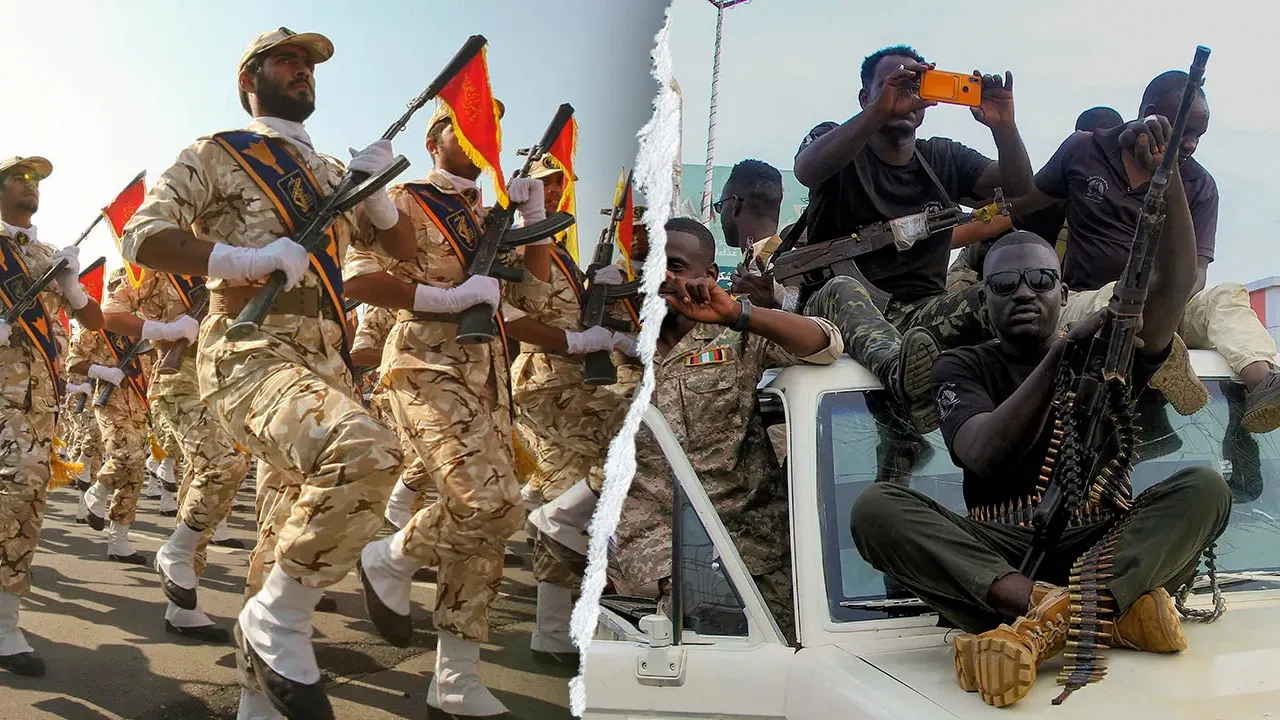
The designation comes with a stern warning to Iran about its involvement in the Sudanese conflict. According to the State Department, the SMB has contributed approximately 20,000 fighters to the war in Sudan, many receiving training and support from Iran’s Islamic Revolutionary Guard Corps (IRGC).
“As the world’s leading state sponsor of terrorism, the Iranian regime has financed and directed malign activities globally through its IRGC,” the statement noted. “The United States will use all available tools to deprive the Iranian regime and Muslim Brotherhood chapters of the resources to engage in or support terrorism.”
This action follows the administration’s November sanctions against Muslim Brotherhood branches in Egypt, Jordan, and Lebanon, marking an expansion of U.S. efforts to counter the organization’s influence across the Middle East and North Africa.
Brutal Violence in Sudan’s Conflict
The State Department’s announcement highlighted the SMB’s role in Sudan’s ongoing civil war, describing the organization as “composed of the Sudanese Islamic Movement and its armed wing – the al-Baraa Bin Malik Brigade.” Officials accused the group of using “unrestrained violence against civilians to undermine efforts to resolve the conflict in Sudan and advance its violent Islamist ideology.”
The statement detailed disturbing allegations that SMB fighters “have conducted mass executions of civilians in areas they captured, and repeatedly and summarily executed civilians based on race, ethnicity or perceived affiliation with opposition groups.”
Edmund Fitton-Brown, a senior fellow at the Foundation for Defense of Democracies and former UK ambassador to Yemen, told Fox News Digital that the Muslim Brotherhood maintains deep links within Sudan’s government forces and plays an aggressive role in the war against the Rapid Support Forces (RSF). He noted that the Brotherhood has a “strong component” in the Sudanese regular army.
Fitton-Brown also highlighted the historical connections between the Sudanese Brotherhood and Osama Bin Laden, calling the State Department’s move “significant” as “the first concrete indication that the November executive order was only the start of a process.”
Humanitarian Crisis Worsens
The impact of Sudan’s nearly three-year civil war has been catastrophic for civilians. According to the Council on Foreign Relations, death toll estimates vary widely, with former U.S. envoy for Sudan suggesting as many as 400,000 people have been killed since fighting began on April 15, 2023.
The conflict has displaced more than 11 million people, creating what experts describe as the world’s worst displacement crisis. Humanitarian organizations continue to struggle to provide aid amid the violence.
Political Ramifications
Following the announcement, Senate Foreign Relations Committee Chairman Jim Risch (R-Idaho) called the designation “a vital step to curb the Muslim Brotherhood’s influence in the region, especially as hardline Islamists seek to reassert themselves.” He urged similar consideration for designating the “genocidal Rapid Support Forces and their terror campaign in Sudan.”
Fitton-Brown suggested the move could potentially empower democratic forces inside Sudan, though he cautioned it “will not be sufficient to change the way Sudan is governed or end the civil war, without much more proactive external involvement in the country.”
Not all experts share this optimism. Nicholas Coghlan, a former Canadian diplomat in Khartoum, told the Globe and Mail that hardline factions within leader Abdel Fattah al-Burhan’s government alliance might now push him “to ignore the U.S. and other potential mediators and go all out,” adding that “they have nothing further to lose by holding back.”
As the international community watches these developments, the designation represents a significant escalation in U.S. policy toward both the Muslim Brotherhood and Iran’s involvement in regional conflicts, with potential long-term implications for American engagement in Sudan and beyond.
Fact Checker
Verify the accuracy of this article using The Disinformation Commission analysis and real-time sources.

18 Comments
This move signals the Trump administration’s continued hardline approach to the Muslim Brotherhood globally. While the security concerns are valid, the potential for unintended consequences should not be ignored.
The alleged Iranian support for the SMB is a concerning allegation, but the evidence should be made public to ensure transparency and accountability.
Interesting move by the Trump administration to designate the Sudanese Muslim Brotherhood as a terror group. This signals a hardline approach to countering Iranian influence in the region through proxies like the Brotherhood.
Designating the SMB as a terror group will likely escalate tensions, but it could also help curb the flow of funds and resources from Iran to the group.
The Trump administration’s focus on countering Iranian influence in the region is understandable, but the implications of this terror designation on the ground in Sudan need to be carefully weighed.
Designating the SMB as a terror group could have significant humanitarian consequences if it disrupts aid and relief efforts in Sudan. Mitigating these risks should be a priority.
Designating the SMB as a terror group could have significant humanitarian and diplomatic implications in Sudan. Careful consideration of these factors will be crucial in implementing this policy.
Cutting off the SMB’s access to Iranian resources could shift the balance of power in the Sudanese conflict, but the long-term effects on regional stability should be closely monitored.
The allegations of the SMB receiving training and support from Iran’s IRGC are concerning. If true, this could be a major factor fueling the conflict in Sudan. Careful monitoring and evidence-based action will be crucial.
Cutting off the SMB’s access to Iranian resources could weaken their position in the Sudanese conflict, but the broader geopolitical implications will need to be considered.
Designating the SMB as a terror group could have significant implications for the ongoing conflict in Sudan. The potential impact on humanitarian aid and regional stability should be carefully assessed.
The Trump administration’s focus on countering Iranian influence is understandable, but the policy response should be tailored to the specific dynamics of the Sudanese conflict.
This move seems to be part of the Trump administration’s broader crackdown on the Muslim Brotherhood globally. While the security concerns are understandable, the potential for unintended consequences should be closely evaluated.
Designating the SMB as a terror group could have significant diplomatic and humanitarian implications in Sudan. Careful coordination with regional partners will be crucial.
The alleged link between the SMB and Iran’s IRGC is a serious allegation that warrants thorough investigation. If proven true, this could justify the terror designation, but the evidence should be made public.
Cutting off the SMB’s access to Iranian support could shift the balance of power in the Sudanese conflict, but the long-term effects on regional stability should be considered.
This move is part of a broader pattern of the Trump administration’s aggressive stance against the Muslim Brotherhood globally. While the security concerns are valid, the potential for unintended consequences should not be overlooked.
The alleged Iranian support for the SMB is a serious allegation that needs to be substantiated. Transparent and evidence-based policymaking will be crucial in this case.