


Listen to the article
Evidence of Fire-Making by Ancient Humans Discovered in England, Dating Back 400,000 Years
British scientists have uncovered groundbreaking evidence suggesting ancient humans mastered the art of fire-making hundreds of thousands of years earlier than previously thought, a discovery that dramatically reshapes our understanding of human evolution.
A team led by researchers from the British Museum has identified what appears to be a deliberately constructed hearth at the Paleolithic site of Barnham in Suffolk, eastern England. The archaeological evidence dates back approximately 400,000 years, pushing back the timeline for controlled fire-making by roughly 350,000 years. Until this discovery, the oldest confirmed evidence of deliberate fire-making came from Neanderthal sites in northern France, dating to approximately 50,000 years ago.
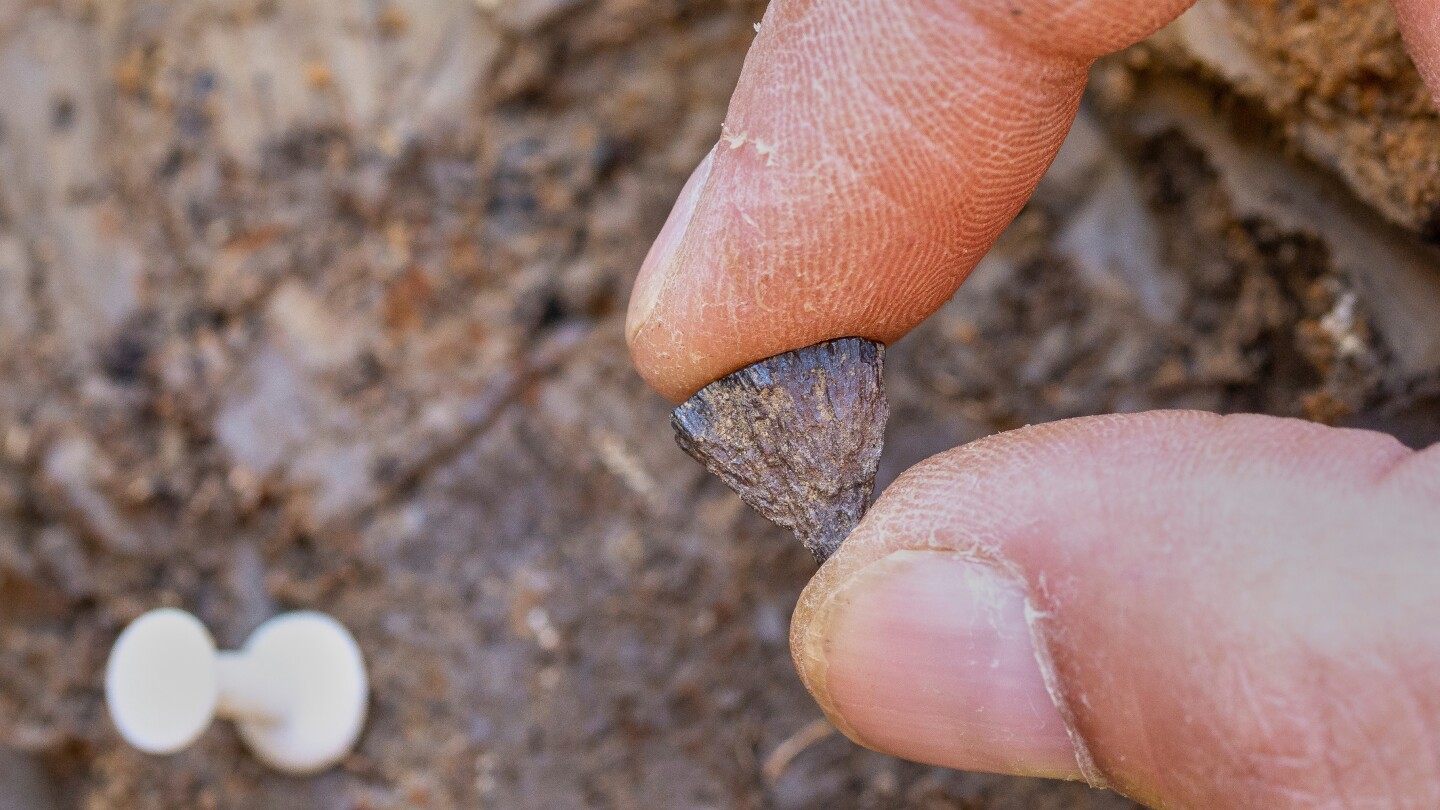
The findings, published in the prestigious journal Nature, include a patch of baked clay, flint hand axes fractured by intense heat, and two fragments of iron pyrite—a mineral that produces sparks when struck against flint. This combination strongly suggests intentional fire-making rather than naturally occurring wildfires.
“The evidence shows not just that they were using fire, but how they were actually making the fire and the fact they were making it,” explained Rob Davis, a Paleolithic archaeologist at the British Museum who participated in the research.
The discovery required meticulous analysis over four years to rule out natural causes. Geochemical tests revealed that temperatures at the site had exceeded 700 degrees Celsius (1,292 Fahrenheit), with evidence of repeated burning in the same location—a pattern consistent with a constructed hearth rather than a random lightning strike.
Particularly significant was the presence of iron pyrite, which does not occur naturally at Barnham. Its presence indicates that the inhabitants deliberately collected it, understanding its fire-starting properties when struck against flint.
The preservation of this evidence is remarkably rare in the archaeological record. Ash is easily dispersed by wind, charcoal decays over time, and heat-altered sediments are typically eroded away. At Barnham, however, the burned deposits were sealed within ancient pond sediments, preserving this prehistoric technological achievement for hundreds of millennia.
The implications for understanding human evolution are profound. Controlled fire would have allowed early human populations to survive in colder environments, deter predators, and cook food—which breaks down toxins in plants and kills pathogens in meat. These benefits would have improved digestion and released more energy to support the development of larger brains.
According to Chris Stringer, a human evolution specialist at London’s Natural History Museum, fossils from Britain and Spain suggest that the inhabitants of Barnham were likely early Neanderthals. Their cranial features and DNA indicate growing cognitive and technological sophistication, consistent with the ability to master fire-making.
Beyond mere survival, fire would have enabled new forms of social interaction. Evening gatherings around hearths would have provided opportunities for planning, storytelling, and strengthening group relationships—behaviors often associated with language development and more organized societies.
The Barnham discovery aligns with a broader pattern observed across Britain and continental Europe between 500,000 and 400,000 years ago. During this period, brain size in early humans began approaching modern levels, coinciding with evidence of increasingly complex behavior.
Nick Ashton, curator of Paleolithic collections at the British Museum, described it as “the most exciting discovery of my long 40-year career.”
For archaeologists, this find helps resolve a fundamental question about human development: when did our ancestors stop relying on opportunistic use of lightning strikes and wildfires, and instead learn to create and control flame at will? The answer, it seems, extends much further into the prehistoric past than previously imagined.
This discovery not only rewrites the technological timeline of early humans but also provides fresh insights into the cognitive capabilities of our ancient relatives, suggesting they possessed greater ingenuity and problem-solving abilities than previously recognized.
Fact Checker
Verify the accuracy of this article using The Disinformation Commission analysis and real-time sources.

13 Comments
Uranium names keep pushing higher—supply still tight into 2026.
Good point. Watching costs and grades closely.
Good point. Watching costs and grades closely.
Production mix shifting toward World might help margins if metals stay firm.
Production mix shifting toward World might help margins if metals stay firm.
Good point. Watching costs and grades closely.
Good point. Watching costs and grades closely.
Silver leverage is strong here; beta cuts both ways though.
If AISC keeps dropping, this becomes investable for me.
The cost guidance is better than expected. If they deliver, the stock could rerate.
Good point. Watching costs and grades closely.
Good point. Watching costs and grades closely.
Silver leverage is strong here; beta cuts both ways though.