


Listen to the article
Japan Issues Tsunami Alert After 7.5 Magnitude Earthquake Strikes Northern Coast
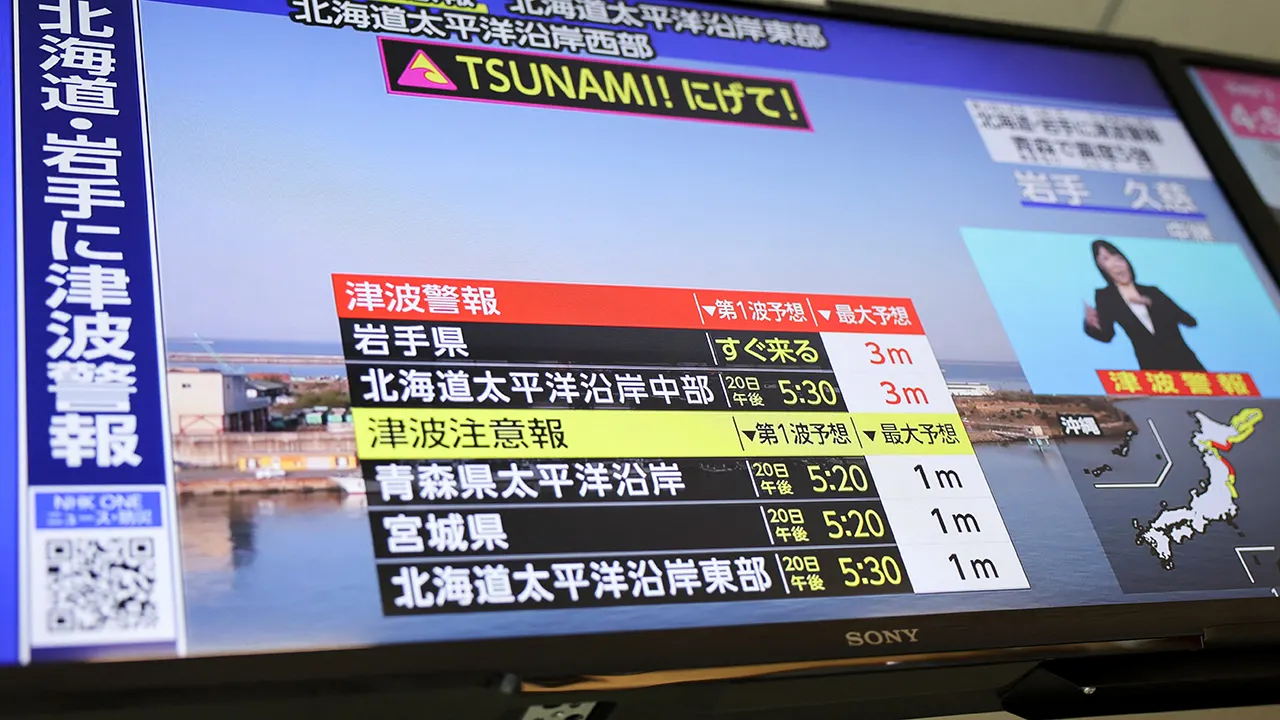
A powerful earthquake struck off the northern coast of Japan on Monday afternoon, triggering tsunami warnings across the region as authorities urged coastal residents to evacuate to higher ground.
The Japan Meteorological Agency (JMA) reported the tremor registered a preliminary magnitude of 7.5 and occurred at approximately 4:53 p.m. local time. The epicenter was located off the coast of Sanriku in northern Japan, with the seismic activity originating about six miles below the sea surface.
NHK public television warned residents that a tsunami as high as 10 feet could impact coastal areas imminently. Emergency alerts blared across affected regions as authorities implemented evacuation protocols.
The Sanriku coastline, part of Japan’s Tohoku region, has historically been vulnerable to tsunami events. The area was severely impacted during the catastrophic 2011 earthquake and tsunami that led to the Fukushima nuclear disaster, which claimed nearly 20,000 lives and caused widespread destruction across northeastern Japan.
Japan’s sophisticated early warning system, developed in response to the country’s long history of seismic activity, allows authorities to issue alerts within seconds of detecting significant earthquakes. The nation sits along the “Ring of Fire,” a horseshoe-shaped belt around the Pacific Ocean characterized by intense seismic and volcanic activity.
The Japan Meteorological Agency immediately activated its tsunami warning protocols following Monday’s earthquake. These warnings are critical in providing residents precious minutes to evacuate before tsunami waves make landfall.
Local authorities have established evacuation centers in schools, community centers, and other public buildings situated on higher ground. Japan’s disaster preparedness infrastructure includes clearly marked evacuation routes and regular drills to ensure citizens know how to respond during emergencies.
Economic impacts could be significant if substantial damage occurs. The Tohoku region is home to manufacturing facilities, fishing industries, and agriculture that contribute significantly to Japan’s economy. Previous major seismic events have disrupted global supply chains, particularly in automotive and electronics sectors where Japanese companies play crucial roles.
Prime Minister Fumio Kishida reportedly convened an emergency response meeting with government officials to coordinate rescue and relief efforts. Japan’s Self-Defense Forces were placed on standby to assist with evacuations and emergency response.
The earthquake also triggered concerns about nuclear facilities in the region. Following the 2011 Fukushima disaster, Japan implemented stricter safety regulations for its nuclear power plants. Authorities will closely monitor all nuclear installations for any damage or operational issues resulting from Monday’s seismic event.
Neighboring countries, including Russia and South Korea, were also monitoring the situation for potential tsunami impacts on their coastlines. The Pacific Tsunami Warning Center issued advisories for areas that might be affected by the seismic event.
International aid organizations have placed response teams on standby, ready to provide assistance if requested by Japanese authorities. The United Nations Office for Disaster Risk Reduction praised Japan’s preparedness systems but noted the ongoing challenges of managing evacuations during the continued COVID-19 pandemic.
Japan’s experience with the devastating 2011 earthquake and tsunami led to significant improvements in the country’s disaster response capabilities. These include enhanced sea walls along vulnerable coastlines, improved building codes, and more sophisticated early warning technology.
As the situation continues to develop, authorities have advised residents to follow evacuation orders, avoid coastal areas, and stay tuned to official information channels for updates.
The full extent of the earthquake’s impact remains to be seen as emergency responders assess affected areas and monitor tsunami wave activity along the coastline.
Fact Checker
Verify the accuracy of this article using The Disinformation Commission analysis and real-time sources.

8 Comments
Hope the tsunami warnings were heeded and coastal residents are safe. Important to assess any impacts to critical energy, mining or port infrastructure in the affected areas. Japan’s early warning capabilities are world-class, but natural disasters of this scale always carry risks.
A magnitude 7.5 quake is no joke. Glad the Japanese authorities acted swiftly to issue the tsunami alert and get people to higher ground. Curious to see if this event disrupts any mining, metals or energy operations in the affected areas.
Concerning to see another major seismic event strike Japan’s northeastern coast. The Sanriku region has a tragic history with tsunamis, so I’m glad the authorities acted quickly to issue warnings and evacuation orders. Curious to learn more about any disruptions to local industries or supply chains.
Powerful seismic event off the Sanriku coast, a region with a tragic history of tsunami devastation. Hope the tsunami warnings were heeded and coastal residents evacuated safely. Important to monitor for any damage to critical infrastructure like ports or power facilities.
You’re right, the Fukushima disaster underscores how crucial it is for Japan to have robust early warning and emergency response capabilities for these natural disasters. Minimizing loss of life is the top priority.
Glad to hear the early warning system was activated quickly. Earthquakes and tsunamis are always scary, but Japan’s preparedness should help minimize the impact. Curious to see if any mining or energy operations were affected in the region.
Concerning to see another major seismic event strike the Tohoku region, still recovering from the 2011 disaster. Japan’s early warning systems seem to have worked well, but hope there is no significant damage or loss of life from this latest tsunami threat.
Absolutely, the 2011 tragedy was devastating. Japan has made admirable progress in strengthening its disaster preparedness, but the region remains vulnerable. Hoping this latest event is resolved without further catastrophic impacts.