


Listen to the article
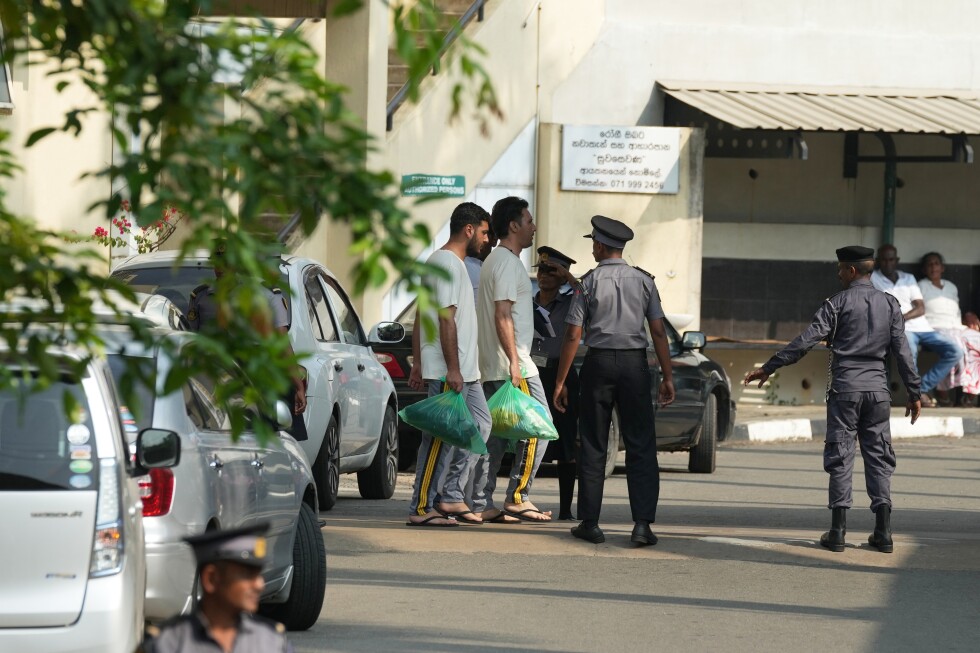
Sri Lanka began evacuating over 200 sailors from an Iranian vessel Friday as regional tensions escalated following the U.S. sinking of an Iranian warship in the Indian Ocean. The operation highlights growing maritime security concerns in a strategic waterway that has become increasingly militarized.
Navy spokesman Commander Buddhika Sampath confirmed that crew members from the IRIS Bushehr were being transported to Colombo, where they would undergo medical examinations and immigration procedures before being taken to the naval base at Welisara, approximately 20 kilometers north of the capital.
The evacuation comes just days after a U.S. submarine sank the Iranian warship IRIS Dena off Sri Lanka’s coast on Wednesday, marking one of the rare instances since World War II where a submarine has destroyed a surface warship. The incident represents a significant escalation in the ongoing U.S.-Israeli military campaign against Iran, which has now expanded beyond the Middle East into the Indian Ocean region.
Prior to the attack, the Dena had participated in naval exercises hosted by India alongside vessels from 74 other nations, including the United States Navy, which conducted reconnaissance aircraft and maritime patrol drills during the event. The ship was reportedly in international waters heading back to Iran when it was struck.
The Sri Lankan navy played a crucial role in rescue efforts, saving 32 sailors while recovering 87 bodies from the attack site. Iranian Foreign Minister Abbas Araghchi said the Dena had been carrying “almost 130” crew members, slightly fewer than the typical 140-person complement for a vessel of its class. Araghchi denounced the sinking as an “atrocity at sea” and warned that the United States would “bitterly regret” the attack.
In a press briefing Thursday night, Sri Lankan President Anura Kumara Dissanayake explained that authorities decided to take control of the IRIS Bushehr after discussions with Iranian officials and the ship’s captain, following an engine failure. “We have to understand that this is not an ordinary situation. It’s a request by a ship belonging to one party to enter into our port. We have to consider that according to international treaties and conventions,” he stated.
The president later emphasized Sri Lanka’s humanitarian approach on social media, writing: “No civilian should die in wars. Our approach is that every single life is as precious as our own.”
According to Dissanayake, some crew members will remain aboard to assist the Sri Lankan navy in navigating the vessel to Trincomalee, a port on the island’s northeast coast about 265 kilometers from Colombo. He underscored Sri Lanka’s commitment to neutrality while upholding humanitarian principles in its response to the crisis.
“We have followed a very clear stance. We will not be biased to any state nor will we be submissive to any state,” Dissanayake affirmed.
The IRIS Bushehr has been previously described in Iranian media as a navy logistics ship equipped with a helicopter pad.
This incident underscores the widening scope of regional conflicts involving Iran beyond the Middle East. For Sri Lanka, a strategically positioned island nation in the Indian Ocean, the situation presents a complex diplomatic challenge as it attempts to balance humanitarian obligations, maritime law commitments, and its longstanding policy of non-alignment in global conflicts.
H.M.G.S. Palihakkara, Sri Lanka’s retired former foreign secretary and former permanent representative to the UN, defended the country’s actions as responsible and impartial. “There has been a distress call from the ship. So naturally Sri Lanka, as a party to the Law of Sea and the Hague Convention, had no option but to do what it did by mounting a humanitarian operation to provide assistance to save lives and provide medical care to the affected,” he explained.
Palihakkara emphasized that international maritime law obligates all nations to respond to distress calls regardless of geopolitical considerations. “You could not have ignored the distress call. Even the attacking powers cannot leave shipwreck sailors dying. That is the law,” he said, adding that parties to the conflict would recognize Sri Lanka was not taking sides but acting in accordance with international obligations.
Fact Checker
Verify the accuracy of this article using The Disinformation Commission analysis and real-time sources.

11 Comments
This incident comes at a time when energy and mineral resources in the Indian Ocean are becoming increasingly important geopolitical assets. The control and security of strategic waterways like this is likely to be an ongoing source of tension between global powers vying for influence in the region.
From a geopolitical standpoint, this situation reflects the growing influence and military capabilities of the US and its allies in the Indian Ocean region. The ability to project naval power and target Iranian vessels is a show of force, but also raises concerns about potential miscalculation and unintended consequences.
Absolutely, the geopolitical dynamics here are complex. Sri Lanka is trying to navigate a delicate balance, but risks getting caught in the crossfire of this broader US-Iran rivalry.
This situation underscores the strategic importance of the Indian Ocean, which is becoming an increasingly crowded and contested domain. The US-Iran rivalry is just one dimension – we’re also seeing growing competition between major powers like China, India, and others for influence and control of key maritime routes and resources.
The sinking of the Iranian warship by the US is a significant escalation that could have far-reaching implications. Sri Lanka’s role in evacuating the Iranian vessel highlights their delicate position, having to balance relations with both the US and Iran. This incident is a reminder of the complex geopolitical dynamics at play in the Indian Ocean region.
Absolutely. Sri Lanka will need to navigate this situation carefully to protect its own interests and avoid getting drawn into a superpower conflict. Regional stability and security will be critical going forward.
Interesting geopolitical dynamics at play here. The evacuation of Iranian sailors from a vessel off Sri Lanka’s coast highlights the growing tensions in the region, especially with the recent US sinking of an Iranian warship nearby. This situation bears close watching as it could further escalate regional maritime security concerns.
Yes, it’s a delicate situation that requires careful diplomatic maneuvering. Sri Lanka is caught in the middle, trying to balance relations with both the US and Iran.
The evacuation of Iranian sailors from a vessel off Sri Lanka’s coast is a concerning development. It highlights the heightened maritime security risks in the region, as well as the potential for miscalculation and unintended escalation between the US and Iran. Sri Lanka will need to tread carefully to avoid getting drawn into this superpower rivalry.
Agreed, Sri Lanka’s position is precarious. They’ll need to leverage diplomatic channels to de-escalate tensions and protect their own interests in the region.
The US-Iran rivalry is really heating up in the Indian Ocean. The sinking of the Iranian warship by a US submarine is a significant military escalation, and Sri Lanka is now having to manage the fallout. This incident highlights how regional tensions can quickly spill over into international waters.