


Listen to the article
Spain’s Catholic Bishops Yield Control in Clergy Abuse Compensation Cases
Spain’s Catholic bishops have agreed to cede final authority to the Spanish government’s ombudsman in determining compensation for victims of sexual abuse by deceased clergy or in cases where the statute of limitations has expired. The landmark agreement, announced Thursday in Barcelona, represents a significant concession by the Catholic Church in Spain.
The agreement establishes a one-year window for victims to file claims and addresses longstanding tensions between Spain’s left-wing government and church authorities over proper reparations. Victims had previously criticized the church’s original in-house compensation proposal as inadequate.
“Today, we have paid a debt to the victims,” said Justice Minister Félix Bolaños at a press conference in Madrid. “It is true that the State has acted late, but we are acting now. Yesterday, the victims couldn’t do anything because these crimes had prescribed.”
According to Bolaños, “hundreds” of victims whose abusers have died or are elderly can now receive formal acknowledgment of their abuse and financial compensation from the church. The agreement allows victims uncomfortable approaching church offices directly to instead file claims through the government.
Spain’s approach to clergy abuse compensation is unusual in its level of state involvement. While Catholic authorities in many Western European countries have established compensation programs for abuse victims—either church-run or managed by independent experts—Spain’s process stands apart due to the government’s active role.
The path to this agreement has been fraught with tension. Spain began confronting decades of clerical abuse and institutional cover-ups more seriously in recent years, largely due to investigative reporting by the newspaper El País. In 2023, Spain’s parliament-appointed ombudsman delivered a damning 800-page report examining 487 known abuse cases and including survey data suggesting the number of potential victims could reach hundreds of thousands.
Spanish bishops rejected that estimate, countering that their own investigation had identified 728 sexual abusers within the church since 1945, with most incidents occurring before 1990 and approximately 60% of perpetrators now deceased.
Under the new arrangement, victims will submit their initial petitions to Spain’s Justice Ministry, which will forward them to the ombudsman for review and compensation recommendations. The church’s committee will then assess these proposals. If no agreement is reached between the church and the victim, the case proceeds to a joint committee with representatives from the church, ombudsman’s office, and victims’ associations. If that committee fails to reach consensus, the ombudsman’s decision becomes final.
“We consider it to be completely positive,” said Juan Cuatrecasas, spokesman for the victims’ association Robbed Childhood, which had criticized the church’s original plan for lacking independent oversight. “We believe it was time for the victims whose cases had been prescribed to see the truth served.”
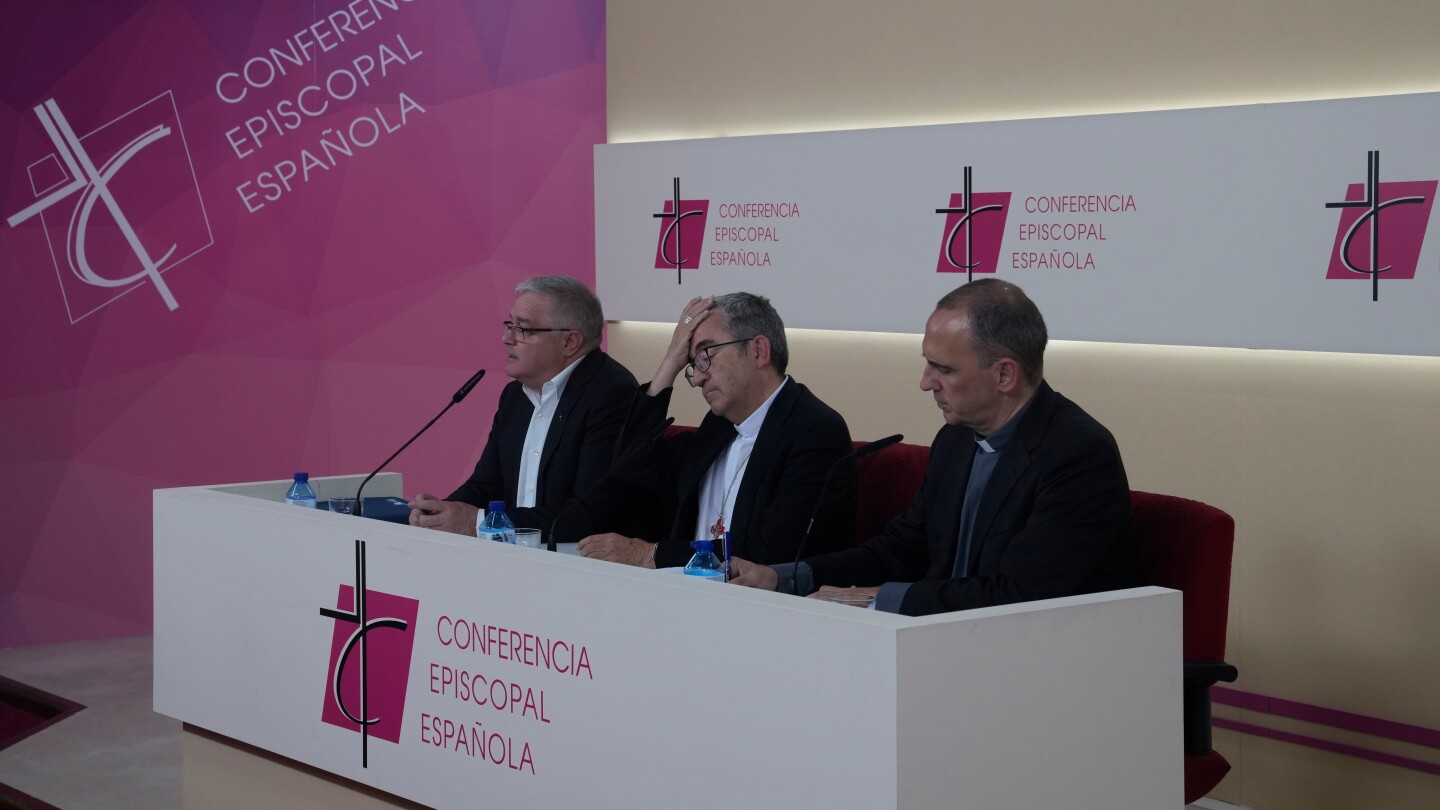
Archbishop Luis Argüello, president of the Spanish Episcopal Conference, acknowledged that some victims felt uncomfortable approaching church offices directly. He noted that the church has already paid approximately 2 million euros ($2.3 million) in compensation after reviewing over 100 victim petitions since establishing its special committee in 2024.
The agreement stipulates that compensation payments to victims will be tax-exempt, and the claims window will remain open for one year, with the possibility of a one-year extension if necessary.
Globally, approaches to clerical abuse compensation vary widely. In the United States, where the abuse scandal erupted in 2002, litigation, settlements, and compensation programs have cost the Catholic Church billions of dollars, forcing several dioceses into bankruptcy. In France, the church paid an average of about 35,000 euros ($41,000) to each of 358 victims whose claims were processed in 2023, with some receiving the maximum award of 60,000 euros ($70,000) in 2024.
The Vatican’s child protection advisory board emphasized in its report last year that the Catholic Church has a moral obligation to support victims’ healing, stating that financial reparations and stronger sanctions against abusers and their enablers are essential remedies.
This agreement represents a significant step in Spain’s ongoing reckoning with its history of clerical abuse, establishing a more transparent and victim-centered approach to compensation with unprecedented government oversight.
Fact Checker
Verify the accuracy of this article using The Disinformation Commission analysis and real-time sources.

8 Comments
Clergy sexual abuse is a global crisis that has caused immense trauma. I’m curious to see how this compensation program in Spain compares to other approaches taken around the world to address this issue.
That’s a good point. Comparing the Spanish model to initiatives in other countries could provide useful insights and best practices for supporting survivors of abuse.
It’s heartening to see the Spanish government taking a more active role in this process. Victims deserve a transparent and impartial avenue for seeking justice, which this agreement seems intended to provide.
While it’s good the Catholic Church is conceding some control, there are still questions about how effective and comprehensive this compensation program will be. Past church-led efforts have often fallen short in the eyes of many victims.
That’s a fair point. The details and implementation of this program will be crucial in determining whether it truly delivers justice and closure for survivors.
This is an important step towards accountability and justice for victims of clergy abuse in Spain. Ceding final authority to the government’s ombudsman seems like a reasonable compromise that can help ensure fair and transparent compensation processes.
Agreed. Providing a clear avenue for victims to seek formal acknowledgement and financial reparations, even in cases where the statute of limitations has expired, is crucial.
This is a complex issue with a long and painful history. I hope the Spanish government and Catholic Church can work together constructively to create a system that prioritizes the needs and rights of abuse victims above all else.