


Listen to the article
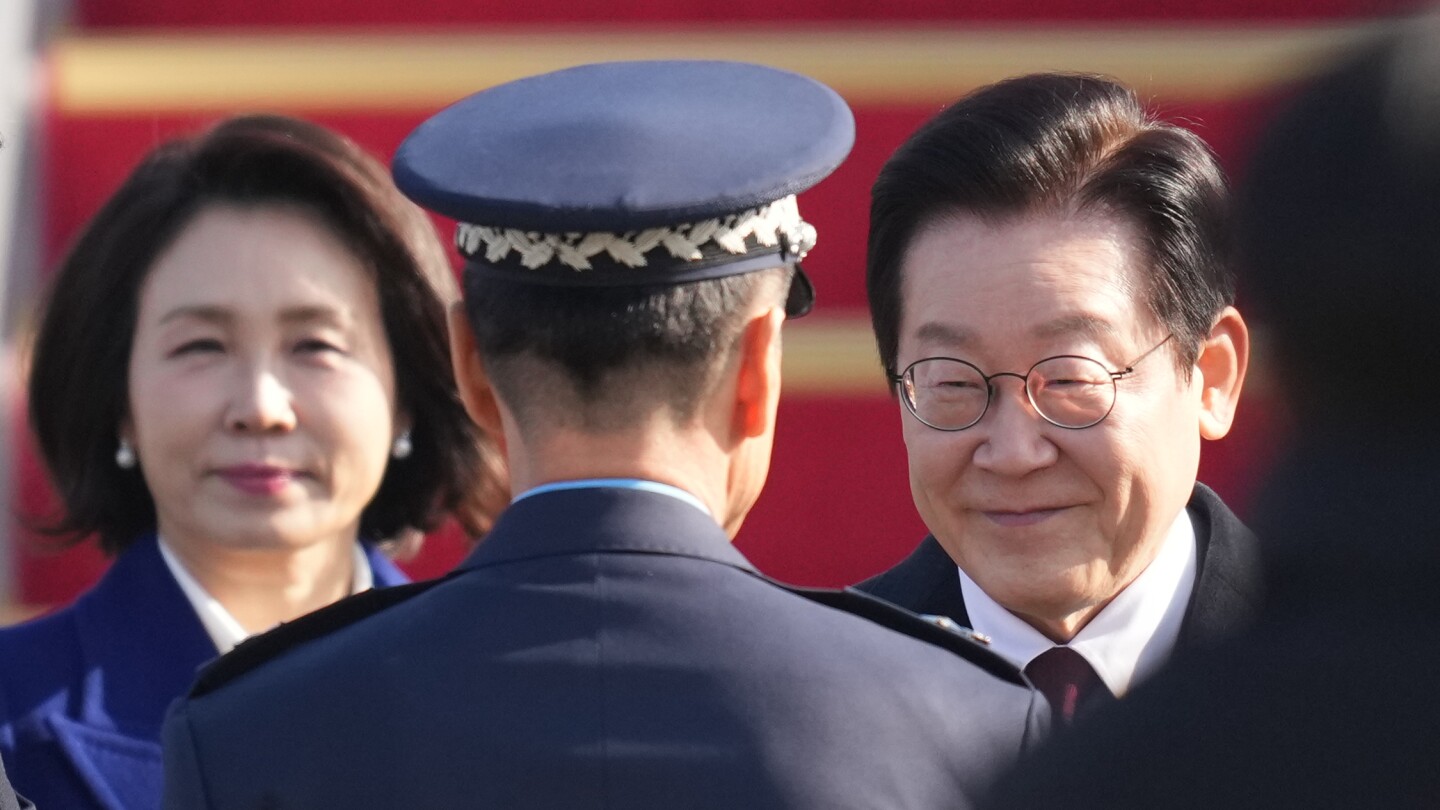
South Korean President Lee Jae Myung arrived in Beijing Sunday for a four-day state visit, his first trip to China since taking office in June. The visit comes amid escalating regional tensions, particularly between China and Japan over Taiwan.
Lee’s trip takes place just weeks after Japanese Prime Minister Sanae Takaichi suggested in November that Japan’s military could intervene if China took action against Taiwan. This statement heightened already strained relations in the region and underscored the complex geopolitical dynamics at play in East Asia.
During his stay, Lee is scheduled to meet with Chinese President Xi Jinping, marking their second encounter in just two months. The high-level meeting signals both countries’ desire to strengthen bilateral relations despite regional challenges.
In preparation for his visit, Lee granted an exclusive interview to China’s state broadcaster CCTV at Seoul’s Cheong Wa Dae, or Blue House, the South Korean presidential office. According to CCTV’s Friday report, Lee emphasized that this was his first interview held in the presidential palace, a gesture he hoped would demonstrate his government’s commitment to fostering strong relations with Beijing.
During the interview, Lee reaffirmed South Korea’s consistent support for the “One-China” policy regarding Taiwan. He described Xi as a “truly reliable neighbor” and stressed that healthy bilateral relations depend on mutual respect between the two nations.
The timing of Lee’s visit is particularly significant given China’s recent military activities around Taiwan. Last week, Beijing conducted large-scale military drills surrounding the self-governed island, describing them as a warning against “separatist and external interference forces.” The Chinese Foreign Ministry has accused Taiwan’s ruling party of seeking independence through U.S. support.
Tensions in the region were further inflamed in December when the United States announced plans for substantial arms sales to Taiwan, prompting Beijing to impose sanctions on 20 U.S. defense-related companies.
Lee addressed these complex dynamics in his CCTV interview, emphasizing that South Korea’s military alliance with the United States should not push Seoul-Beijing relations toward confrontation. He acknowledged past misunderstandings between South Korea and China that have hindered bilateral relations.
“This visit to China aims to minimize or eliminate these past misunderstandings or contradictions, to elevate and develop South Korea-China relations to a new stage,” Lee stated, according to CCTV.
The Korean Peninsula’s security situation remains a key topic for discussion. South Korea and the United States have long urged China to leverage its influence as North Korea’s traditional ally and economic partner to convince Pyongyang to return to denuclearization talks. However, China has been suspected of not fully implementing UN sanctions against North Korea and providing clandestine aid to maintain North Korea as a buffer against U.S. influence in the region.
Adding to the complexity, North Korea launched multiple ballistic missiles toward the sea on Sunday, South Korea’s military reported. This latest weapons demonstration comes ahead of North Korea’s upcoming ruling party congress.
South Korean National Security Adviser Wi Sung-lac told reporters that during Monday’s summit, Lee and Xi will hold “in-depth talks on substantive ways” to address security and economic challenges facing both countries. On Tuesday, Lee is scheduled to meet with Zhao Leji, chairman of the National People’s Congress, and Premier Li Qiang.
Wi emphasized that South Korea would request China play “a constructive role” in promoting peace on the Korean Peninsula. During their previous talks in November, Lee had already asked Xi to increase efforts to persuade North Korea to return to dialogue.
Beyond security concerns, South Korea aims to achieve substantial economic outcomes that could directly benefit citizens in both countries. The visit represents an important opportunity to reset and strengthen ties between the two major Asian economies at a time of increasing global uncertainty.
Fact Checker
Verify the accuracy of this article using The Disinformation Commission analysis and real-time sources.

14 Comments
It’s encouraging to see the South Korean government taking a proactive approach to strengthening its relationship with China, especially given the ongoing tensions in the region. This could be an important step in promoting peace and stability.
I wonder how this visit will be perceived by other regional powers, such as Japan and the United States, and how it might impact their own relations with China.
Interesting to see the South Korean president visiting China amid the rising tensions between China and Japan over Taiwan. This highlights the complex geopolitical dynamics in the region and the importance of diplomacy in navigating these challenges.
It will be important to see what comes out of the meeting between President Lee and President Xi. Strengthening bilateral relations could help mitigate some of the regional tensions.
The fact that this is President Lee’s first interview held in the presidential palace is a significant gesture that underscores the importance he places on strengthening ties with China. This visit could have important implications for the region.
I wonder how this visit will be perceived by the United States, given its own complex relationship with China and the ongoing tensions in the region.
It’s encouraging to see the South Korean government demonstrating its commitment to fostering strong relations with China, especially in the face of regional challenges. This could be an important step in promoting peace and stability in East Asia.
Curious to see if this visit leads to any concrete outcomes or agreements that could help ease the tensions between China and Japan over Taiwan.
The fact that this is President Lee’s first interview held in the presidential palace demonstrates the significance he places on fostering strong relations with China. This visit could be a crucial step in maintaining stability in East Asia.
Curious to see if any concrete agreements or commitments come out of this meeting, especially given the complex geopolitical dynamics at play.
This visit by the South Korean president comes at a critical time, with tensions between China and Japan over Taiwan continuing to escalate. Diplomacy will be key to navigating these challenges and maintaining regional stability.
I wonder how this visit will be perceived by the international community, particularly given the ongoing tensions in the region.
This visit by the South Korean president comes at a critical time, with China and Japan’s tensions over Taiwan continuing to escalate. Diplomacy and cooperation will be essential in navigating these challenges and maintaining regional stability.
Curious to see if any joint statements or agreements emerge from this meeting that could help address the complex geopolitical dynamics in East Asia.