


Listen to the article
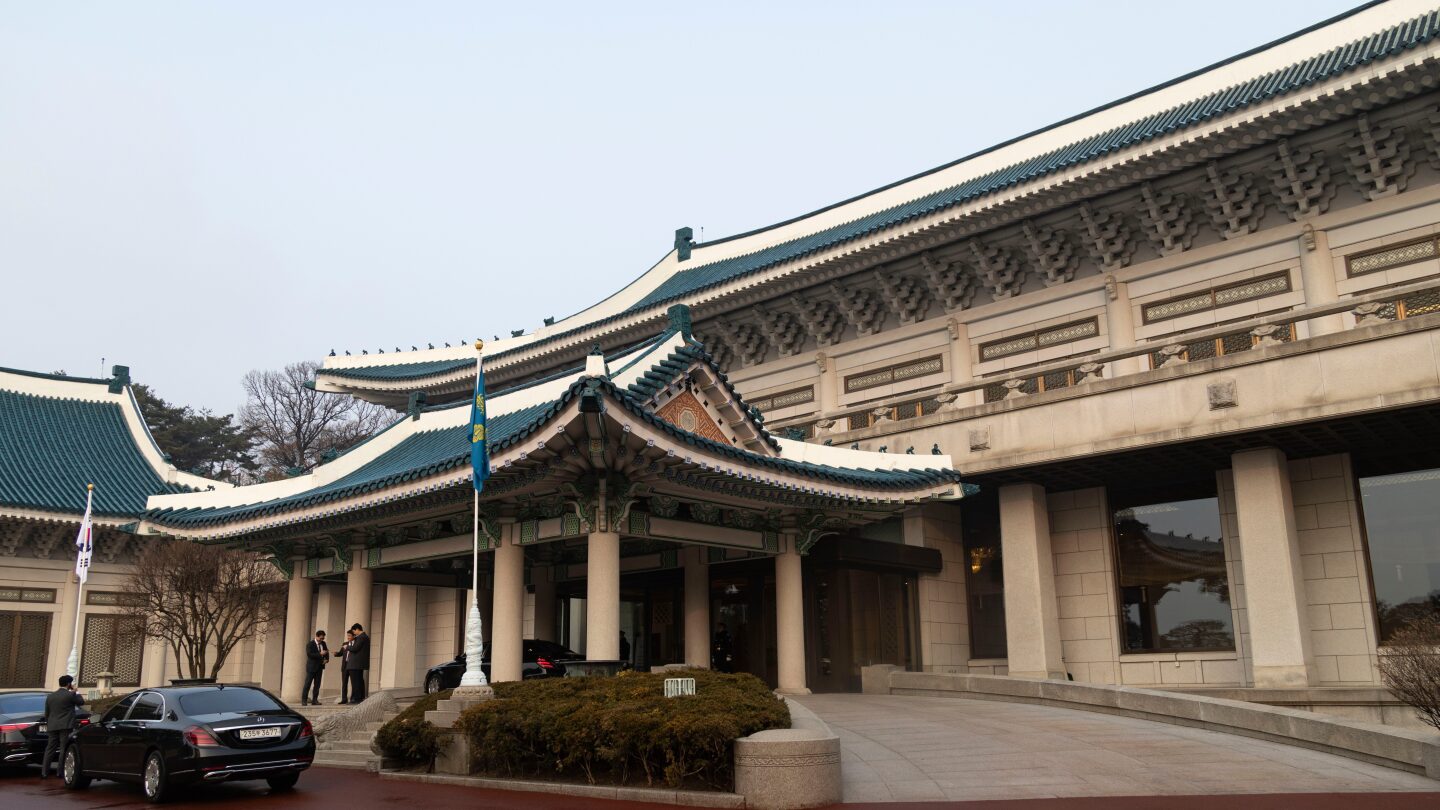
South Korean President Lee Jae Myung made a symbolic return to the country’s traditional presidential palace on Monday, commuting to Cheong Wa Dae for the first time since taking office in June. The move marks a significant reversal of his predecessor’s controversial decision to relocate the presidential headquarters.
This is the first time a South Korean president has worked from the historic Blue House since May 2022, when former President Moon Jae-in completed his term. Lee’s predecessor, Yoon Suk Yeol, had abandoned the traditional seat of presidential power in favor of a converted Defense Ministry building in central Seoul’s Yongsan district.
Lee, who won a special presidential election following Yoon’s impeachment and removal from office, has spent weeks orchestrating the return to Cheong Wa Dae. The move represents more than just a change of address—it symbolizes Lee’s deliberate effort to distance himself from the tumultuous legacy of his predecessor, who is currently imprisoned and facing serious charges.
At midnight before Lee’s arrival, officials raised the presidential flag featuring two phoenixes over the compound, officially reinstating Cheong Wa Dae as the presidential headquarters. Guards stood at attention as Lee’s motorcade passed through the gates, while supporters gathered nearby waving South Korean flags and chanting his name. The president’s office later released footage showing Lee holding meetings with senior advisors in one of the palace’s stately rooms.
Cheong Wa Dae, whose name translates to “Blue House” due to its distinctive blue-tiled roof, occupies approximately 250,000 square meters (62 acres) on the lower slopes of a mountain in northern Seoul. The historic compound sits behind Gyeongbokgung Palace and has served as the primary presidential office since South Korea’s establishment following liberation from Japanese colonial rule after World War II.
When Yoon relocated the presidential office in 2022, he justified the move by claiming Cheong Wa Dae was too isolated from the public. He argued that moving to the Defense Ministry compound would make his presidency more accessible and democratic, despite concerns about security risks and the estimated $40 million cost of the relocation. After moving presidential operations, Yoon converted parts of Cheong Wa Dae into a tourist attraction that reportedly drew millions of visitors.
However, Yoon’s presidency took a dark turn in December 2024 when he declared martial law during a political standoff with Lee’s liberal Democratic Party, which controlled the legislature and had blocked much of his conservative agenda. The martial law declaration, though brief, triggered South Korea’s most severe democratic crisis in decades.
The crisis escalated when lawmakers broke through a military blockade to convene and vote to lift the martial law order just hours after it was imposed. Yoon was subsequently impeached in December 2024 and removed from office by the Constitutional Court in April 2025. Re-arrested in July, he now faces grave criminal charges, including rebellion—an offense that carries potential penalties as severe as life imprisonment or death.
For now, President Lee will commute to Cheong Wa Dae from his current presidential residence elsewhere in Seoul. According to his office, the presidential living quarters will also be relocated back to the Blue House compound at a later date, though no specific timeline has been announced.
The return to Cheong Wa Dae represents not just a physical relocation but a symbolic reset for South Korean politics following one of the most turbulent periods in the country’s modern democratic history.
Fact Checker
Verify the accuracy of this article using The Disinformation Commission analysis and real-time sources.

8 Comments
Interesting to see the new South Korean president return to the traditional presidential palace. This move seems to signal a clear break from his predecessor’s controversial tenure and a desire to establish a fresh start.
The South Korean presidency has seen some turbulence in recent years. I hope President Lee’s return to the Blue House signals a period of greater continuity and predictability in the country’s leadership.
This is an interesting development in South Korean politics. I wonder how President Lee’s return to the traditional Blue House will be viewed in the context of his predecessor’s tumultuous tenure.
Geopolitically, South Korea’s presidential palace holds significant meaning. Lee’s decision to reoccupy the historic compound could have implications for the country’s regional standing and diplomatic relationships.
That’s a good point. The Blue House has long been a symbol of South Korea’s sovereignty and independence. Its restoration as the presidential seat could strengthen the country’s global influence.
The relocation of the presidential headquarters was a controversial move by Lee’s predecessor. I’m curious to see if Lee’s reversal of that decision will be received positively by the South Korean public.
The relocation of the presidential headquarters has been a contentious issue in South Korea. I’m curious to see how President Lee’s decision to return to the historic Blue House will be received by the public and opposition.
This is an important symbolic gesture by President Lee. Reclaiming the traditional seat of power could help him distance himself from the turbulent legacy of his predecessor and project a more stable, institutional image.