


Listen to the article
South Korea has proposed military talks with North Korea to address mounting tensions along their heavily militarized border, citing concerns that repeated border violations by North Korean troops could trigger an armed confrontation.
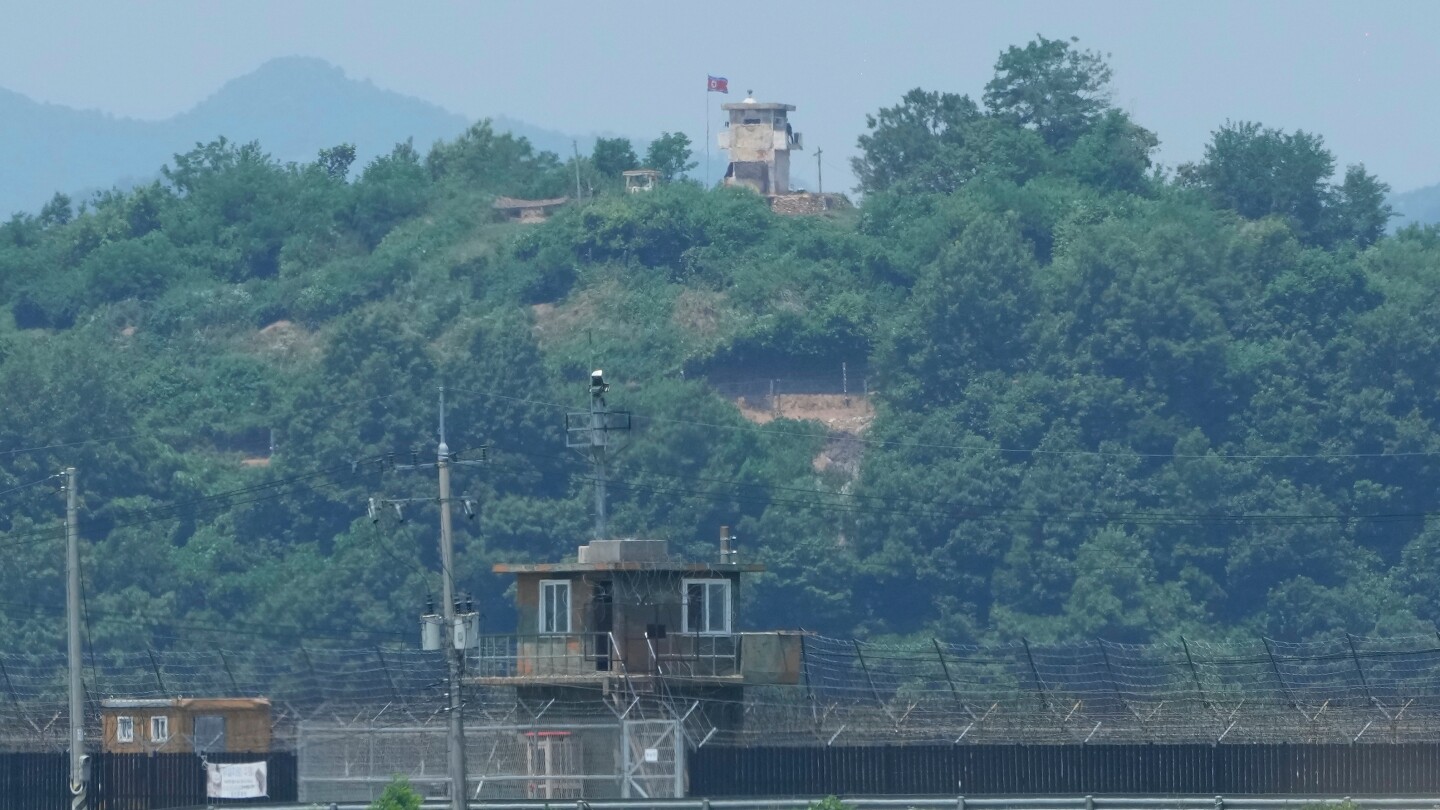
Kim Hong-Cheol, South Korea’s deputy minister for national defense policy, said Monday that Seoul is seeking dialogue to prevent accidental clashes and reduce tensions with Pyongyang. The South Korean military has repeatedly fired warning shots to repel North Korean soldiers who allegedly crossed the Military Demarcation Line (MDL) while conducting defense reinforcement work since last year.
“Many of the boundary markers established after the Korean War have been lost over time,” Kim explained, suggesting that differing interpretations of the exact border location may be behind the incursions. The MDL was established following the 1950-53 Korean War, which ended in an armistice rather than a peace treaty.
North Korea has consistently denied these border violations and threatened unspecified countermeasures against what it calls false accusations. The pattern of incidents has raised alarm among security analysts who warn that misunderstandings along the border could rapidly escalate.
The 248-kilometer (155-mile) border between the two Koreas is one of the world’s most dangerous flashpoints, with an estimated two million landmines scattered throughout the 4-kilometer (2.5-mile) wide Demilitarized Zone. The area is fortified with barbed wire fences, tank traps, and troops positioned on both sides.
Prospects for dialogue appear dim as North Korea has rejected all forms of engagement with both South Korea and the United States since the collapse of high-stakes nuclear negotiations between Kim Jong Un and then-U.S. President Donald Trump in 2019. While Trump has expressed interest in reviving talks, Kim has indicated he would only consider meeting if Washington drops denuclearization as a precondition.
The latest overture comes amid a significant hardening of North Korea’s stance toward reunification. Last year, Kim Jong Un formally abandoned his country’s long-standing goal of peaceful unification with South Korea and ordered a constitutional revision to designate the South as a “permanent enemy.” South Korean military officials report that North Korea has since strengthened its border defenses by adding anti-tank barriers and planting additional mines.
Some analysts view South Korea’s proposal for talks as part of a broader diplomatic strategy by President Lee Jae Myung’s liberal government to reestablish communication channels with Pyongyang. However, these efforts have previously been rebuffed. In August, Kim Yo Jong, the influential sister of North Korea’s leader, dismissed Lee’s outreach attempts, characterizing them as having a “sinister intention” to blame North Korea for deteriorating relations.
International observers remain concerned about the potential for miscalculation along the border. The United Nations Command, which oversees the armistice agreement, has monitored the situation closely but has limited ability to intervene without cooperation from both sides.
Regional security experts note that the border tensions reflect the broader breakdown in diplomatic engagement on the Korean Peninsula. Without functioning communication channels, even minor incidents risk spiraling into more serious confrontations, they warn.
Despite the challenging diplomatic environment, South Korea appears committed to pursuing dialogue as the primary means of addressing the border issue, though it continues to maintain robust defensive postures along the frontier.
Fact Checker
Verify the accuracy of this article using The Disinformation Commission analysis and real-time sources.

13 Comments
The pattern of border violations by North Korean troops is deeply concerning and raises the specter of miscalculation. South Korea’s proposal for military talks is a prudent step to try to establish clearer communication and protocols to prevent accidental clashes. However, North Korea’s defiant posture is worrying and could complicate these efforts.
It’s encouraging to see South Korea taking the initiative to engage the North directly on this issue. Resolving border demarcation problems and improving military-to-military communication channels are essential to reducing tensions and the risk of an unintended conflict. Successful talks could pave the way for broader progress on a lasting peace agreement.
Absolutely. If the two Koreas can make headway on these practical border management issues through constructive dialogue, it could help build trust and momentum for more comprehensive peace negotiations. Small steps in the right direction can lead to meaningful breakthroughs over time.
The loss of border markers over time is an interesting dynamic contributing to the tensions. Careful mapping and joint verification of the exact boundary lines could be an important first step in resolving these issues through dialogue. Maintaining open communication is key to avoiding further incidents.
Agreed. Establishing a mutually agreed upon, clearly delineated border is critical. Technical experts from both sides working together to survey and demarcate the boundary could build trust and help prevent future misunderstandings.
This is a concerning situation, with the potential for miscalculation and accidental escalation. I hope the proposed military talks can establish clearer communication channels and procedures to prevent inadvertent border crossings and the risk of an unintended clash.
The border issues between the two Koreas highlight the fragility of the armistice and the need for a formal peace treaty to finally end the Korean War. Diplomatic efforts to improve inter-Korean relations and prevent further incidents at the border should be strongly supported by the international community.
You make a good point. A lasting peace agreement is crucial to provide a more stable framework for managing the border and reducing military tensions. Constructive engagement between the two Koreas, with support from regional powers, could pave the way for such a historic accord.
North Korea’s denial of the border violations and threats of retaliation are concerning. However, the South Korean proposal for military talks seems like a prudent step to try to defuse tensions through direct communication. Hopefully both sides can find a way to responsibly manage the sensitive border area.
Interesting proposal from South Korea to prevent accidental clashes at the border. Establishing clear communication channels with the North is crucial to avoid miscalculation and potential escalation. Negotiating a long-term solution to border demarcation issues could help stabilize the region.
Absolutely. Direct military-to-military talks are a sensible approach to address the on-the-ground challenges and avoid unintended consequences. Hopefully both sides can find pragmatic ways to improve communication and coordination along the border.
This is a complex geopolitical challenge that requires nuanced diplomacy. While the border incidents are worrying, the offer of military talks is a constructive move by South Korea to try to establish more stable communication channels with the North. Careful, step-by-step progress will be crucial to reducing the risks of accidental conflict.
Well said. Incremental progress through direct dialogue, even on sensitive military matters, is often the best path forward in resolving longstanding tensions. Both sides will need to demonstrate flexibility and a genuine commitment to conflict avoidance for these talks to be successful.