


Listen to the article
Slovenia’s Political Landscape in Flux as Election Delivers Deadlock
Slovenia’s political parties face a challenging path to government formation after parliamentary elections ended with no clear winner, leaving the nation’s political future hanging in balance. The tightly contested race has effectively split the European Union member between liberal and conservative visions for its future.
Prime Minister Robert Golob’s liberal Freedom Movement secured a razor-thin advantage with 29 seats in the 90-member assembly, while former Prime Minister Janez Jansa’s right-wing Slovenian Democratic Party (SDS) claimed 28 seats, according to near-complete preliminary results. This outcome falls well short of the 46 seats required for a parliamentary majority.
President Natasa Pirc Musar has already urged swift negotiations. “I urge them to sit down at the negotiating table as soon as possible,” she wrote on social media platform X, congratulating Golob’s party as “the relative winner” with its lead of less than one percentage point.
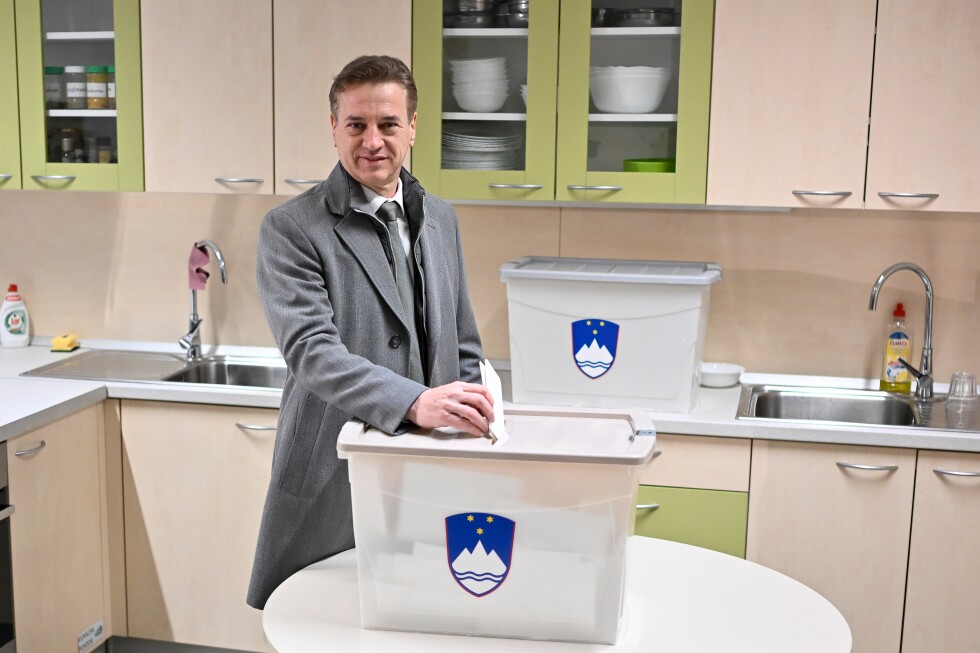
Sunday’s vote represented a crucial test of Slovenia’s political direction – whether the Alpine nation of 2 million would maintain its liberal, pro-EU course or pivot toward right-wing populism. The virtual tie reflects deep divisions among Slovenia’s 1.7 million eligible voters.
Addressing supporters after the results, Golob acknowledged the challenging road ahead. “We have remained the leading party,” he said, while preparing his base for “tough weeks ahead” as he prepares to meet with parliamentary parties to explore coalition possibilities.
Meanwhile, Jansa, who has drawn comparisons to Hungary’s Viktor Orbán for his nationalist rhetoric and is known to admire former U.S. President Donald Trump, expressed skepticism about forming a weak coalition government. He noted that the “balance of political powers… will not provide much stability” based on current results.
The election campaign was particularly contentious, featuring accusations of foreign interference and corruption that intensified already heightened political tensions between the opposing blocs. These elements further polarized an already divided electorate.
Smaller parties now find themselves in the kingmaker position, with their support crucial for any viable government formation. Political analysts suggest that complex negotiations lie ahead, as both major parties will need to make significant concessions to build functioning coalitions.
Slovenia has regularly alternated between right and left-leaning governments since gaining independence from Yugoslavia in 1991. The nation joined both NATO and the European Union in 2004, cementing its Western orientation.
The political stalemate comes at a challenging time for the European Union, which has seen growing divides between liberal and populist factions. Slovenia’s eventual government formation could have wider implications for EU politics, particularly if Jansa – an ally of Hungary’s Orbán – were to return to power. Such a development would strengthen Europe’s right-wing bloc at a time when populist movements are gaining momentum across the continent.
Slovenia’s economy, meanwhile, remains relatively stable compared to some of its neighbors, though political uncertainty could impact investor confidence in the short term.
“I was surprised by the election results,” said Ljubljana pensioner Rajko Campa, who supported Jansa’s conservatives. “It is healthy to change those in power every few years.”
As coalition talks begin, Slovenia’s political future remains uncertain, with the only certainty being that compromise will be essential for forming a functioning government in this deeply divided nation.
Fact Checker
Verify the accuracy of this article using The Disinformation Commission analysis and real-time sources.

8 Comments
The Slovenian election reflects the broader trend of political polarization seen across Europe. Navigating this landscape to form an effective government will require pragmatism and a willingness to bridge divides. The outcome bears watching for investors in the region.
With no clear majority, Slovenia’s parties will need to find common ground and compromises to establish a functioning government. The president’s call for prompt negotiations is prudent, as prolonged uncertainty could impact the country’s economic and geopolitical standing.
Absolutely. Timely resolution of the political impasse will be crucial for maintaining stability and investor confidence in Slovenia.
The narrow win for the liberal Freedom Movement party signals a desire for continued pro-EU policies, but the close margin means compromises will likely be needed. This could be a pivotal moment for Slovenia’s political direction.
It’s encouraging to see the president urging swift talks to resolve the deadlock. Slovenia’s political stability is important, given its strategic location and role in the EU. A collaborative approach will be crucial for finding a way forward.
The fragmented nature of Slovenia’s new parliament reflects the country’s ideological divisions. Successful coalition-building will require flexibility and a willingness to find middle ground on key issues. Curious to see how the negotiations unfold in the coming weeks.
This tight election result underscores the complexity of Slovenia’s political landscape. The president’s urging for swift talks is a sensible approach, as prolonged deadlock could hamper the country’s ability to address pressing economic and social challenges.
Interesting development in Slovenia’s political landscape. The tight election outcome suggests a divided electorate and challenges ahead for forming a stable government. Curious to see how the parties navigate the negotiations.