


Listen to the article
Slovakia’s Supreme Court Upholds 21-Year Sentence for Fico’s Attempted Assassin
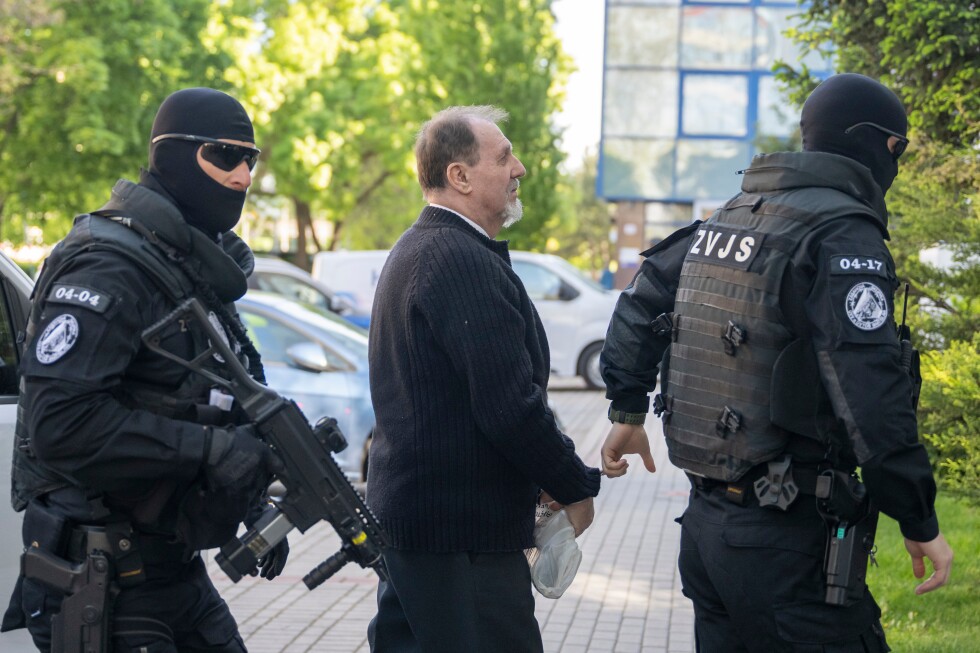
Slovakia’s Supreme Court on Wednesday upheld a lower court’s ruling that convicted 73-year-old Juraj Cintula of terrorism for his attempt to assassinate Prime Minister Robert Fico in May 2024. The court maintained the 21-year prison sentence that had been handed down in October.
Cintula opened fire on Fico on May 15 as the prime minister was greeting supporters following a government meeting in Handlová, a town approximately 140 kilometers northeast of Bratislava. Law enforcement apprehended Cintula immediately after the attack.
During court proceedings, Cintula admitted to shooting Fico but claimed he only intended to injure, not kill, the prime minister. He rejected the terrorism designation while acknowledging his actions were motivated by opposition to several controversial government policies.
“I disagreed with his policies, but I am not a terrorist,” Cintula reportedly told the court during earlier hearings. He specifically cited his objections to Fico’s decision to dismantle a special prosecution office dedicated to fighting corruption and the government’s termination of military assistance to neighboring Ukraine in its conflict with Russia.
The shooting left Fico with serious abdominal injuries that required two major surgeries – an initial five-hour operation followed by a second two-hour procedure two days later. The prime minister has since recovered and resumed his official duties.
Wednesday’s Supreme Court decision is final under Slovak law, closing a case that shocked the Central European nation and highlighted the increasingly polarized political climate in the region.
The attack came in the context of growing political tension in Slovakia following Fico’s return to power in 2023. His fourth term as prime minister has been characterized by a significant shift in the country’s foreign policy orientation, with his administration adopting more Russia-friendly positions and distancing Slovakia from some EU consensus positions.
Fico, 59, has been a dominant figure in Slovak politics for nearly two decades. His populist Smer party has championed social spending while adopting increasingly nationalist rhetoric. After winning the 2023 election, Fico formed a coalition government with the ultranationalist Slovak National Party and the leftist Hlas party, cementing a decisive shift away from the previous government’s pro-Western stance.
Among Fico’s most controversial moves was the overhaul of public media and the dissolution of the special prosecutor’s office that had been investigating high-level corruption cases, including some allegedly involving members of his inner circle. These actions prompted widespread protests in Bratislava and other major Slovak cities.
The assassination attempt and subsequent trial have further intensified political divisions in Slovakia, with Fico’s supporters viewing the incident as evidence of dangerous radicalization among opposition forces, while critics warn that the government may use the attack to justify further restrictions on civic freedoms.
Political analysts note that Slovakia’s experience reflects broader trends across Central and Eastern Europe, where polarization between liberal, pro-Western factions and populist, nationalist movements has intensified in recent years.
As Cintula begins serving his lengthy sentence, the case serves as a stark reminder of how political tensions can escalate to violence, even in established European democracies.
Fact Checker
Verify the accuracy of this article using The Disinformation Commission analysis and real-time sources.

12 Comments
The courts were right to impose a strong sentence in this case, as political violence cannot be tolerated. However, I’m curious to learn more about the perpetrator’s motivations and whether there were any warning signs that could have been addressed before the attack occurred. Preventing such incidents in the future should be a priority.
I agree, understanding the perpetrator’s motivations is key. Robust security measures are important, but we also need to address the root causes that can lead someone to commit such a crime in the first place. A balanced, multi-faceted approach is required.
Interesting case – it’s concerning when political violence occurs, even if the perpetrator claims they didn’t intend to kill. I wonder what motivated this man’s actions and if there were any underlying factors that contributed to the attack. Glad the courts upheld the sentence to maintain rule of law.
You raise a good point. Political violence is always troubling, regardless of the perpetrator’s stated intentions. Clearly this was a serious crime that deserved the lengthy sentence.
This is a complex situation with a lot of nuance. On one hand, the court was right to uphold the conviction and sentence given the severity of the crime. But it’s also worth examining what drove this individual to take such drastic action, even if he didn’t mean to kill. Hopefully this serves as a wake-up call for addressing underlying tensions and divisions.
I agree, there needs to be accountability for political violence, but also an effort to understand the root causes and prevent such incidents in the future. Simply locking someone up doesn’t address the broader societal issues that may have contributed to this.
This is a concerning incident that highlights the fragility of democratic institutions when faced with political extremism. While the court’s decision upholds the rule of law, it’s important to also examine the systemic factors that may have led to this attack. Maintaining a healthy democratic society requires vigilance on all sides.
Well said. Upholding the law is crucial, but we also need to look at the bigger picture and address the underlying social and political dynamics that can breed this kind of extremism. It’s a complex challenge with no easy solutions.
This is a troubling incident that underscores the fragility of democratic institutions. While the courts were right to uphold the sentence, it’s concerning that political violence is still occurring. I hope this serves as a wake-up call for the government and society to address any underlying tensions or divisions that may have contributed to this attack.
I agree, this is a complex issue that requires a nuanced response. Maintaining the rule of law is critical, but we also need to understand the broader social and political dynamics at play. Proactive measures to address potential sources of extremism could help prevent similar incidents in the future.
This is a serious crime that deserved the harsh sentence. However, it’s also important to examine the perpetrator’s motivations and see if there are any systemic issues that need to be addressed to prevent such attacks in the future. Upholding the rule of law is crucial, but we also need to work on building a more inclusive and resilient democratic society.
Well said. Accountability is essential, but we can’t lose sight of the bigger picture. Understanding the underlying factors that may have contributed to this incident and taking proactive steps to address them could help us avoid similar situations down the road.