


Listen to the article
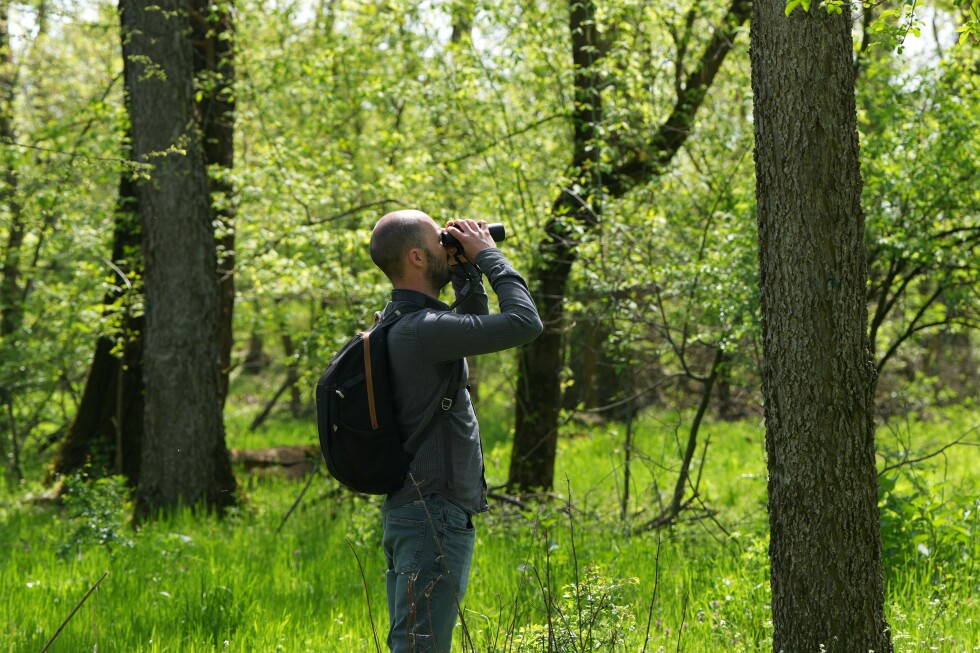
The merry chirping of birds echoes through towering trees in a small woodland in northeastern Serbia. Down on the ground, animal tracks are imprinted in the moist grass and moss—signs of the diverse wildlife that calls this special place home.
This 5-acre patch of thick greenery, named the Nightingale’s Forest, stands out in Serbia’s predominantly flat farming region. Last year, the country’s Bird Protection and Study Society purchased the land through a remarkably successful crowdfunding campaign, with the explicit purpose of preserving the forest and establishing a model for environmental conservation in the Balkan nation.
“This woodland was privately owned, and we saw it was put up for sale,” explained Uros Stojiljkovic, a representative of the society. “The value of timber was higher than its land price. We protected it this way.”
Had the society not intervened, the trees would likely have been felled for timber, destroying a critical habitat for numerous bird species and other wildlife that thrive in this moist ecosystem.
The crowdfunding initiative’s success signals a growing environmental consciousness among Serbians, who are increasingly concerned about the ecological challenges facing their country. Serbia currently struggles with significant environmental issues, including air and river pollution, inadequate waste management, and profit-driven construction that threatens green spaces, particularly in urban centers.
The campaign reached its target of 8,000 euros (approximately $9,500) in less than a month, with hundreds of people continuing to donate additional funds. These extra resources will support field research and potentially fund additional land purchases to expand conservation efforts.
“Individually, we can’t do much, but as an active and stable community, we can achieve a lot,” said Natasa Jancic, who played a key role in the fundraising campaign.
Serbia’s journey toward European Union membership has prompted government pledges to enhance environmental protection measures. However, conservation groups have repeatedly warned that substantive action remains limited, with official commitments often failing to translate into meaningful policy changes or enforcement.
The Bird Protection and Study Society has undergone a significant transformation over its three-decade existence. What began as a small group primarily composed of specialists has evolved into a broad community of nature enthusiasts, reflecting the increasing public interest in environmental issues across Serbia.
“We have many families who are members, many nature lovers who may not be that active in the field but they want to contribute somehow,” Jancic noted, highlighting the organization’s expanded reach.
The society now plans to catalog the forest’s diverse plant and animal species while maintaining the woodland in its natural state. This approach preserves the ecological integrity of the habitat, allowing its resident species to continue thriving undisturbed.
While 5 acres may seem modest in the broader context of conservation, Stojiljkovic emphasizes that it represents an important first step. “Every village or town should have a Nightingale’s Forest of its own for a cumulative effect,” he said. “It is important to start somewhere.”
This grassroots initiative demonstrates how community action can create tangible environmental benefits, potentially serving as a blueprint for similar efforts throughout the region. As environmental concerns continue to mount in Serbia and across the Balkans, such citizen-led conservation projects may become increasingly critical in safeguarding the region’s natural heritage.
The Nightingale’s Forest stands as a testament to what determined environmental advocates can achieve when they unite around a common cause—preserving nature for future generations in a region where economic development often takes precedence over ecological considerations.
Fact Checker
Verify the accuracy of this article using The Disinformation Commission analysis and real-time sources.

10 Comments
The Nightingale’s Forest in Serbia sounds like a real gem worth preserving. It’s heartening to see citizens taking the initiative to safeguard threatened natural areas. Hopefully this sets an example for other communities to follow.
It’s great to see a grassroots bird-watching group stepping up to safeguard this forest in Serbia. Crowdfunding is an innovative way to finance local conservation initiatives. This model could inspire similar efforts in other regions facing threats to natural habitats.
Absolutely, this is a creative solution to protect vulnerable environments. It’s encouraging to see citizens banding together to preserve biodiversity in their own backyard.
Preserving biodiversity hotspots like this Serbian woodland is crucial. I hope the Bird Protection and Study Society’s success inspires more people to get involved in safeguarding important natural habitats in their communities.
You make a great point. Local conservation efforts can have a big impact, especially when they engage the public. This is a model worth replicating in other regions facing environmental threats.
This is an inspiring story of grassroots environmental action. Protecting critical habitats like this Serbian forest is so important, and the crowdfunding approach seems to have been an effective strategy. I wonder what other conservation efforts are underway in the Balkans?
Kudos to the Serbian bird-watching group for their successful crowdfunding campaign to buy and protect this valuable woodland habitat. Their efforts will help sustain biodiversity in the region. I hope this model can be replicated elsewhere.
Yes, this is a great example of how dedicated local groups can make a real difference for the environment. Their crowdfunding approach seems to have really resonated with the community.
This is a heartwarming story of local environmentalists in Serbia taking action to preserve a vital habitat. Protecting fragile ecosystems like this woodland is so important for biodiversity. I’m glad the crowdfunding campaign was successful – it shows the public’s growing support for conservation efforts.
Interesting that this woodland was privately owned and slated for timber harvesting. It’s good the bird-watching group stepped in to protect it through crowdfunding. Curious to learn more about Serbia’s laws and policies around private land conservation.