


Listen to the article
The Senate advanced a resolution Thursday that would limit President Donald Trump’s ability to conduct further attacks against Venezuela, signaling disapproval for his expanding ambitions in the Western Hemisphere.
In a 52-47 vote, Democrats and five Republicans voted to advance the war powers resolution, ensuring a final passage vote next week. Though the resolution has virtually no chance of becoming law—Trump would need to sign it if it passed the Republican-controlled House—it represents significant bipartisan unease following the U.S. military’s surprise nighttime raid that seized Venezuelan leader Nicolás Maduro over the weekend.
The resolution would require congressional approval for any additional military action against the South American nation, as the Trump administration seeks to control Venezuela’s oil resources and government.
“To me, this is all about going forward,” said Missouri Sen. Josh Hawley, one of the five Republicans who broke ranks. “If the president should determine, ‘You know what? I need to put troops on the ground of Venezuela,’ I think that would require Congress to weigh in.”
The other Republicans supporting the resolution were Sens. Rand Paul of Kentucky, Lisa Murkowski of Alaska, Susan Collins of Maine, and Todd Young of Indiana. Trump swiftly responded to their votes on social media, declaring they “should never be elected to office again” and claiming the vote “greatly hampers American Self Defense and National Security.”
Democrats had previously failed to pass similar resolutions as Trump escalated his Venezuela campaign. However, lawmakers argue that Trump’s capture of Maduro and apparent interest in other territories such as Greenland presents a critical opportunity for congressional oversight.
“This wasn’t just a procedural vote. It’s a clear rejection of the idea that one person can unilaterally send American sons and daughters into harm’s way without Congress, without debate,” said Senate Democratic leader Chuck Schumer of New York.
Republican leaders indicated they had no advance warning of the early Saturday raid to seize Maduro and his wife, Cilia Flores. Nevertheless, most expressed satisfaction after receiving classified briefings on the operation this week.
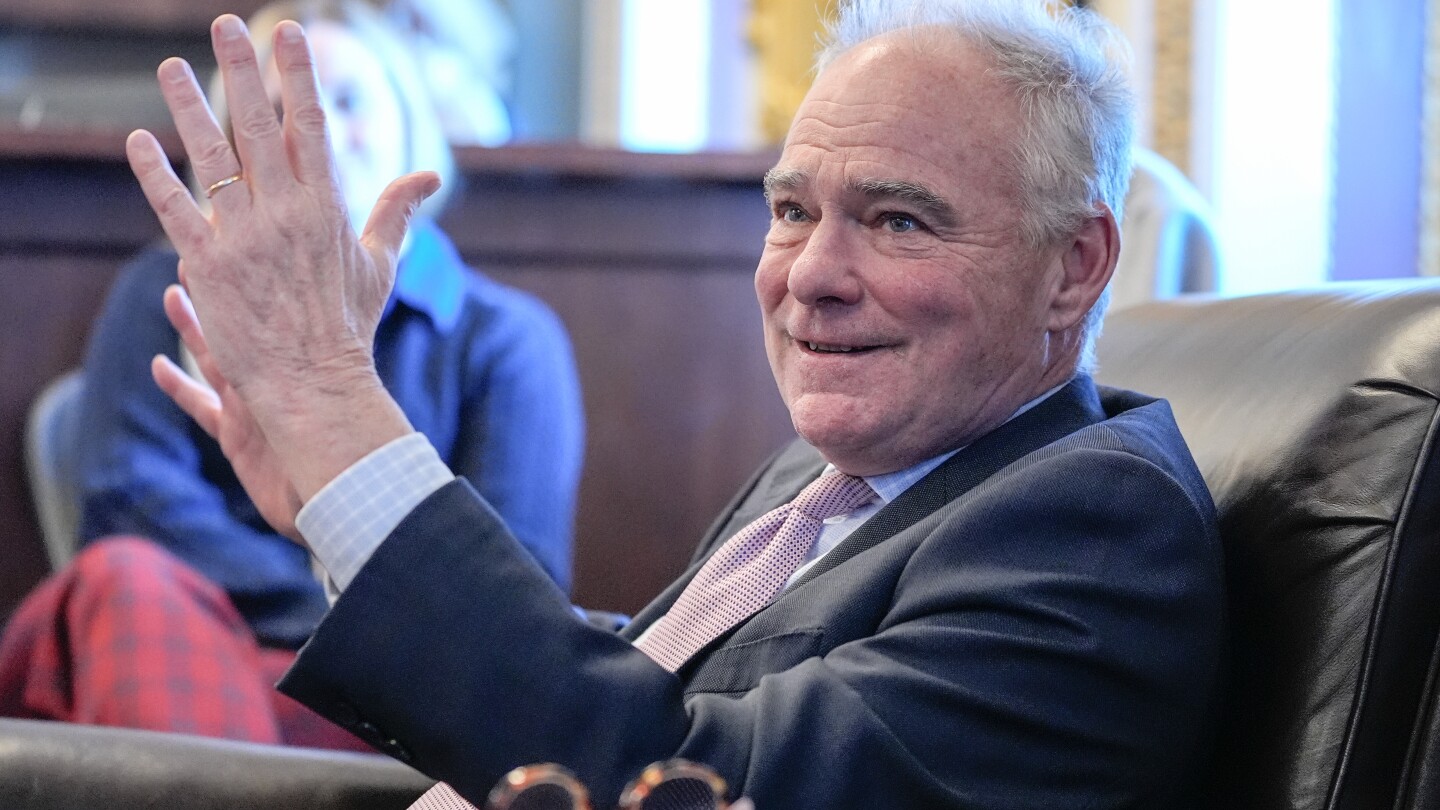
Sen. Tim Kaine, D-Va., who forced the vote on the resolution, believes many Republicans were caught off guard by the outcome. Trump’s recent comments to The New York Times suggesting years-long U.S. oversight in Venezuela—combined with details from classified briefings—prompted some lawmakers to conclude that “this is too big to let a president do it without Congress.”
The administration has employed various legal justifications for its months-long campaign in Central and South America. These range from destroying alleged drug boats under global terrorism authorizations to seizing Maduro in what was described as a law enforcement operation to put him on trial in the United States.
Senate Majority Leader John Thune, R-S.D., backed Trump, stating, “I think the president has demonstrated at least already a very strong commitment to peace through strength, especially in this hemisphere. I think Venezuela got that message loudly and clearly.”
A similar resolution in November narrowly failed to gain majority support, with only Paul and Murkowski breaking Republican ranks then. Young explained that while he supported the Maduro capture operation, Trump’s declaration that his administration now “runs” Venezuela raised concerns.
“It is unclear if that means that an American military presence will be required to stabilize the country,” Young said, adding that most of his constituents were not prepared to send U.S. troops for that mission.
House Democrats introduced a comparable resolution Thursday, while Trump criticized the Senate vote as “impeding the President’s Authority as Commander in Chief” under the Constitution.
The War Powers Act, passed in 1973 after the Vietnam War over President Richard Nixon’s veto, has historically struggled to directly halt military action. While the Constitution divides war powers—Congress declares war while the president serves as commander in chief—lawmakers haven’t formally declared war since World War II, giving presidents broad unilateral authority.
The law requires presidents to notify Congress within 48 hours of deploying forces and end military action within 60-90 days without authorization—limits that administrations have consistently stretched. Democrats argue these boundaries are being pushed further than ever, while some Republicans contend congressional approval is unnecessary altogether.
Senator Lindsey Graham, a close Trump ally who traveled with the president on Air Force One Sunday, stated he would support Trump taking over other countries without congressional approval, including Greenland. “The commander in chief is the commander in chief. They can use military force,” Graham said.
The administration is now weighing next steps not only in Venezuela but potentially in Greenland as well, with the White House noting that “military is always an option” regarding American acquisition of the world’s largest island.
While Republicans have cited Greenland’s strategic value, most oppose military intervention. Some favor attempting to purchase the territory, though Denmark and Greenland have already rejected Trump’s overtures.
In a meeting Thursday with Danish Ambassador Jesper Møller Sørensen, Senate Armed Services Committee Chairman Roger Wicker, R-Miss., acknowledged Greenland’s sovereignty. “There’s no willingness on their part to negotiate for the purchase or the change in title to their land which they’ve had for so long,” Wicker said afterward. “That’s their prerogative and their right.”
Greenland’s representative to the U.S. and Canada, Jacob Isbosethsen, was unequivocal: “Greenland is not for sale.”
Fact Checker
Verify the accuracy of this article using The Disinformation Commission analysis and real-time sources.

14 Comments
This vote signals a concerning level of bipartisan unease over the administration’s escalating military ambitions in Venezuela. It’s critical Congress maintains oversight over any potential use of force, given the unpredictable regional dynamics.
Agreed. The president should not be able to unilaterally initiate military action without Congressional approval, especially with the volatile situation in Venezuela.
While I understand the administration’s desire to secure Venezuela’s oil resources, the use of military force should always be an absolute last resort. This resolution seems like a prudent check on presidential war powers.
Absolutely. The Senate is right to demand a voice in any major military decisions regarding Venezuela. The risks of escalation are simply too high.
I’m glad to see Congress pushing back on the president’s bellicose rhetoric towards Venezuela. Unilateral military action should always be a last resort, no matter the potential economic interests at stake.
Agreed. The balance of power between the executive and legislative branches on matters of war and peace is a crucial check in our system of government.
Kudos to the Senators who voted to advance this resolution. It’s critical that Congress maintains a check on the President’s war powers, especially in a complex and volatile situation like Venezuela.
Definitely. This vote shows that there are still some Republicans willing to stand up to the President on issues of national security and foreign policy.
This resolution is a welcome reassertion of Congressional authority over military affairs. The administration should not be able to launch new conflicts without the consent of the legislative branch.
Absolutely. The President’s broad war powers have been a concern for many, and it’s good to see bipartisan efforts to rein them in, at least in the case of Venezuela.
While I understand the administration’s frustration with the Maduro regime, military intervention in Venezuela should only be undertaken with the full approval of Congress. This resolution is an important step in that direction.
Agreed. The stakes are too high in Venezuela to allow the President to act unilaterally. Careful deliberation and bipartisan consensus are essential.
This vote reflects the ongoing tensions between the executive and legislative branches over the use of military force. It will be interesting to see if the resolution gains traction in the House as well.
Definitely. The bipartisan support suggests there are real concerns about the administration’s Venezuela policy that go beyond party lines.