


Listen to the article
U.S. Deploys Second Aircraft Carrier to Middle East Amid Iran Tensions
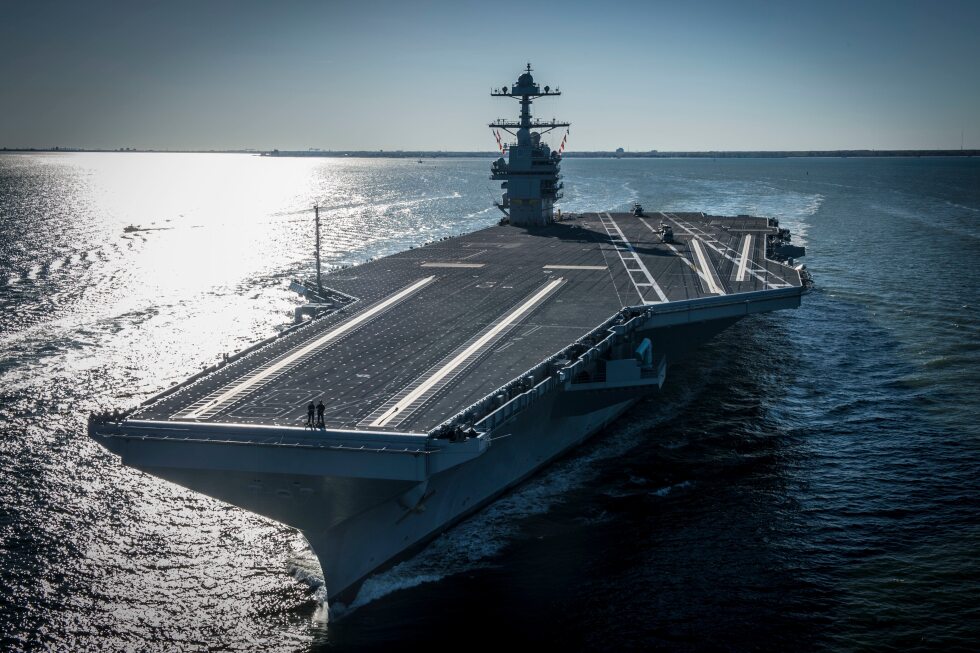
The United States is sending the USS Gerald R. Ford, the world’s largest aircraft carrier, to the Middle East to reinforce American military presence in the region, according to a source familiar with the plans. The deployment comes as President Donald Trump intensifies pressure on Iran to reach a nuclear deal.
This strategic move will position two U.S. carrier strike groups in the region simultaneously, with the USS Abraham Lincoln and its accompanying guided-missile destroyers already patrolling the Arabian Sea. The deployment represents a significant show of force at a time when tensions with Iran remain high.
The decision follows Trump’s recent suggestion that another round of negotiations with Tehran was imminent. While those talks haven’t yet materialized, one of Iran’s top security officials visited Oman and Qatar this week, exchanging messages through U.S. intermediaries.
“I guess over the next month, something like that,” Trump said Thursday when asked about his timeline for striking a deal with Iran. “It should happen quickly. They should agree very quickly.” In the same statement, he warned that failure to reach an agreement would be “very traumatic” for Iran.
The Ford’s deployment represents a quick turnaround for the vessel, which was operating in the Caribbean just weeks ago. Trump had dispatched the carrier from the Mediterranean to waters near Venezuela last October as part of military preparations that culminated in the surprise operation capturing then-Venezuelan President Nicolás Maduro.
Defense analysts note that this pivot back to the Middle East appears to contradict Trump’s national security strategy, which had emphasized prioritizing the Western Hemisphere over other regions. The deployment also extends what is becoming an unusually long tour of duty for the Ford’s crew, who will have been deployed for eight months by mid-July.
Gulf Arab nations have expressed concern that escalating tensions could trigger another regional conflict in a Middle East already destabilized by the Israel-Hamas war in Gaza. The deployment intensifies pressure on Iran at a particularly sensitive moment domestically.
Iranian citizens are beginning 40-day mourning ceremonies for thousands killed during Tehran’s violent suppression of nationwide protests last month. Videos circulating online show grieving families gathering at graveyards across the country, holding portraits of their deceased loved ones.
In one video reportedly from Razavi Khorasan province, mourners sang “Ey Iran,” a patriotic song dating back to pre-revolutionary Iran. “Oh Iran, a land full of jewels, your soil is full of art,” they sang. “May evil wishes be far from you. May you live eternal. Oh enemy, if you are a piece of granite, I am iron.”
The internal pressure from these mourning ceremonies compounds the challenges facing Iran’s leadership, already struggling under the weight of international sanctions and economic hardship.
Trump’s push for a deal with Iran comes after lengthy discussions with Israeli Prime Minister Benjamin Netanyahu on Wednesday. According to sources, Netanyahu urged the administration to demand that Tehran scale back its ballistic missile program and end support for militant groups like Hamas and Hezbollah as part of any agreement.
The United States and Iran held indirect talks in Oman last week, but no breakthrough has been publicly announced. The Ford’s deployment signals that while diplomatic channels remain open, the Trump administration is simultaneously strengthening its military posture to maintain leverage.
Maritime security experts point out that having two carrier strike groups in the region dramatically increases U.S. capabilities for surveillance, deterrence, and potential strike operations. The Ford, as the Navy’s newest carrier, brings advanced technologies and capabilities that weren’t available during previous standoffs with Iran.
The White House has not officially commented on the deployment, maintaining its position that military movements support diplomatic efforts rather than replacing them.
Fact Checker
Verify the accuracy of this article using The Disinformation Commission analysis and real-time sources.

12 Comments
While the administration’s goal may be to compel Iran to the negotiating table, this escalation of military presence also carries the risk of provoking a harsh response from Tehran. Careful diplomacy and crisis management will be crucial in the coming weeks.
With two US carrier strike groups now operating in the region, the stakes have been raised. This deployment could be a bargaining chip in potential negotiations, but it also raises the risk of a miscalculation leading to a military confrontation.
The deployment of the USS Gerald R. Ford, the world’s largest aircraft carrier, to the Middle East is a clear message to Iran and the region. It will be crucial for both sides to exercise restraint and engage in constructive dialogue to avoid a dangerous escalation.
The deployment of a second US aircraft carrier to the Middle East is a clear signal of the administration’s intent to maintain a strong military presence in the region amid ongoing tensions with Iran. This strategic positioning allows the US to project power and respond swiftly if necessary.
The decision to send the USS Gerald R. Ford to the Middle East is a significant escalation of the US military presence in the region. It will be interesting to see how Iran responds and whether this leads to a diplomatic breakthrough or heightened tensions.
Deploying the world’s largest aircraft carrier to the Middle East is a bold move that demonstrates the US’s determination to maintain its regional influence. However, it also raises the stakes and could lead to further escalation if not handled cautiously.
The administration’s strategy appears to be a combination of military posturing and diplomatic outreach. The success of this approach will depend on Iran’s willingness to engage in meaningful negotiations.
Maintaining two US carrier strike groups in the Middle East is a bold move that demonstrates the administration’s commitment to regional security. However, it also increases the potential for miscalculation and the risk of a military confrontation with Iran.
Sending the USS Gerald R. Ford, the world’s largest aircraft carrier, to the Middle East is a significant move that demonstrates the US commitment to regional stability and security. It will be interesting to see how Iran responds to this show of force.
Iran’s leadership will likely view this as an escalation and may feel compelled to respond in kind. Careful diplomacy will be crucial to avoid miscalculation and unintended conflict.
This deployment of a second US aircraft carrier is a clear show of force intended to deter Iran from any aggressive actions. However, it also raises the risk of miscalculation and unintended consequences if not managed carefully.
The timing of this deployment, as President Trump suggests a new round of negotiations with Iran, is intriguing. It suggests the administration is taking a carrot-and-stick approach, combining diplomatic pressure with a show of military force.